
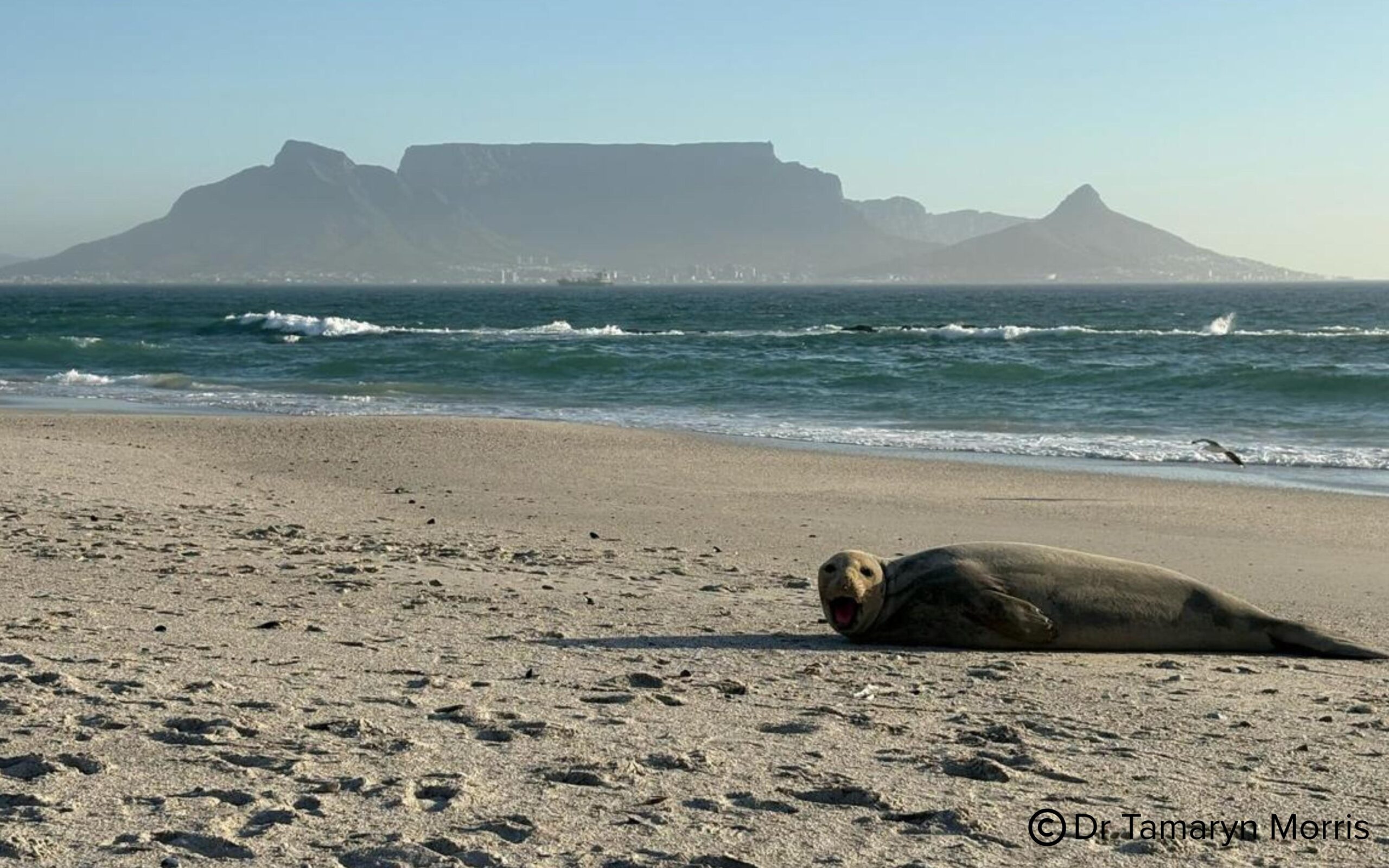
Ever spotted a strange, lumpy creature on a South African beach and wondered what on earth it was? You might have just met an uninvited guest: a southern elephant seal.
Southern elephant seals, scientifically known as Mirounga leonina, have a circumpolar distribution in the southern hemisphere and use the territories in the Antarctic and Sub-Antarctic regions for breeding, moult and resting.
Occasionally, elephant seals are observed far from their usual distributional range and are occasionally spotted on the South African coast, surprising beachgoers with their unusual appearance.
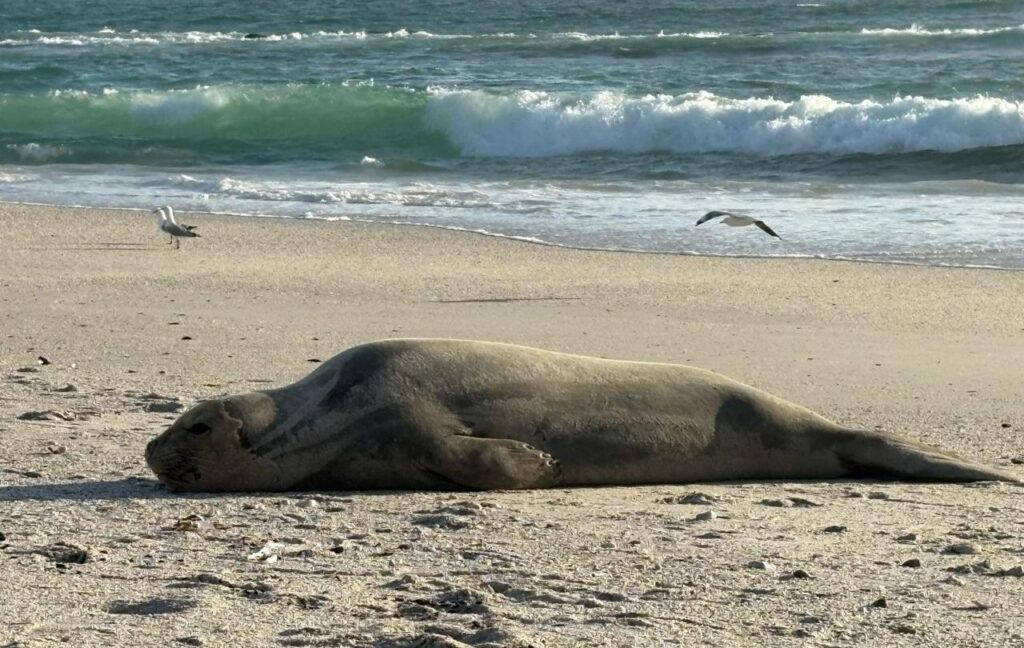
A southern elephant seal spotted at Blouberg Beach, Cape Town, in February 2025 (Photo: Dr Tamaryn Morris).
What are vagrant Southern elephant seals?
The presence of Southern elephant seals in South Africa or outside their normal distribution range makes them vagrants. The closest place to South Africa where elephant seals occur naturally is the Prince Edward Islands, some 2,000 km southeast of Cape Town. To put it into perspective, this is the equivalent of travelling from the Kruger National Park to Cape Town. This is a long distance away from home for them. When you see them, please give them space. Do not harass them.
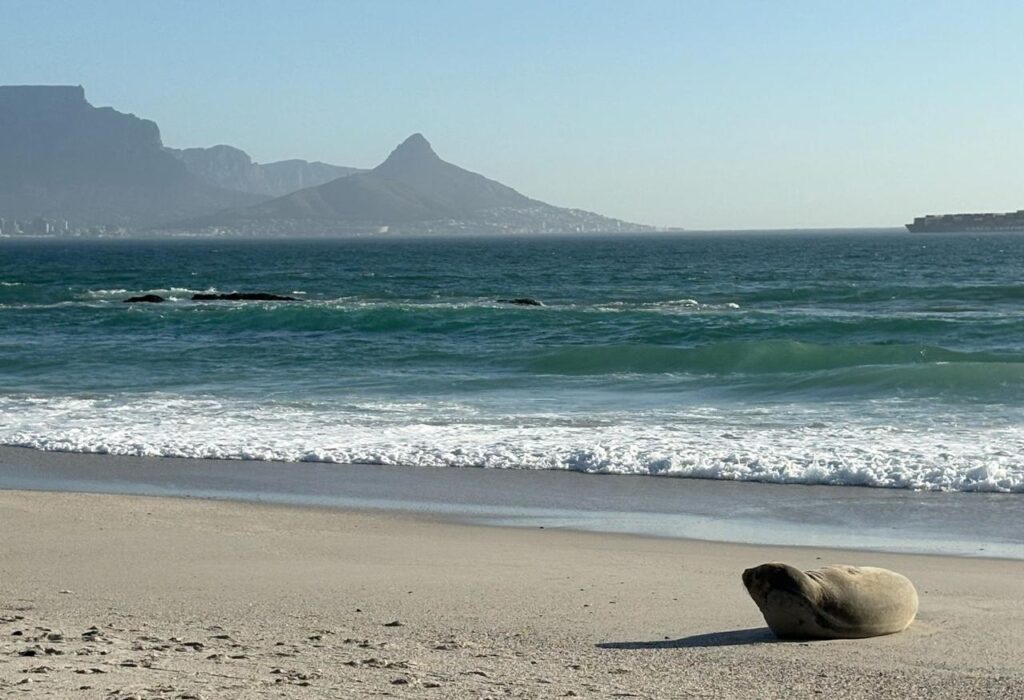
The southern elephant seal at Blouberg Beach, Cape Town, in February 2025 (Photo: Dr Tamaryn Morris).
Why do Southern elephant seals visit our coastlines?
Elephant seals can travel thousands of kilometres, and it is no surprise that some end up on the South African coasts. Most of the elephant seals that are observed on the South African coasts are here to moult and rest. Elephant seals are unique in such a way that every year they undergo a process where they shed their skin and hair, known as moulting. It is a long process that can take weeks, and during this time, they prefer to be on land rather than the ocean.
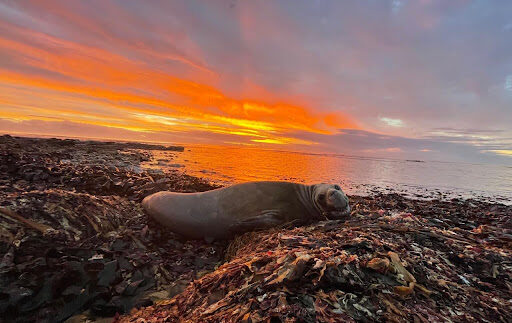
Buffel, South Africa’s beloved southern elephant seal celebrity. This adult male is a frequent visitor to the region and no stranger to the public eye (Photo: Yinhla Shihlomule).
What to do when you encounter a Southern elephant seal at the beach?
The public is always curious when such animals visit our shores, and public awareness is important to know what to do and how to behave when you see one. Elephant seals can be dangerous, as is the case with any other wild animal. So, when you see one, call the relevant people and avoid getting too close to the animal. It is best to leave the animal alone, especially if you are with children and pets – keep away and respect the long-travelled visitor.
Social media has proven to be a powerful tool to reach out to the right people, therefore, If you encounter a southern elephant seal, it’s advisable to contact the relevant authorities – such as the Two Ocean Aquarium, Department of Forestry, Fisheries and the Environment (DFFE), City of Cape Town, SPCA, Bayworld Museum, uShaka Marine World – SAAMBR, among others. These organizations are equipped to respond quickly and ensure the safety of both the animal and the public (contact details provided as hyperlinks).
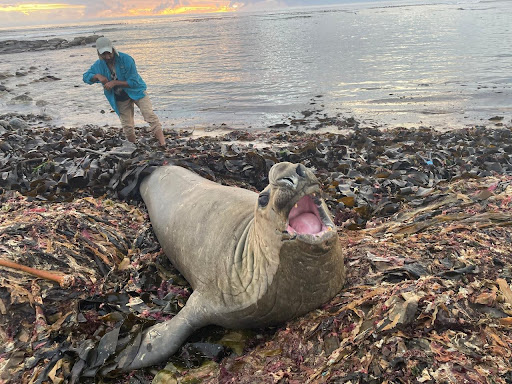
Zafar Monier, former Marion Island seal field researcher (2023/24), and the southern elephant seal, Buffel, at Kommetjie Beach, Western Cape (Photo: Yinhla Shihlomule).
A story of a young Southern Elephant seal spotter
Interestingly, one of the public members, a primary school pupil, Haley Antonello, was a bystander observing from a distance during the tagging and vaccinating of the southern elephant seal that hauled out on Blouberg Beach in Cape Town. She shared her experience with her schoolmates and teachers by giving a talk and bringing awareness about vagrants and what to do when they see one. She reached an audience that is probably not yet on social media to get such critical information about vagrants out there.
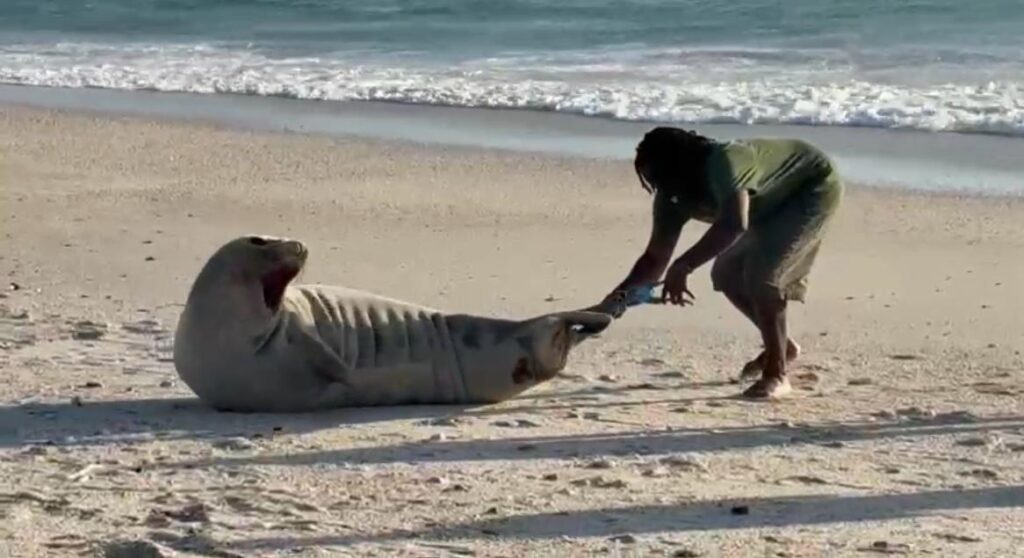
Yinhla Shihlomule (SAPRI’s Top Predator Monitoring Coordinator with extensive seal field experience) tagging a southern elephant seal at Blouberg Beach in Cape Town (Photo: Dr Tamaryn Morris).
Working together to better understand and give our vagrant Southern elephant seal guests a warm welcome
The Two Oceans Aquarium Foundation, and the DFFE, always attend to the cases of vagrants on the South African coasts. Southern Elephant seals have been some of the common vagrants in South Africa. The South African Polar Infrastructure (SAPRI) has been invited to participate with the marking and tagging of seals alongside the Two Oceans Aquarium and the DFFE. This collaboration forms part of ongoing efforts to better understand the movements, health, and behaviour of these marine mammals.
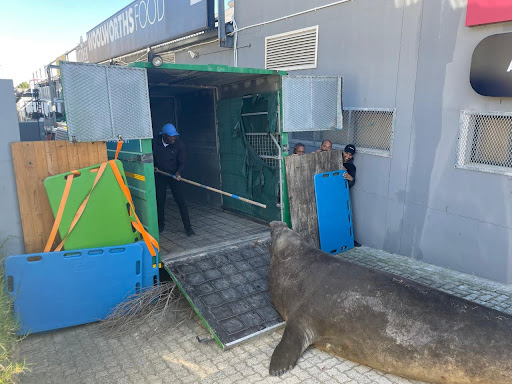
Dylan Manyoka, former Marion Island seal field researcher (2024/2025), guiding the southern elephant seal known as ‘Gordy’ into a trailer at Gordon’s Bay for safe release at the nearest beach (Photo: Yinhla Shihlomule).
Tagging these animals using flipper tags or satellite devices helps track their movements, migration, and behaviour with changing environmental conditions. This provides essential data for long-term conservation planning and contributes to the global understanding of marine megafauna.
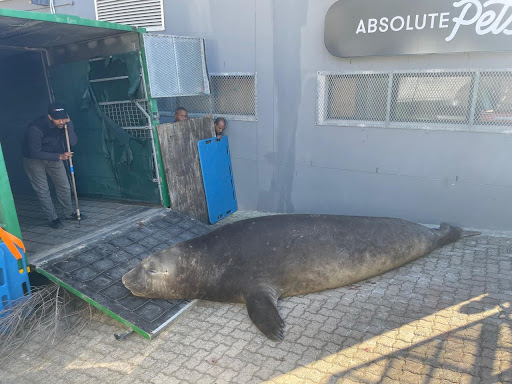
Zafar Monier (2023/2024 Marion Island seal field researcher), assisting in the transport of ‘Gordy’ to the nearest beach after the southern elephant seal hauled out nearly 1 km into Gordon’s Bay (Photo: Yinhla Shihlomule).
SAPRI runs a Long-term Marine Mammal Observation Programme based on Prince Edward Islands, where researchers monitor southern elephant seals and other species as part of South Africa’s broader polar and oceanographic science objectives. This collaboration on the mainland complements SAPRI’s existing work, strengthening our national capacity to monitor and protect these extraordinary animals.
Text supplied by Yinhla Shihlomule (SAPRI Top Predator Monitoring Coordinator).
Rabia Mathakutha, South African Polar Research Infrastructure, 20 August 2025