
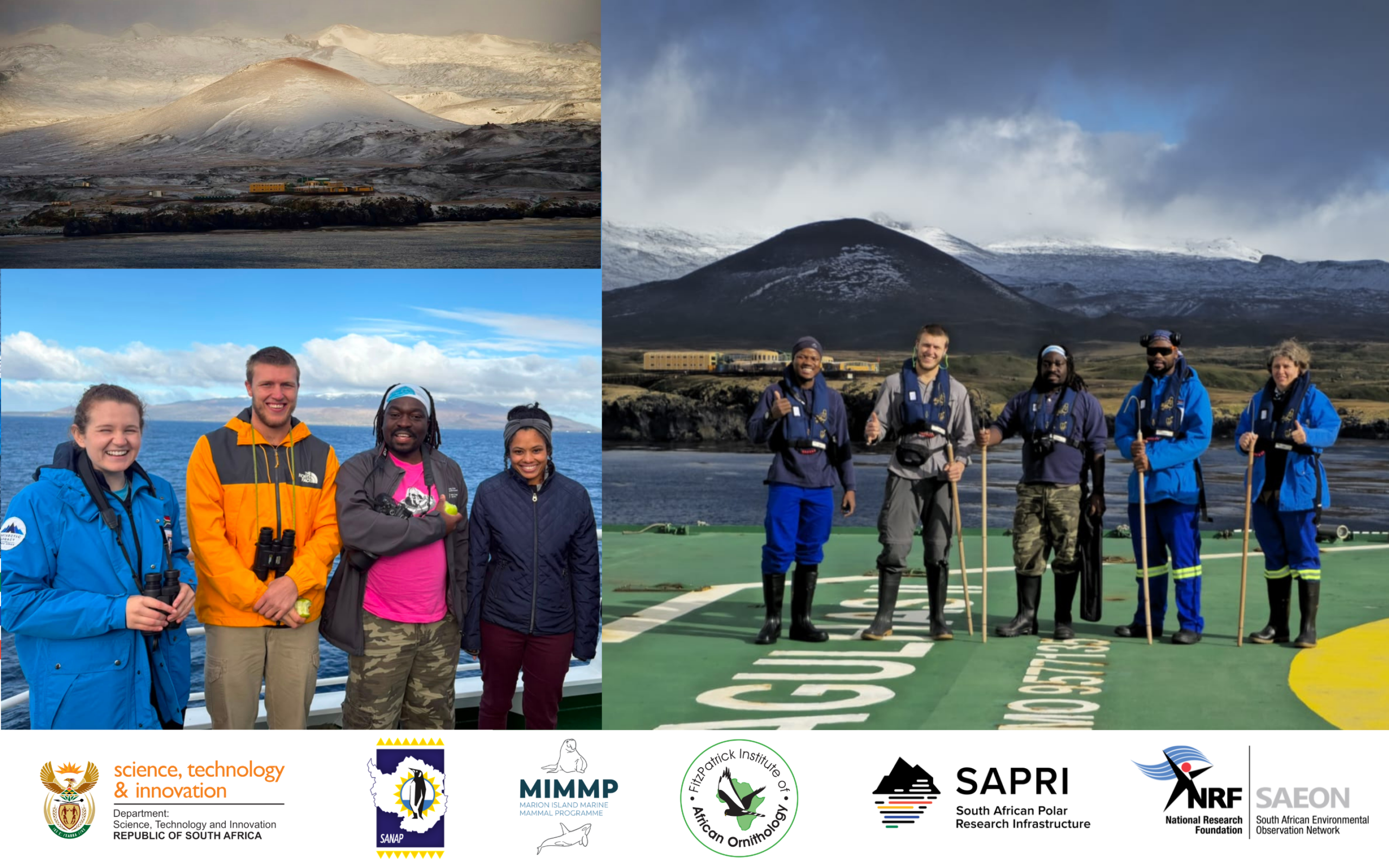
The Marion Island Annual Relief Voyage for the 2026/27 season resumed in early August 2026, following a three-month interruption after the emergency evacuation of the previous overwintering team in May. This marked an important step towards re-establishing South Africa’s permanent occupation and scientific operations on its sub-Antarctic territory.
South Africa’s icebreaker, The S.A. Agulhas II, departed Cape Town on 5 August 2026, carrying personnel, equipment, supplies and essential logistical support required to restart the Marion Island research station.
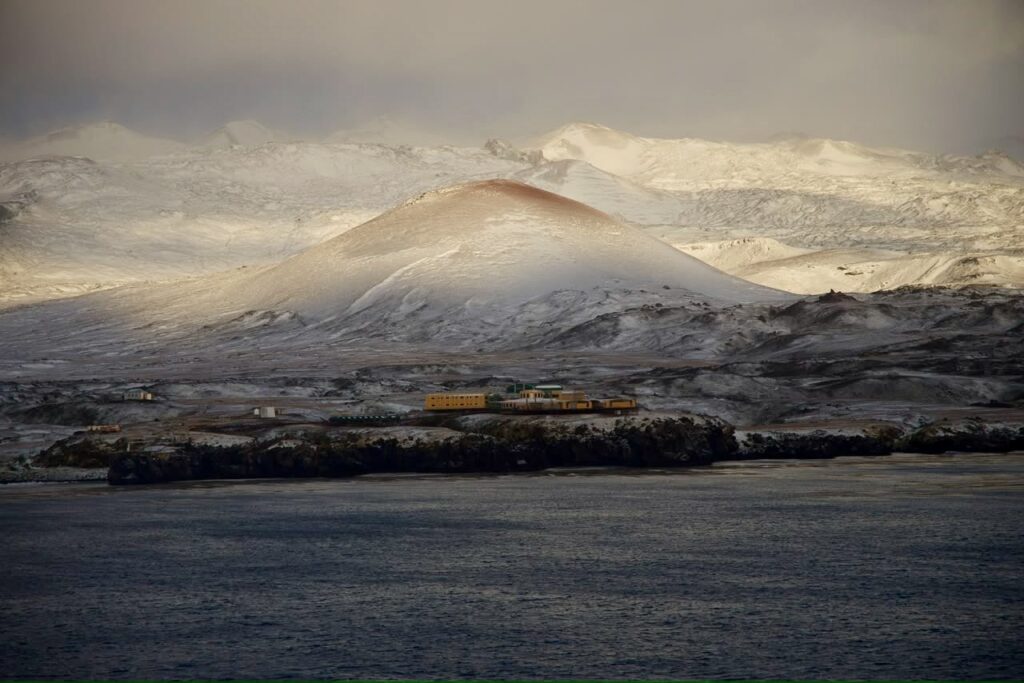
A view of Marion Island and the research station from the S.A. Agulhas II (photo: Marc Limbert)
The evacuation, which took place in May, was necessitated by global fuel supply disruptions affecting the availability of fuel required to operate both the research station and vessel. The subsequent return to the island therefore represented more than the routine annual relief voyage, it was a carefully coordinated effort to restore the base and resume the scientific programmes that rely on continuous observations from Marion Island.
To learn more about why this year’s Marion Island relief voyage departed later than usual, read our article, “SAPRI team departs for Marion Island annual relief voyage“.
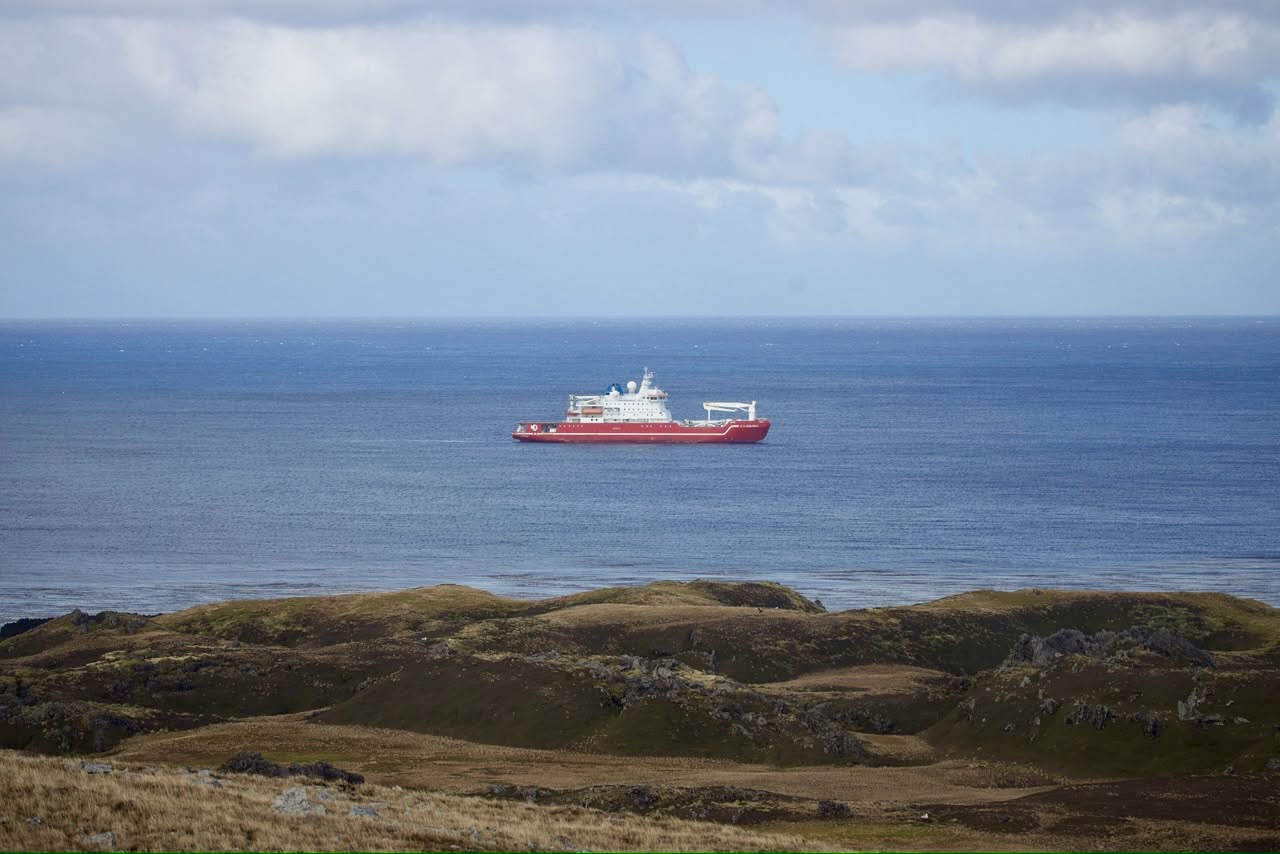
A view of the S.A. Agulhas II from Marion Island (photo: Marc Limbert)
A journey to a remote part of South Africa
Professor David Hedding, the shore-based Chief Scientist for the voyage, reflected on the historical significance of the expedition, noting that “South Africa annexed Marion Island and Prince Edward Island from Great Britain on 29 January 1947 and 4 January 1948, respectively. The annexation was carried out under the codename Operation Snoektown, with the initial occupation party on Marion Island comprising 14 sailors. Construction of the permanent research station subsequently commenced in February 1948”.
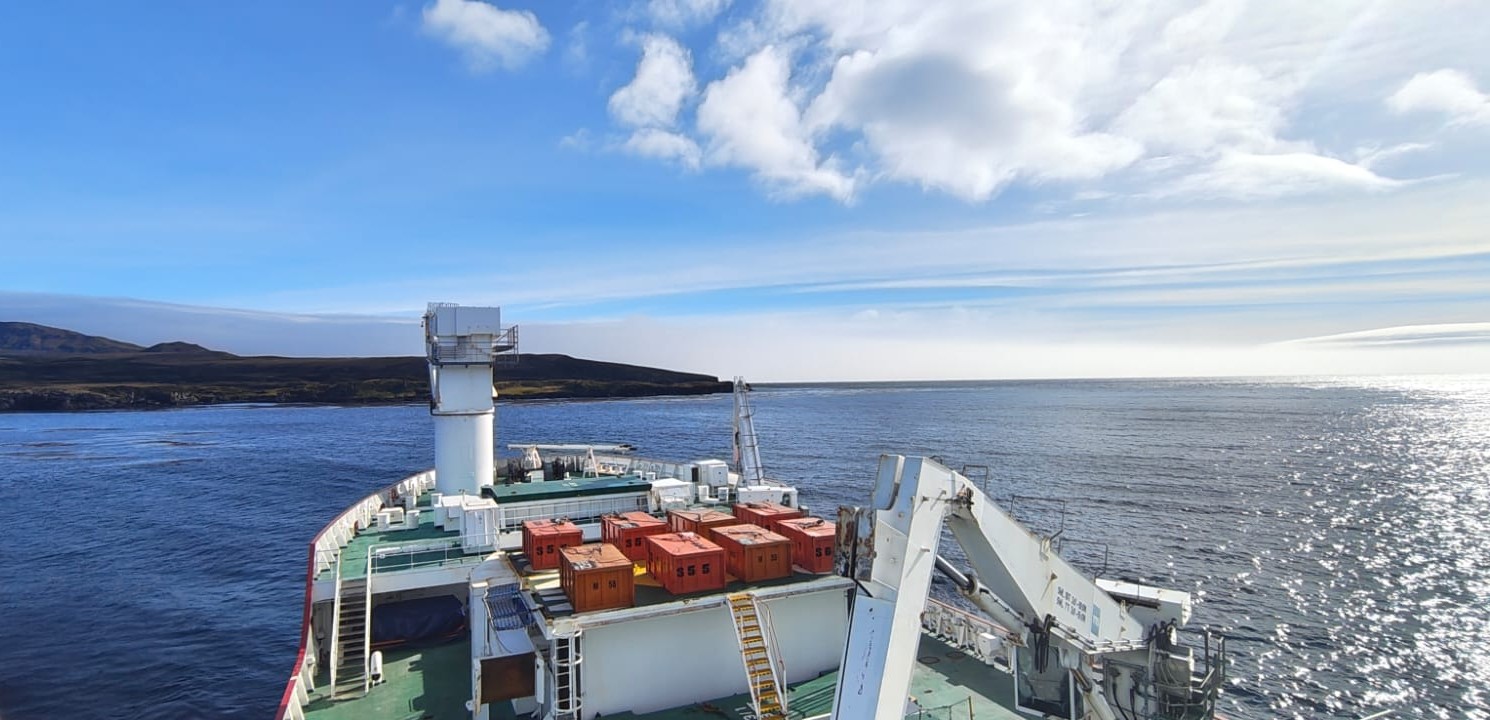
The S.A. Agulhas II arrives at Marion Island (photo: Rhiannon Gill)
The voyage from Cape Town to Marion Island takes approximately four days under favourable conditions when no additional oceanographic research is being conducted, although the journey remains highly dependent on weather and sea conditions. Beyond the logistical importance of the voyage, the time at sea also provides an opportunity for scientists, support personnel and other participants to interact, network and become familiar with one another before spending an extended period working together in the remote Southern Ocean environment.
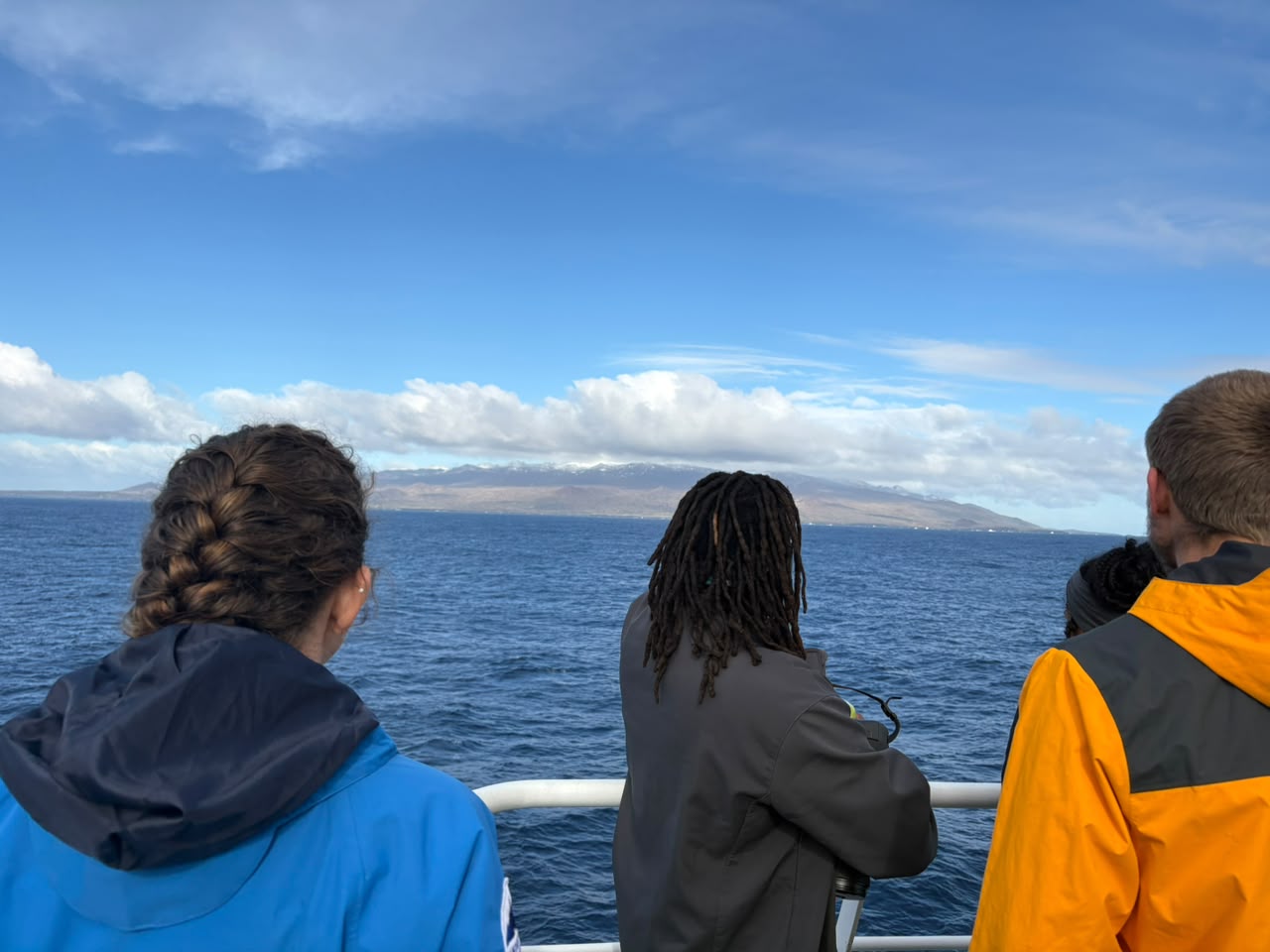
Marion Island in the horizon (photo: Kwanele Khuzwayo)
9 August – Arrival at Marion Island
The S.A. Agulhas II arrived at Marion Island during the morning of 9 August 2026, bringing the expedition closer to its primary objective: restoring the research station and enabling scientific operations to resume.
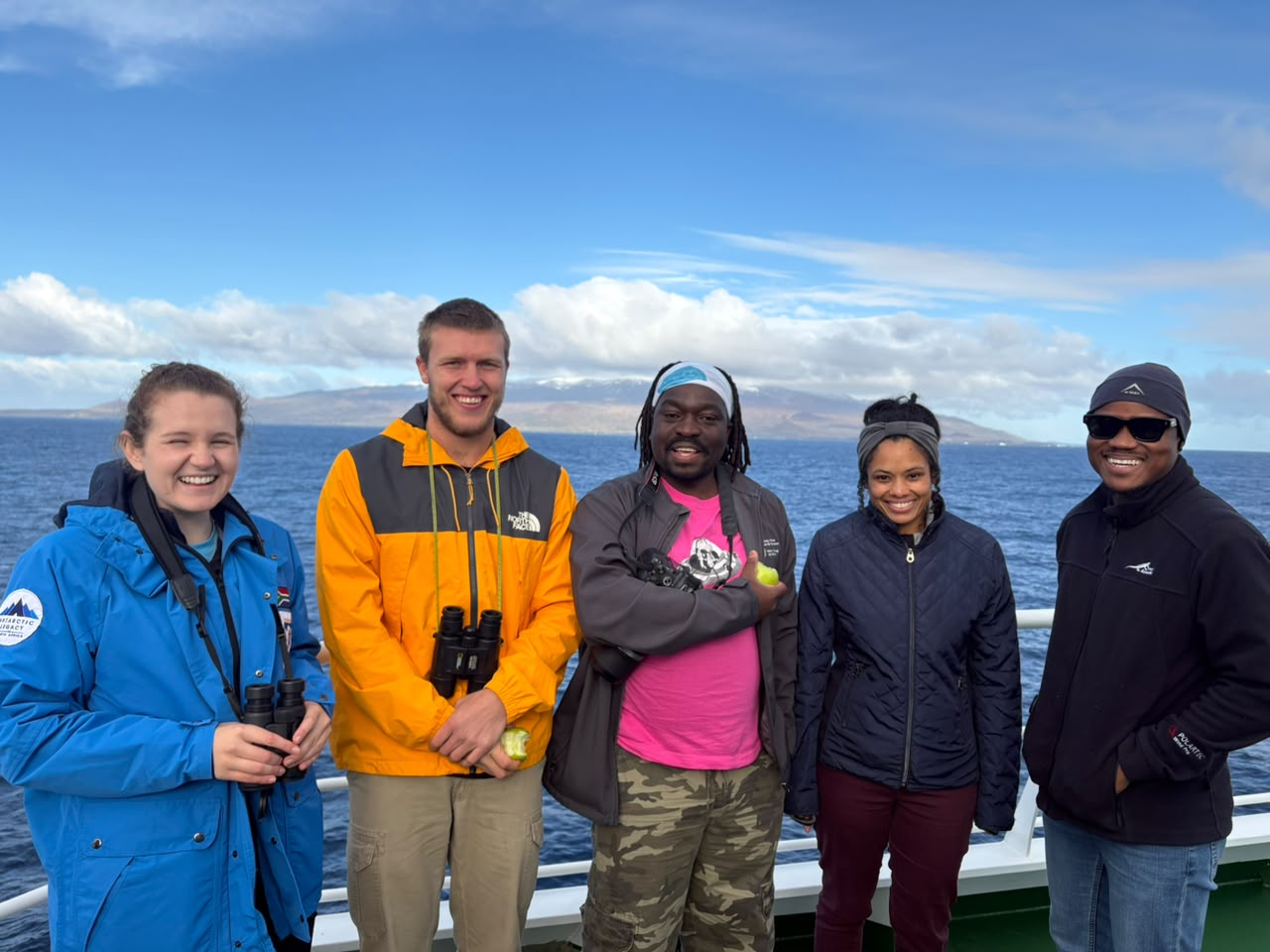
The NRF-SAEON, SAPRI team aboard the S.A. Agulhas II (from left to right: Shani Fourie, Marc Limbert, Yinhla Shihlomule, Jessica Spannenberg, Kwanele Khuzwayo) (photo: Kwanele Khuzwayo)
Later that afternoon, a small inspection team was flown to the island to assess the condition of the research station and its immediate surroundings. The team conducted a rapid assessment before returning to the vessel, providing an initial indication of the conditions on the island and helping inform the next phase of the operation.
10 August – Restarting the research station
On 10 August 2026, a dedicated task team assembled by the Department of Public Works and Infrastructure (DPWI) was flown to Marion Island. Their primary responsibility was to accelerate the restart of the research station’s critical systems and ensure that the base was safe, habitable and ready to support the full range of activities required on the island.
This included preparing the station for scientific research, base maintenance and the logistical requirements associated with resupplying the network of field huts distributed across the island.
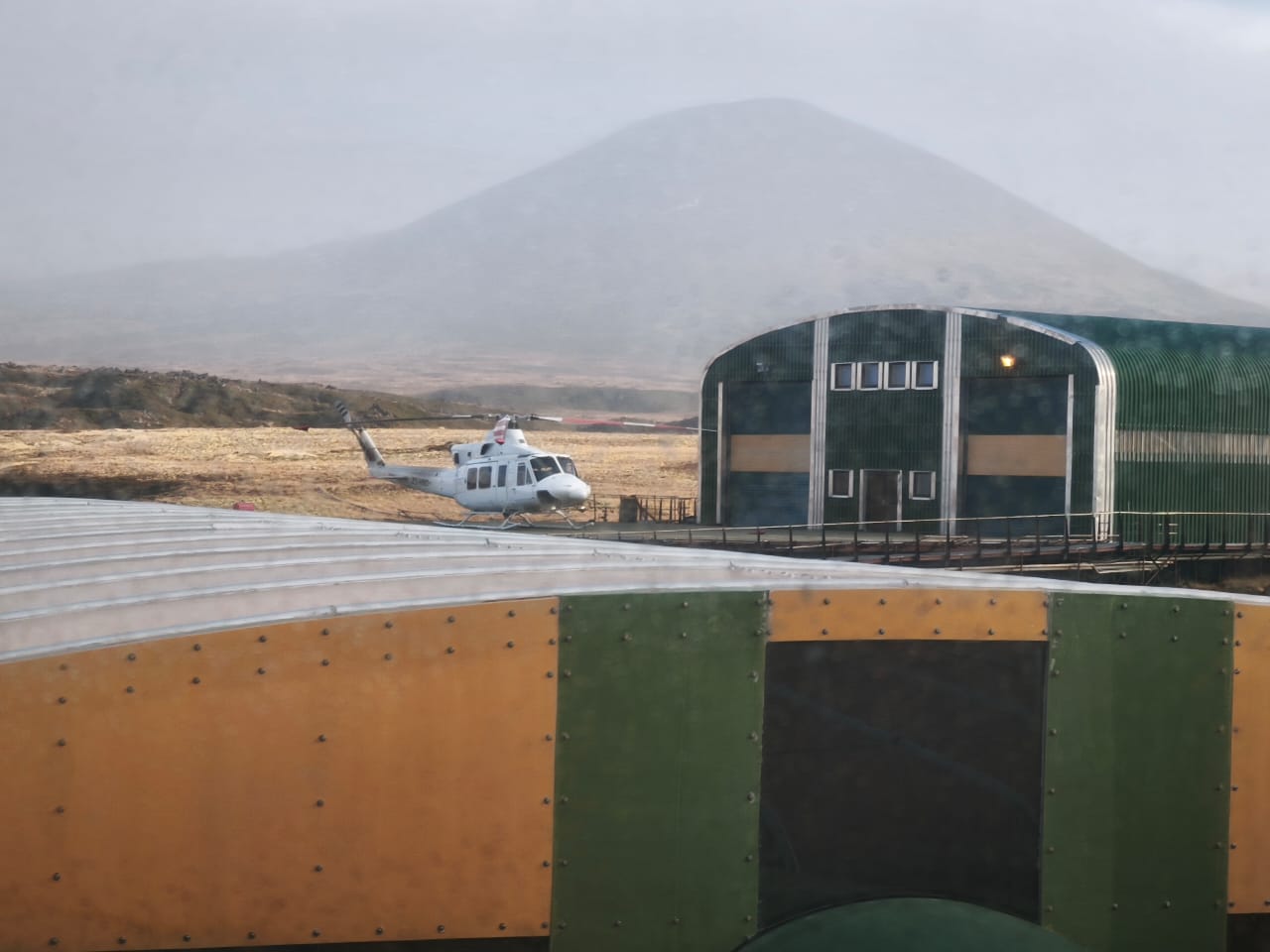
A helicopter operation at the Marion Island research station (photo: Megan Clarkson)
Marion Island has eight coastal field huts, as well as an additional field hut located in the interior of the island at approximately 700 m above sea level. These huts are critical to field-based research, providing researchers with shelter and operational bases while conducting observations across the island.
While the DPWI team worked to restore the main research station, the South African Polar Research Infrastructure (SAPRI) field team was already preparing to make the most of the limited operational window ahead.
Getting ahead of the field campaign
With a demanding field campaign awaiting them, the SAPRI team adopted a proactive approach. While the DPWI task team concentrated on restarting the base and its systems, a team of SAPRI field assistants comprising seal and killer whale field researchers, was flown to Cape Davis field hut via a helicopter to begin their first census and weighing session.
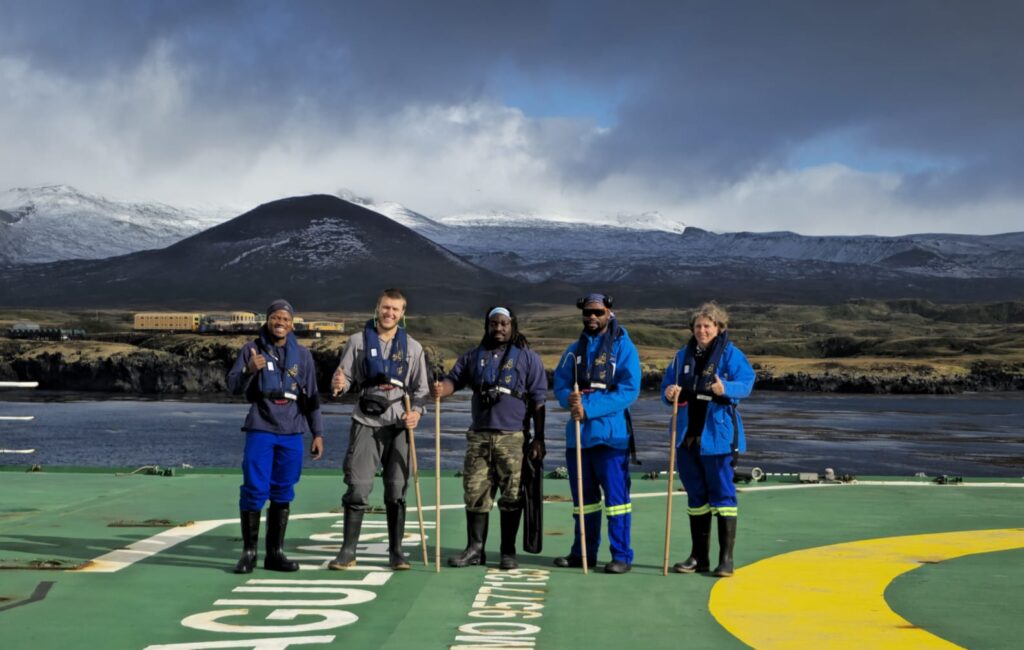
SAPRI’s Seal and Killer Whale Field Researchers aboard the S.A. Agulhas II getting ready to be flown to the island for their first field mission (from left to right: Kwanele Khuzwayo, Marc Limbert, Yinhla Shihlomule, Asive Tywana, Tara Naeser) (photo: Michelle Risi Jones)
This allowed scientific activities to commence in parallel with the restoration of the research station, ensuring that valuable field time was not lost and that long-term observations programmes could resume as quickly as conditions allowed.
The Cape Davis fieldwork marked an important first step in re-establishing the scientific observation programmes following the disruption earlier in the year.
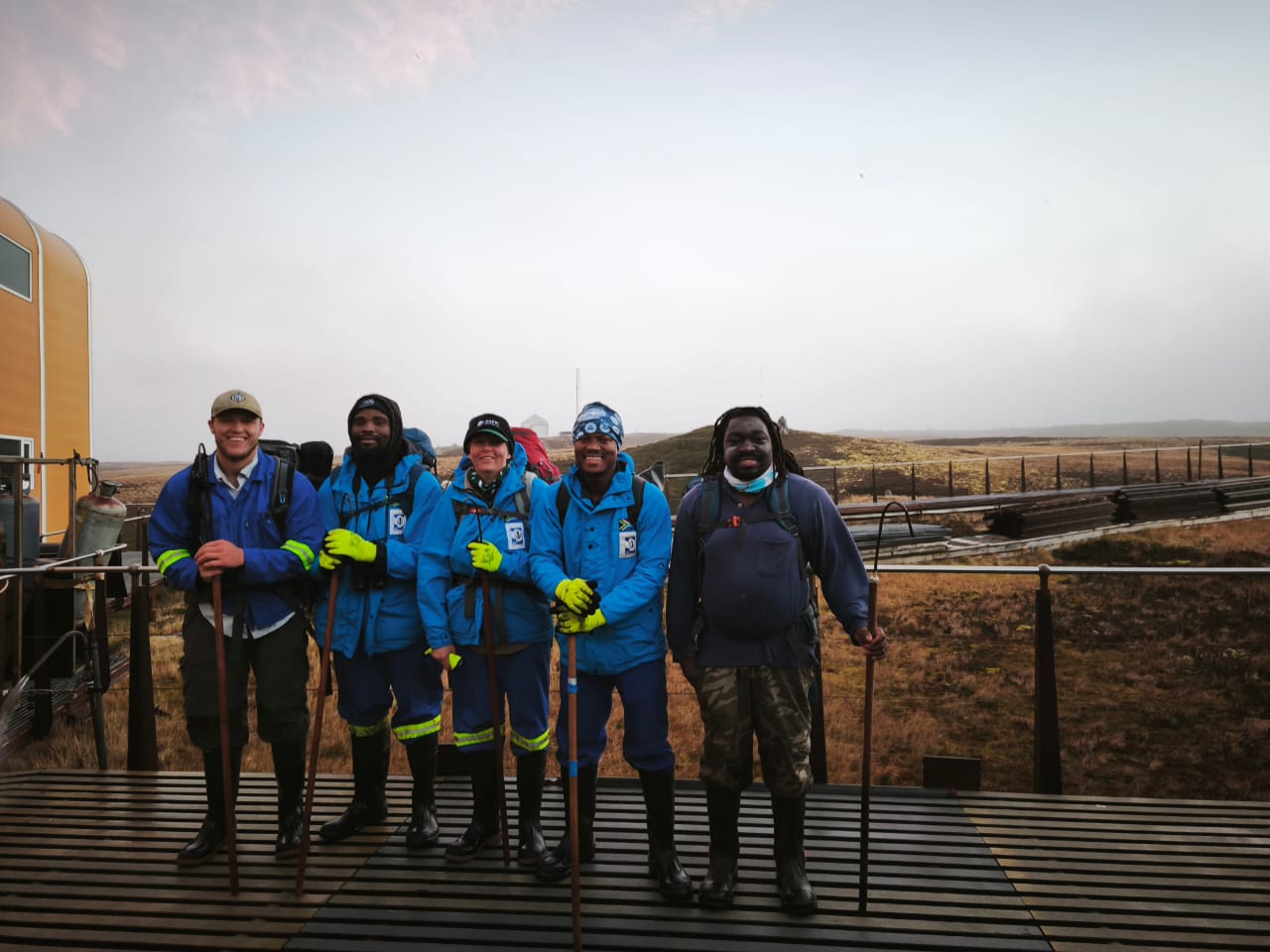
SAPRI’s Seal and Killer Whale Field Researchers after they returned to the Marion Island research station after their first field mission (from left to right: Marc Limbert, Asive Tywana, Tara Naeser, Kwanele Khuzwayo, Yinhla Shihlomule) (photo: Megan Clarkson)
Four days later – The research station is operational
The work undertaken by the DPWI task team progressed rapidly. Within four days, the team successfully resuscitated the critical systems at the Marion Island research base, allowing the station to return to a safe and habitable condition.
With the research station operational, all science personnel were flown from the S.A. Agulhas II to Marion Island on 13 August 2026 via helicopters. Their arrival signalled the transition from the logistical phase of the relief operation back to full scientific operations.
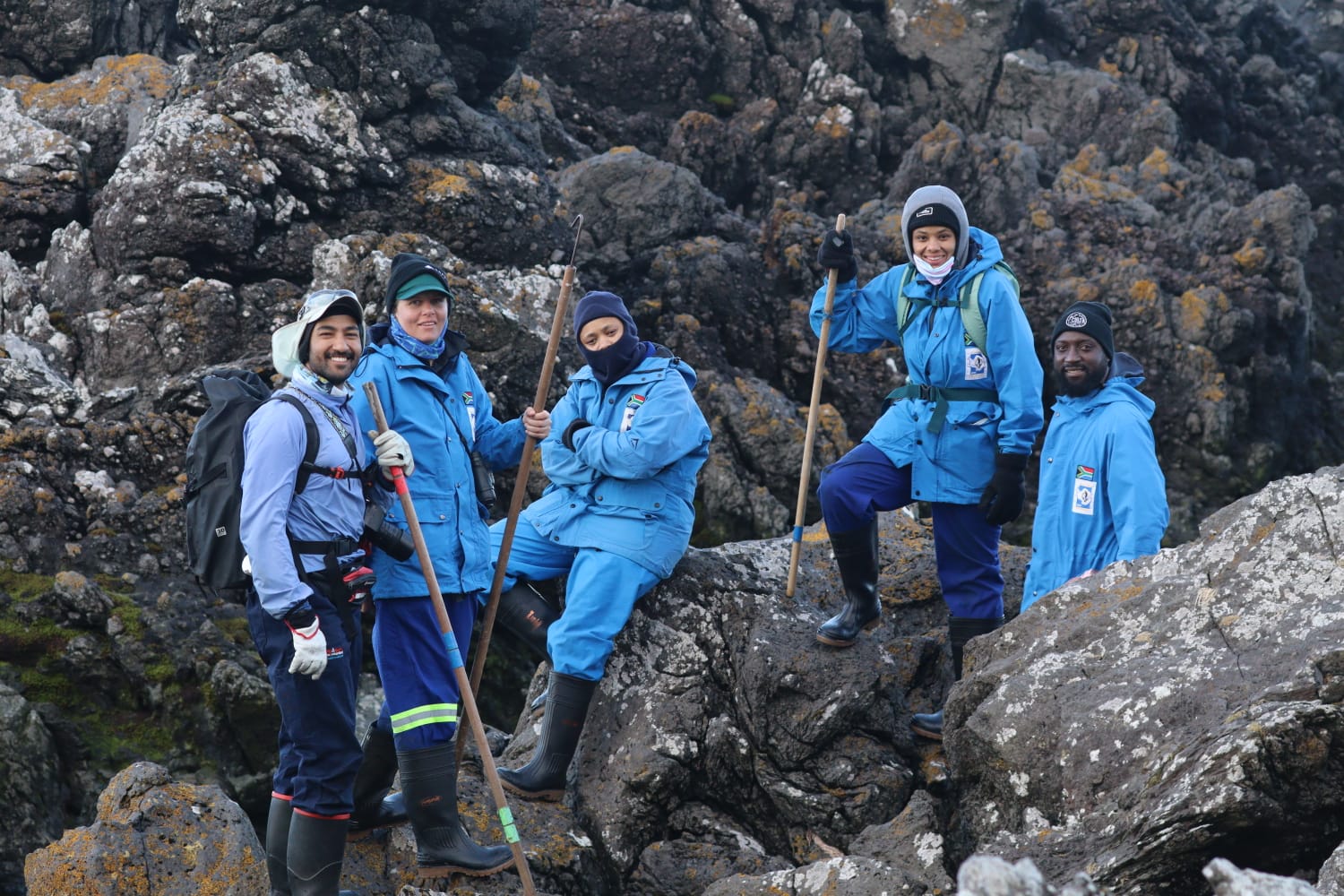
The takeover and overwintering team members at Marion Island (from left to right: Zafar Monier, Tara Naeser, Zintle, Jessica Spannenberg, Londani Rambau) (photo: Megan Clarkson)
By 14 August 2026, science activities had officially resumed across Marion Island.
For the National Research foundation’s South African Environmental Observation Network (NRF-SAEON) and SAPRI, this represented a significant milestone. The successful restoration of the station enabled researchers and field teams to return to the work that underpins South Africa’s long-term environmental observation programmes – from monitoring the island’s wildlife and ecosystems to collecting the environmental data needed to understand changes across the sub-Antarctic region.
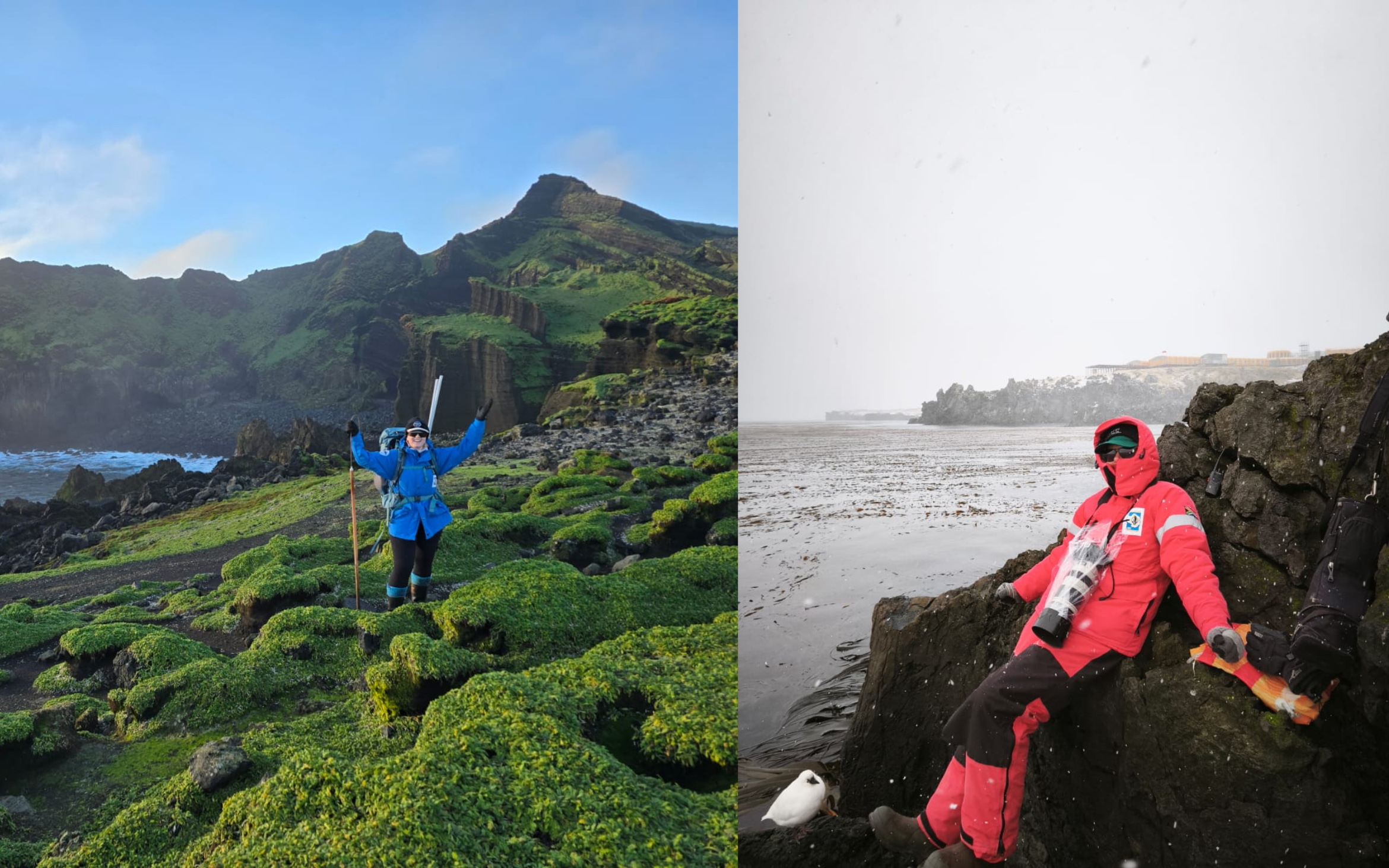
The SAPRI Seabird Researcher, Shani Fourie (left) and Killer Whale field Researcher, Tara Naeser (right), in the field (photos: Shani Fourie and Megan Clarkson)
The successful operation was made possible through the coordinated efforts of DFFE, DPWI, the South African Weather Service, NRF, SAEON, SAPRI, the expedition’s scientific teams and the crew of the S.A. Agulhas II. Their collective efforts ensured that, despite an extraordinary disruption to the normal relief schedule, South Africa’s long-term scientific presence on Marion Island could be restored and research could continue.
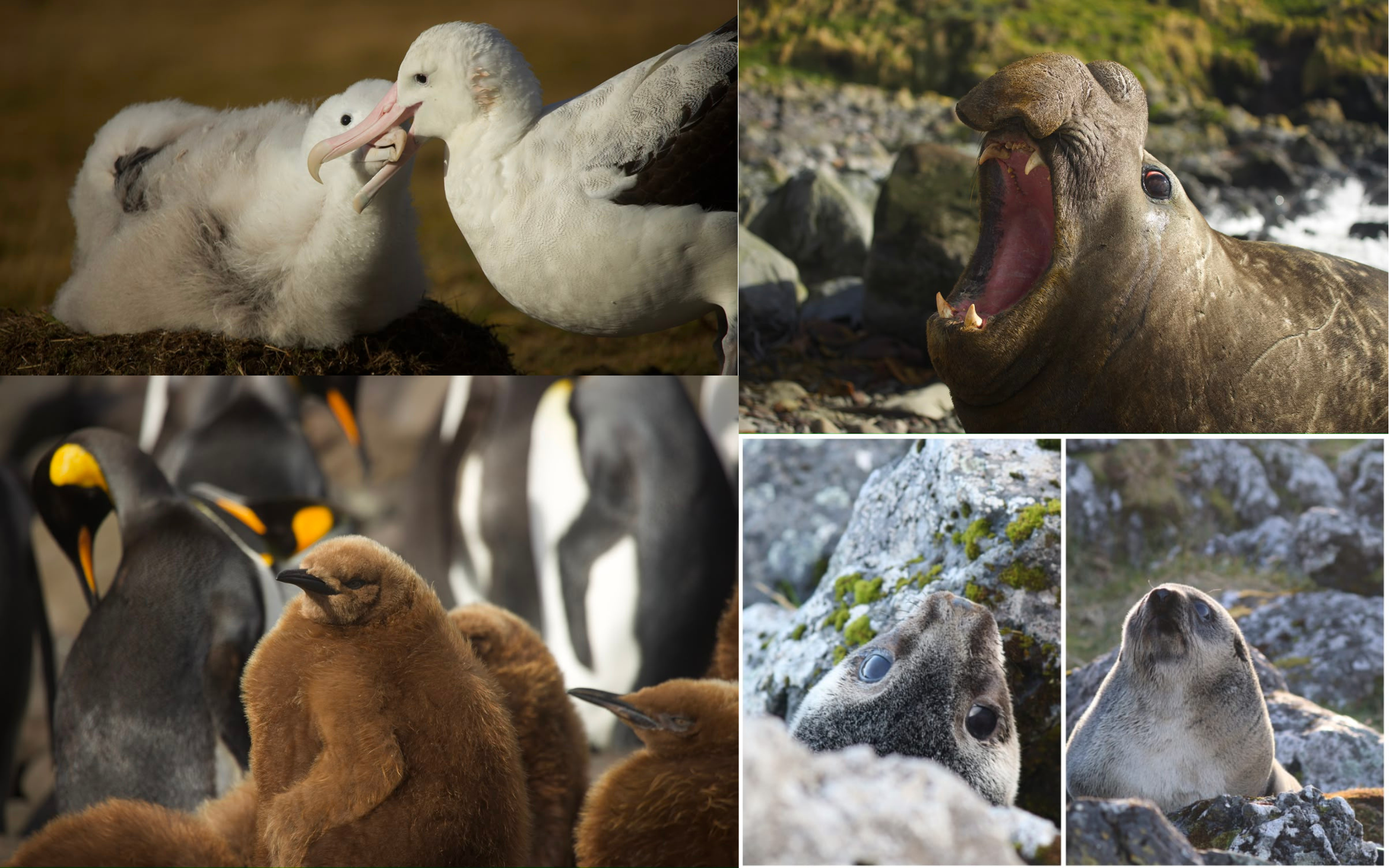
Marion Island biodiversity (photos: Marc Limbert, Megan Clarkson)
The island is operational. The scientists are back in the field. And the long-term observations continue.
Written by Abuyiselwe Nguna, Research Coordinator: Long-term Observations on Land (LTO-LAND), SAPRI
Rabia Mathakutha, South African Polar Research Infrastructure, 24 August 2026