
Marion Island, a remote volcanic island in the southern Indian Ocean, is home to a thriving population of southern elephant seals (Mirounga leonina). Southern elephant seals are an integral part of the island’s ecosystem, and they serve as key indicators of the health of our oceans and planet. Although the Marion Island southern elephant seal population is currently increasing, a large population decline in the 1900’s highlighted the need for long-term monitoring. The culling and harvesting of these marine mammals in the seal hunting era initially caused a sharp population drop, but the population continued to decline after the end of the seal hunting. With this backdrop, a long-term monitoring programme was established in 1983 and continues today.
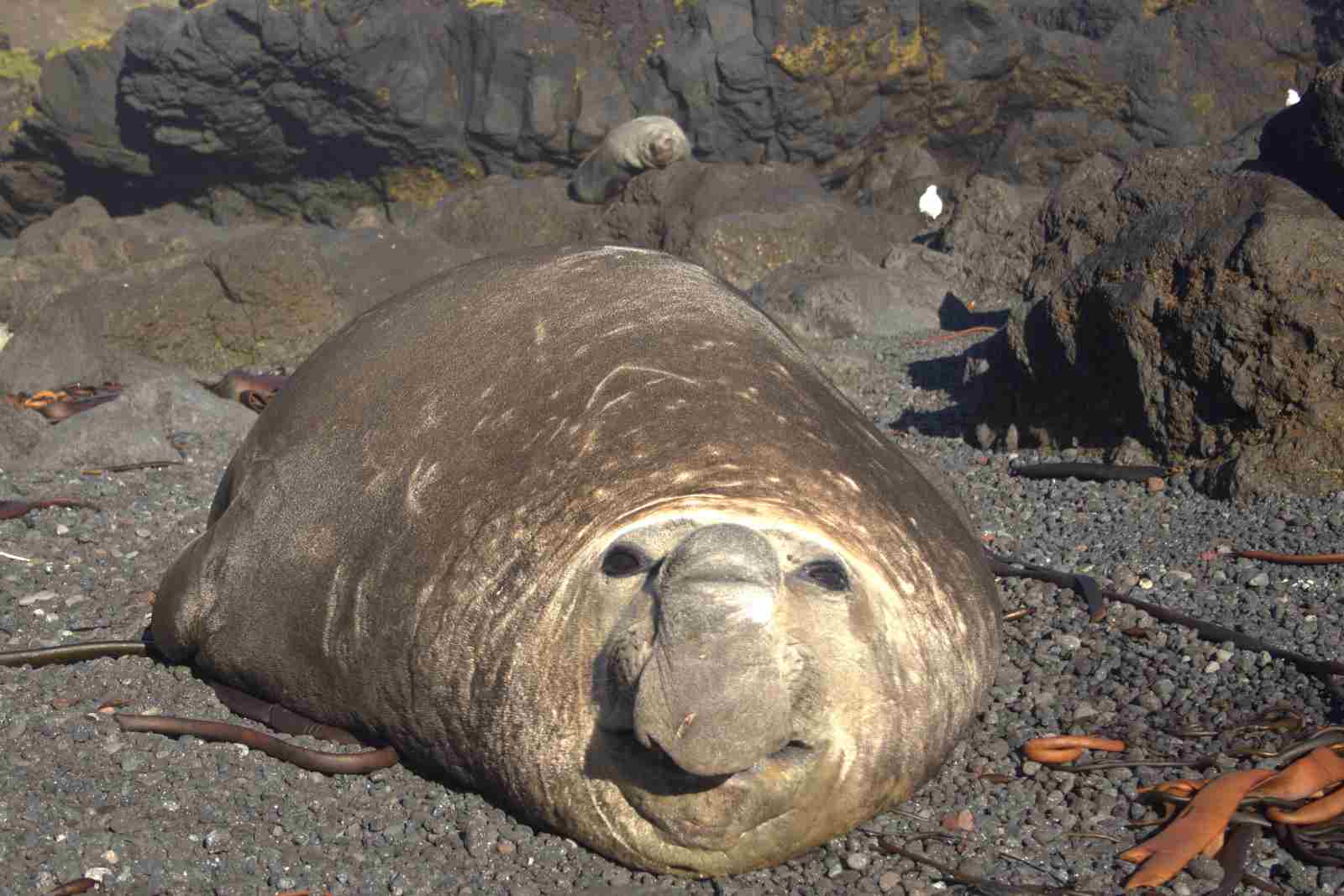
Southern elephant seal on Marion Island (photo by Yinhla Shihlomule)
Our role as sealers
As South African Polar Research Infrastructure (SAPRI) seal researchers, or “sealers”, our team’s role is to continue the southern elephant seal long-term monitoring programme that has been conducted for over 40 years. Every year, nearly all the southern elephant seal pups that are born on Marion Island are tagged with uniquely numbered and colour-coded tags. This allows every tagged seal to be identified when it hauls out on the beaches of the island in subsequent years. With the majority of Marion-born southern elephant seals being identifiable, the core of the long-term monitoring work consists of counting the number of seals on the beaches and reading the tag numbers of previously tagged seals. This is referred to as ‘censusing’ and serves as a method to monitor the presence of individual southern elephant seals on the island and their movement patterns.
The majority of southern elephant seals that haul out on the beaches of Marion Island do so on the eastern coastline because inaccessible rugged cliffs dominate the western coastline. Our team conducts censuses on the busiest beaches on the eastern coastline every 9 to 10 days. The beaches along this stretch of coastline are divided into 40 beach codes and in total they take approximately five and a half days to census. The beaches on the western side of the island are censused once a month.
The data we collect provides essential insights into the southern elephant seal population growth and decline. This allows trends and patterns to be identified, which can be used to inform conservation efforts.
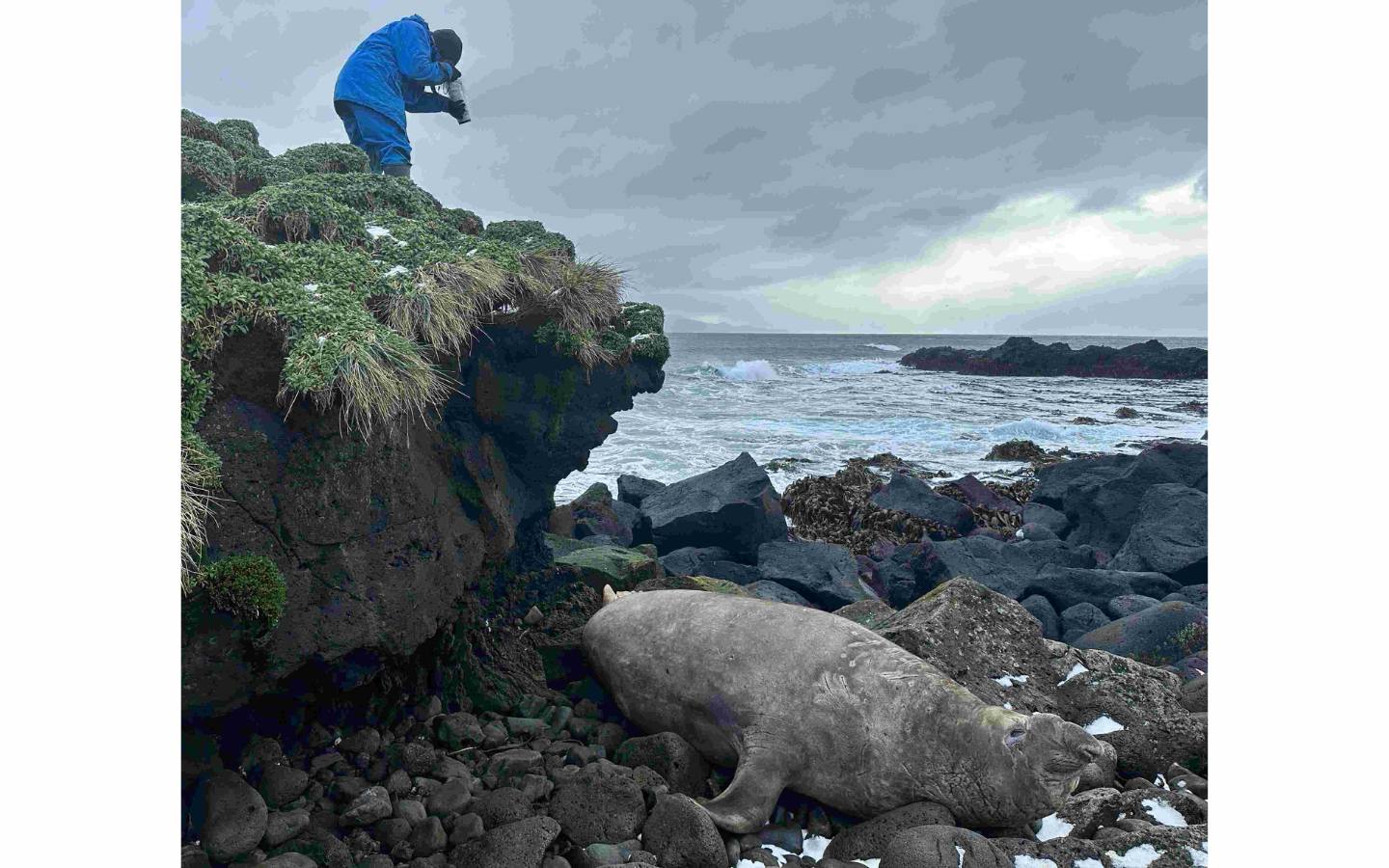
Chandler Patel using a camera to read a bull’s tag number (photo by Camilla Smyth)
The times of year: winter haul out, breeding season, and moult
Three different times of year are recognised in the monitoring of southern elephant seals on Marion Island: winter haul out (April to August), breeding season (August to November), and moult (November to April).
During winter haul out, relatively young southern elephant seals haul out onto the beaches for a few weeks and then return to sea. This is a relatively quiet time of year, but it is followed by the breeding season which is a very busy and exciting time on the island.
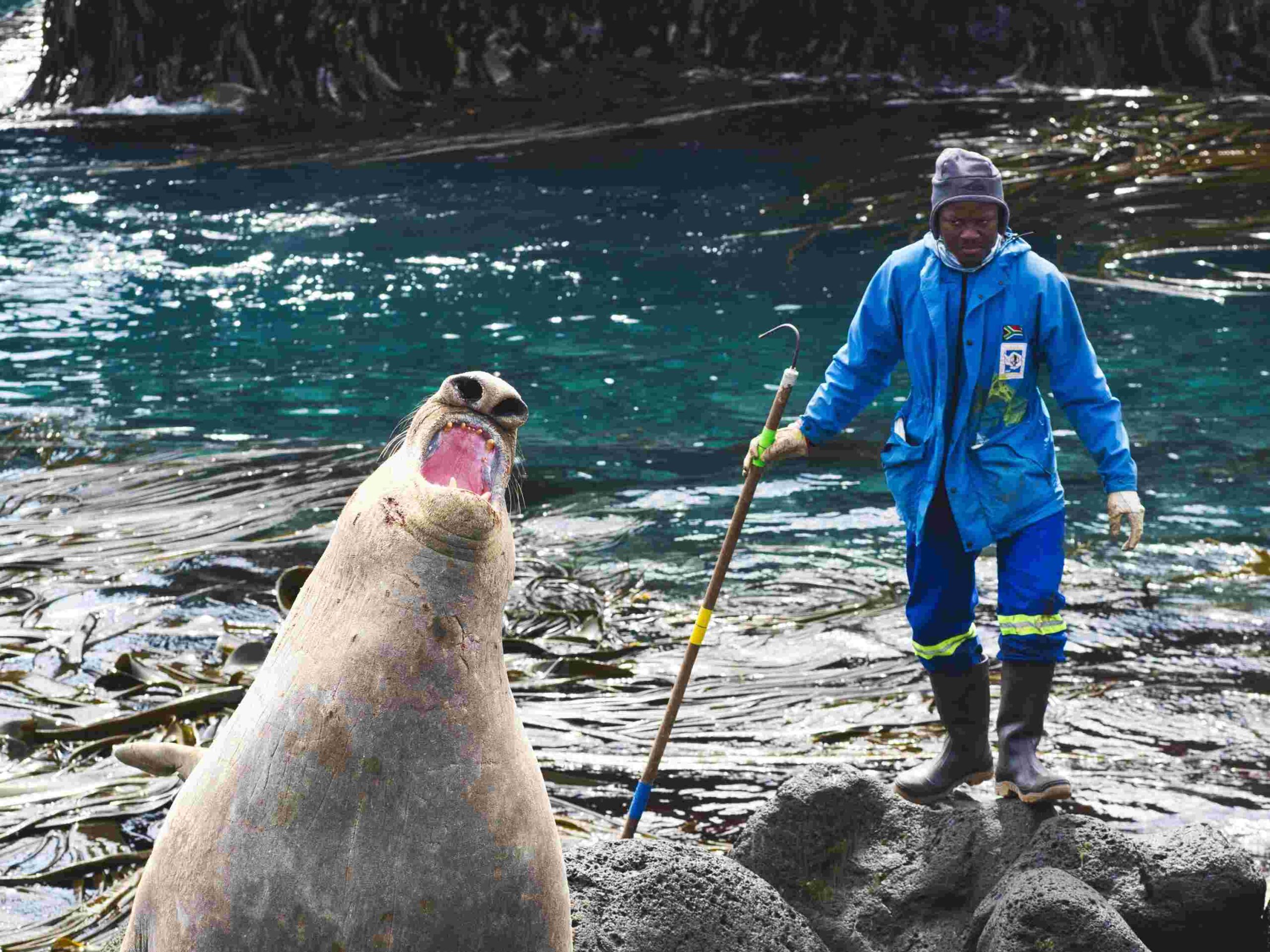
Kwanele Khuzwayo checking a southern elephant seal tag at Cape Davis Beach (photo by Roelf Daling)
As breeding season commences, we welcome the arrival of the adult male bulls around the middle of August and the arrival of the pregnant adult females around the middle of September. Southern elephant seals breed in harems which means the males fight for access to a group of females. Typically, one male per beach will become the beach master and will win access to all the females present in that harem. Breeding season is very physically demanding for both adult males and females. To monitor mass loss and energy expenditure, we conduct photogrammetry projects on the breeders upon arrival and prior to departure from the island. This entails taking photographs of the animals from specific angles and allows body mass estimates to be calculated.
After the females give birth, the pups suckle for about 3 to 4 weeks. Then, after the pups wean, the adult females mate and return to sea. The weaned pups, referred to as ‘weaners’, remain on the beaches, and it is at this stage that the tags are attached to their hind flippers. This is a big task for the sealers, and this year we tagged over 1000 weaned pups. Additionally, approximately 115 to 200 weaners are weighed every year during breeding season, which is another big task for the sealers.
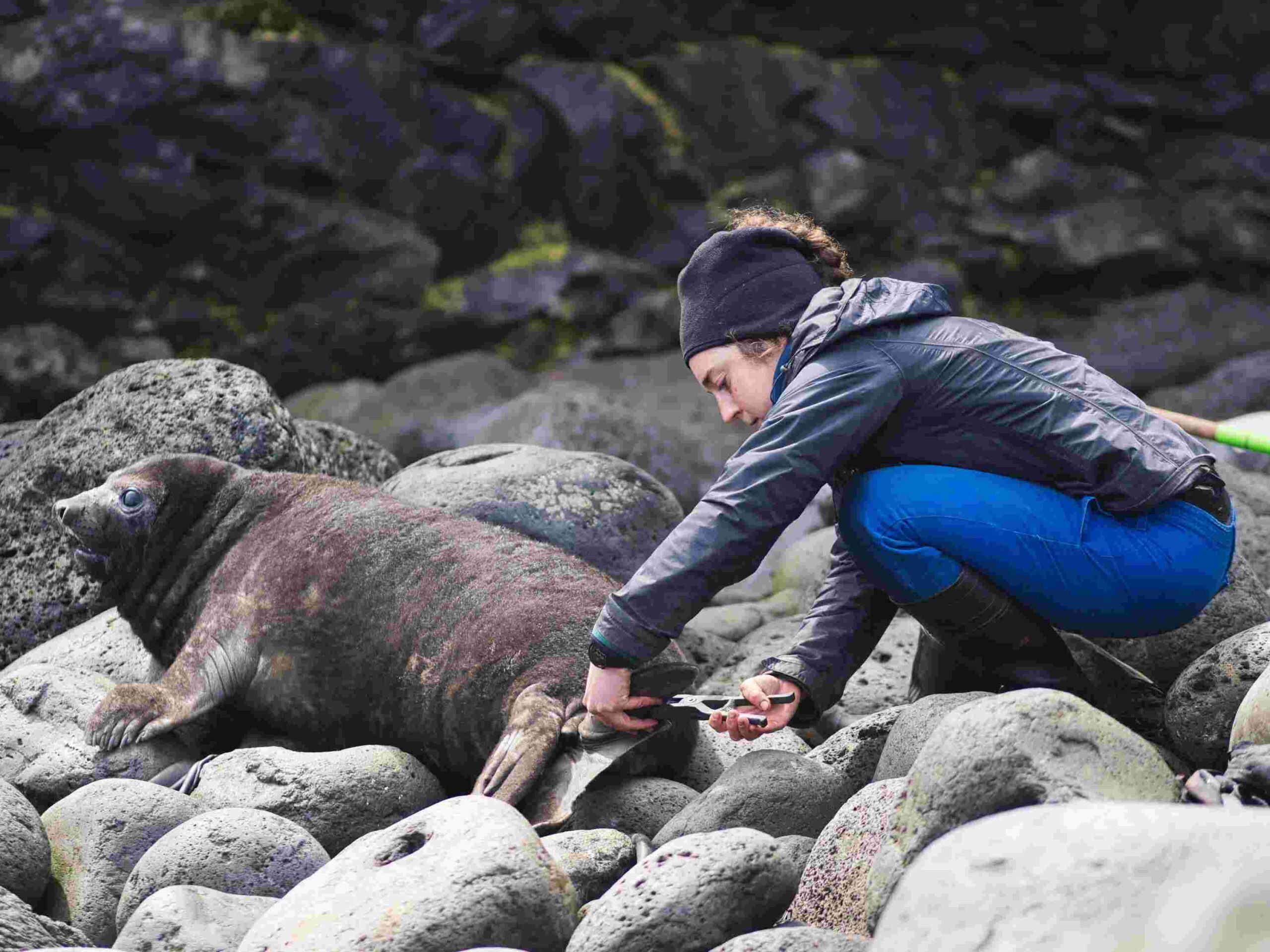
Camilla Smyth tagging a pup with a supersmall tag at Cape Davis Beach (photo by Roelf Daling)
Following the return of the breeders to sea, the moulting season begins. During this time, southern elephant seals again haul out onto the beaches to moult. Moulting refers to the shedding and replacement of the elephant seals’ hair and top layer of skin. It is a process that takes approximately 3 to 5 weeks to complete. During this time, in addition to continuing our regular censuses and photogrammetry projects, we collect moult samples for analysis.
Challenges and rewards
Working as seal field researchers is a very rewarding job, but it also comes with challenges. One of the greatest challenges is the harsh weather. Marion weather is often relentless and unforgiving, and we often find ourselves censusing in strong winds, rain, snow, ice pellets, and cold temperatures. Our schedule is not very flexible, which means we work outside come rain or shine. The work is also very physically demanding. We spend a lot of time on our feet and cover large distances to census all the beaches. Additionally, we need to make sure that we do not get bitten. Although this is not a common occurrence, it is a risk inherent to the job and it is something we need to be constantly aware of, specifically during breeding season.
However, with these challenges come many benefits. We spend so much time on the coast that we observe things we would never otherwise see. We have seen vagrant leopard seals, elephant seals give birth and some spectacular killer whale sightings. It is also very rewarding to be able to track individual seals and watch the cycle of life on the island. We also work with the two species of fur seals on the island, which is another rewarding aspect of the job.
Not very many people have the chance to come to this island, and we are some of the lucky few who have. In addition to our inspiring work on seals, the other wildlife and scenery on the island is spectacular and sometimes we have the extra opportunity of being able to help the bird researchers with their work. Although it is challenging at times, being a sealer on Marion Island is an experience of a lifetime and an experience that we would trade for no other.
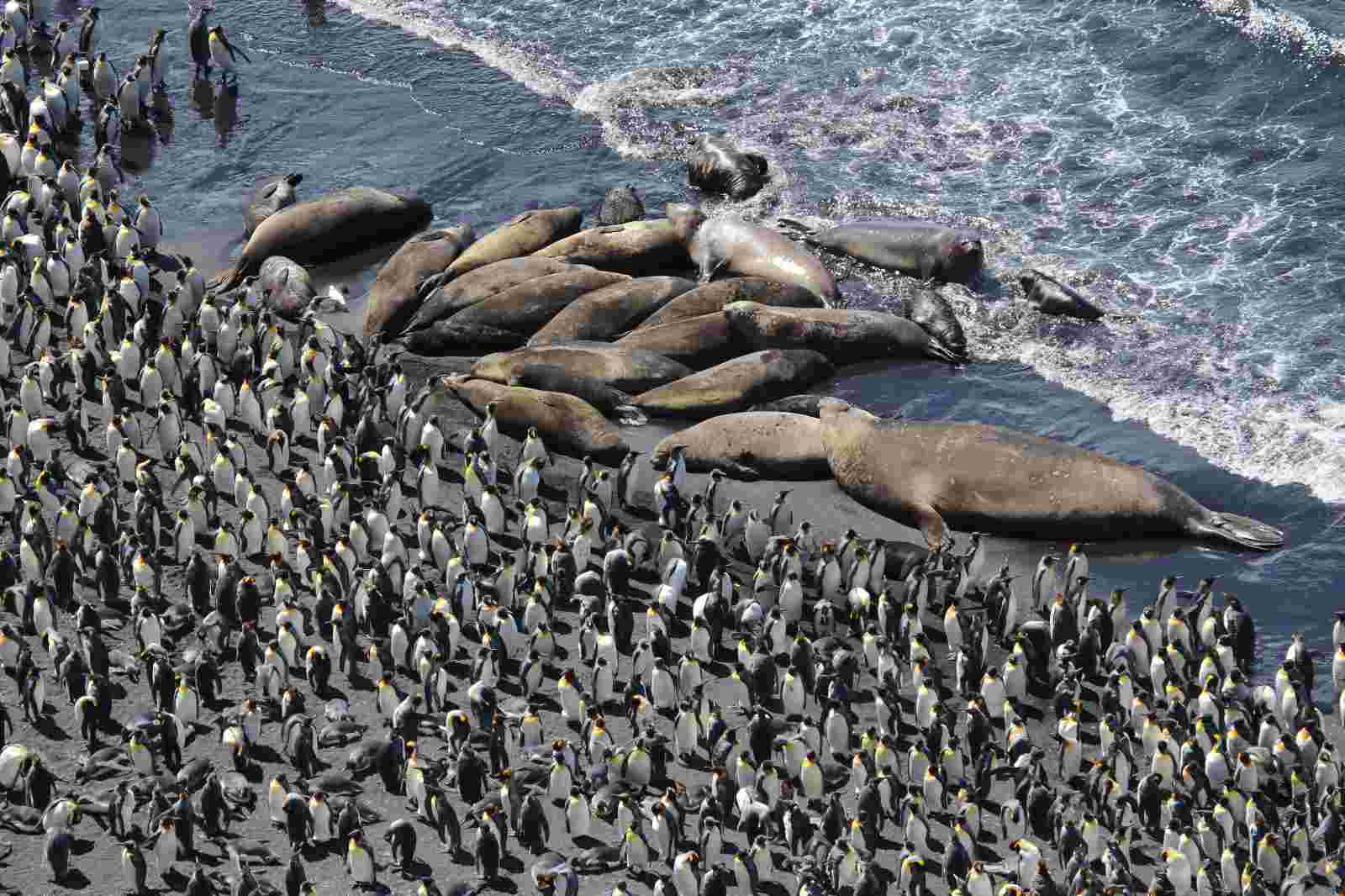
Elephant seal colony on Marion Island (photo by Yinhla Shihlomule)
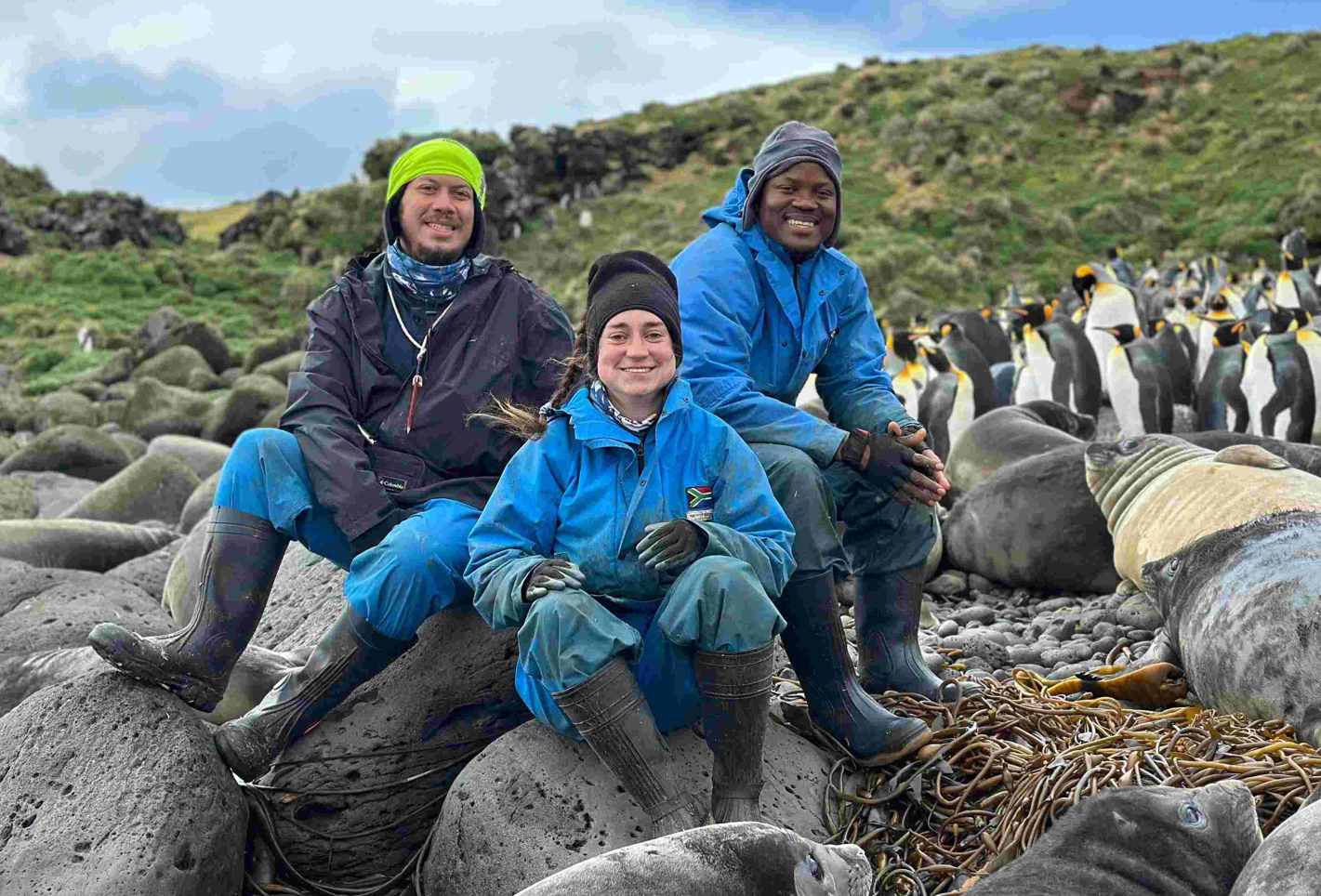
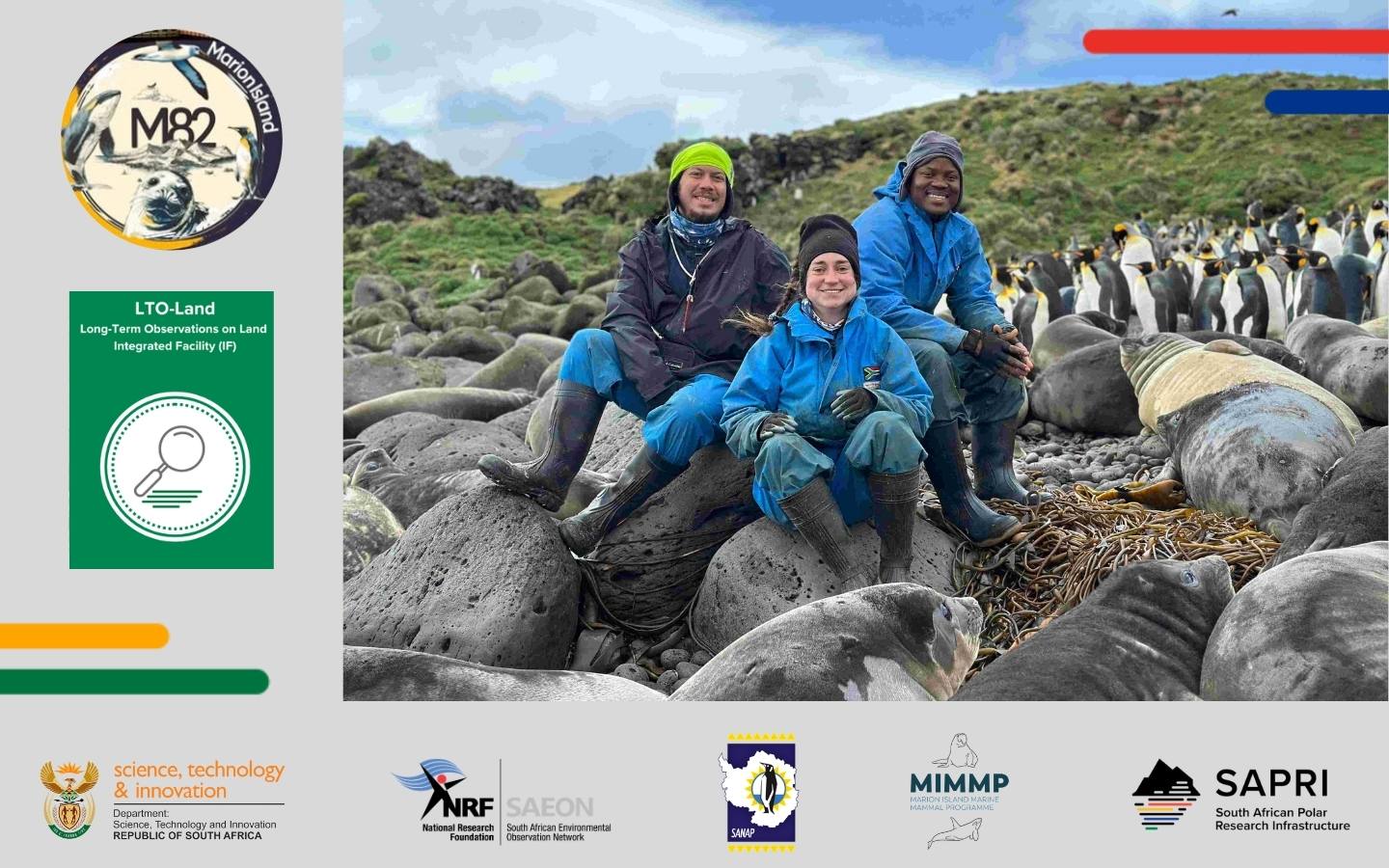
Chandler Patel, Camilla Smyth and Kwanele Khuzwayo enjoying a moment with weaned southern elephant seal pups during a weighing session at Archway Beach (photo by Mndeni Hlatshwayo)
Written by: Kwanele Khuzwayo, Camilla Smyth and Chandler Patel – M82 sealers
Anne Treasure, South African Polar Research Infrastructure, 25 February 2026