
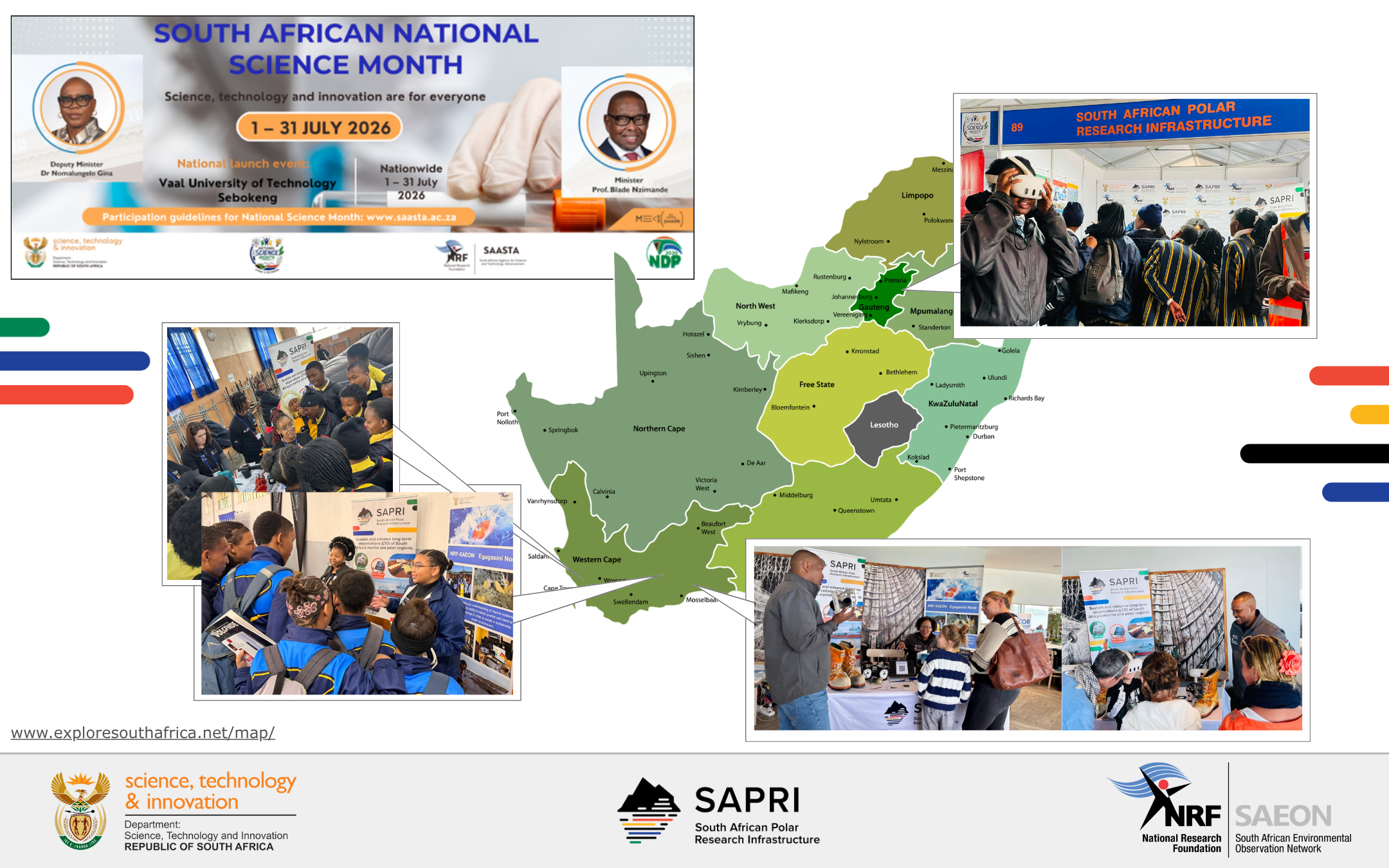
July 2026 marked a significant milestone for public engagement with science in South Africa as the Minister of Science, Technology and Innovation, Professor Blade Nzimande, officially elevated National Science Week into a month-long National Science Month (NSM), running from 1–31 July. Under the inspiring theme, “Science, Technology and Innovation are for Everyone,” the expanded initiative reflected the South African’s government’s commitment to making science more accessible, inclusive and relevant to every South African.
As one of the Department of Science, Technology and Innovation’s (DSTI) national research infrastructures, the South African Polar Research Infrastructure (SAPRI), and its host, the NRF-SAEON Egagasini Node, proudly participated in a series of outreach and engagement activities throughout the month. From Gauteng to the Garden Route, the Central Karoo to the Eastern Cape, and Cape Town, SAPRI and NRF-SAEON connected thousands of learners, educators, researchers and members of the public with the fascinating world of marine and polar science.
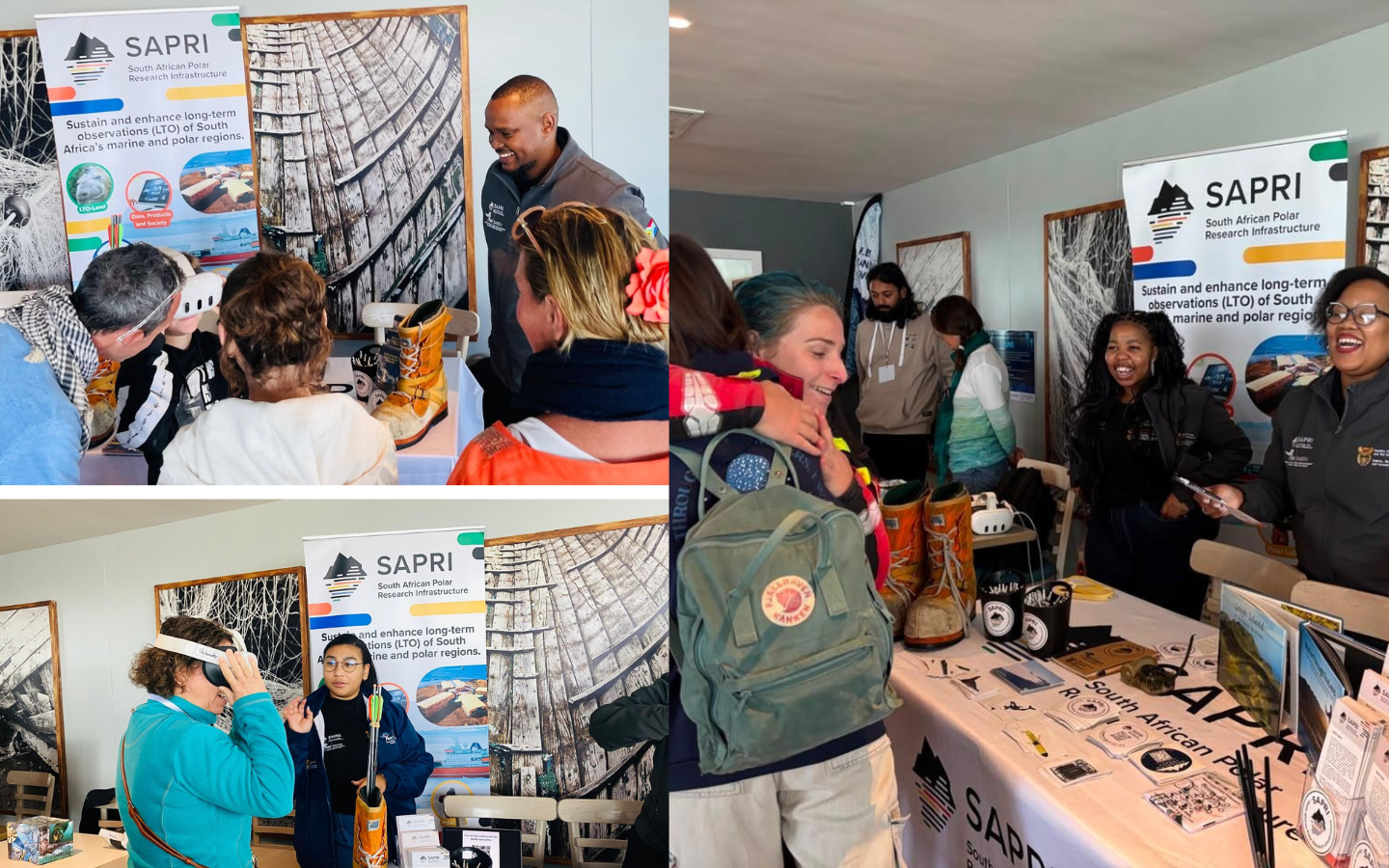
The SAPRI and NRF-SAEON team engaging delegates of the Plett Ocean Festival Marine Science Symposium in Plettenberg Bay
The launch of the inaugural National Science Month
The inaugural National Science Month was officially launched on 4 July 2026 at the Vaal University of Technology, Southern Gauteng, Science and Technology Park in Sebokeng. The launch brought together public officials, research institutions, universities, science communicators and learners from different parts of the country to celebrate the important role that science, technology and innovation play in building a better future. Attracting an impressive over 2000 attendees, SAPRI engaged directly with well over 1,000 visitors throughout the day.
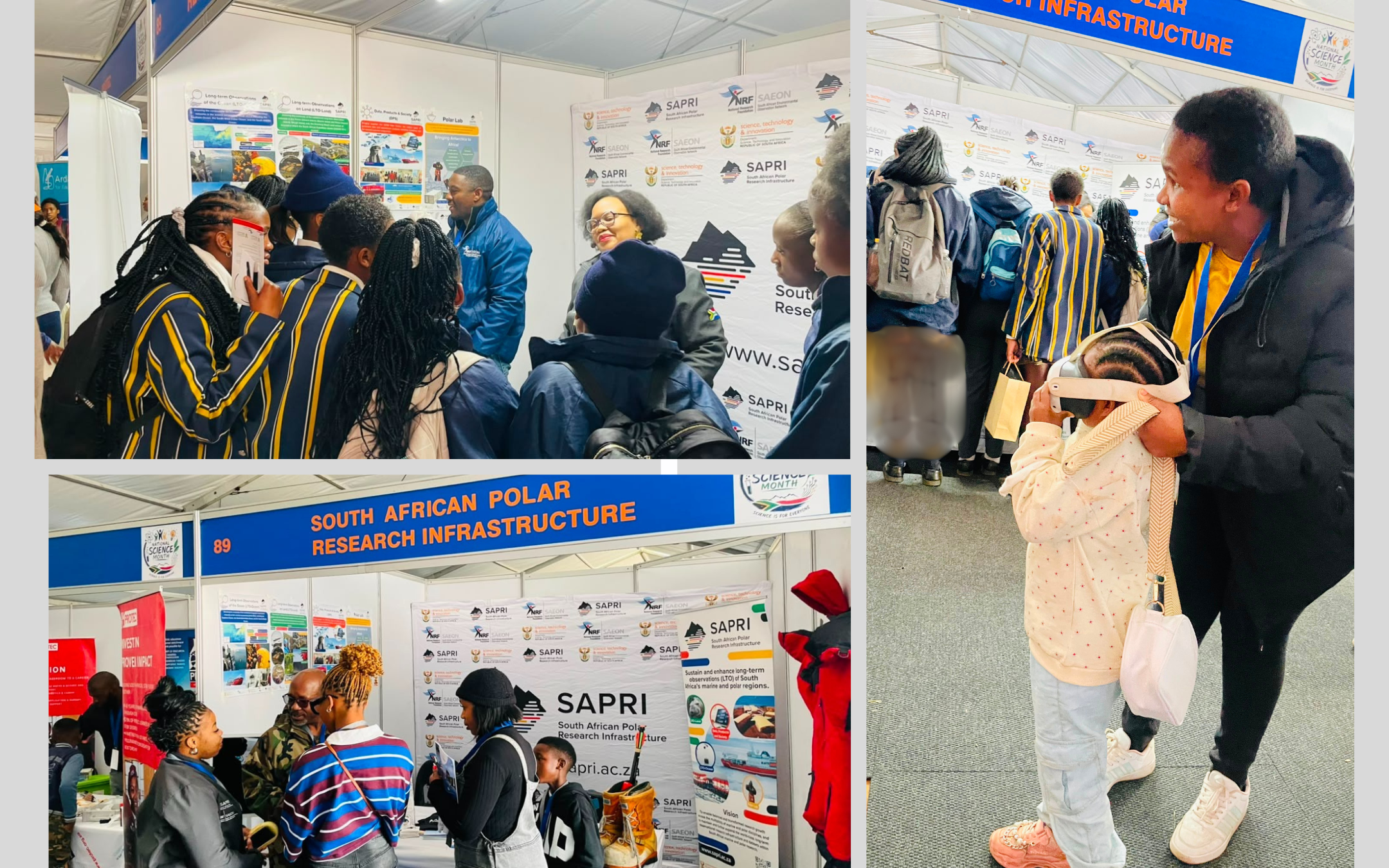
The SAPRI outreach exhibition at the National Science Month launch at the Vaal University of Technology
We are proud to have supported the DSTI during this landmark event by showcasing South Africa’s world-class marine and polar research capabilities. Exhibiting alongside fellow DSTI research infrastructures and national science platforms, SAPRI and the NRF-SAEON Egagasini Node demonstrated how cutting-edge research supports environmental monitoring, climate science and international collaboration in Antarctica and the Southern Ocean.
Throughout the day, the exhibition became a vibrant hub of learning and discovery. Visitors explored South Africa’s presence in Antarctica, learned about long-term environmental monitoring programmes, and discovered the sophisticated research infrastructure that enables scientists to study some of the planet’s most remote environments.
In recognition of its outstanding exhibition and valuable contribution to the DSTI’s inaugural National Science Month launch, SAPRI received a Certificate of Excellent Exhibition. This acknowledgement celebrated SAPRI’s role in making the launch a memorable and impactful public science engagement event.
Bringing polar science to the Plett Ocean Festival
National Science Month celebrations continued at the Plett Ocean Festival Marine Science Symposium in Plettenburg Bay. SAPRI and the NRF-SAEON Egagasini Node engaged visitors at their exhibition during this three-day ocean festival at the Beacon Island Hotel in Plettenberg Bay.
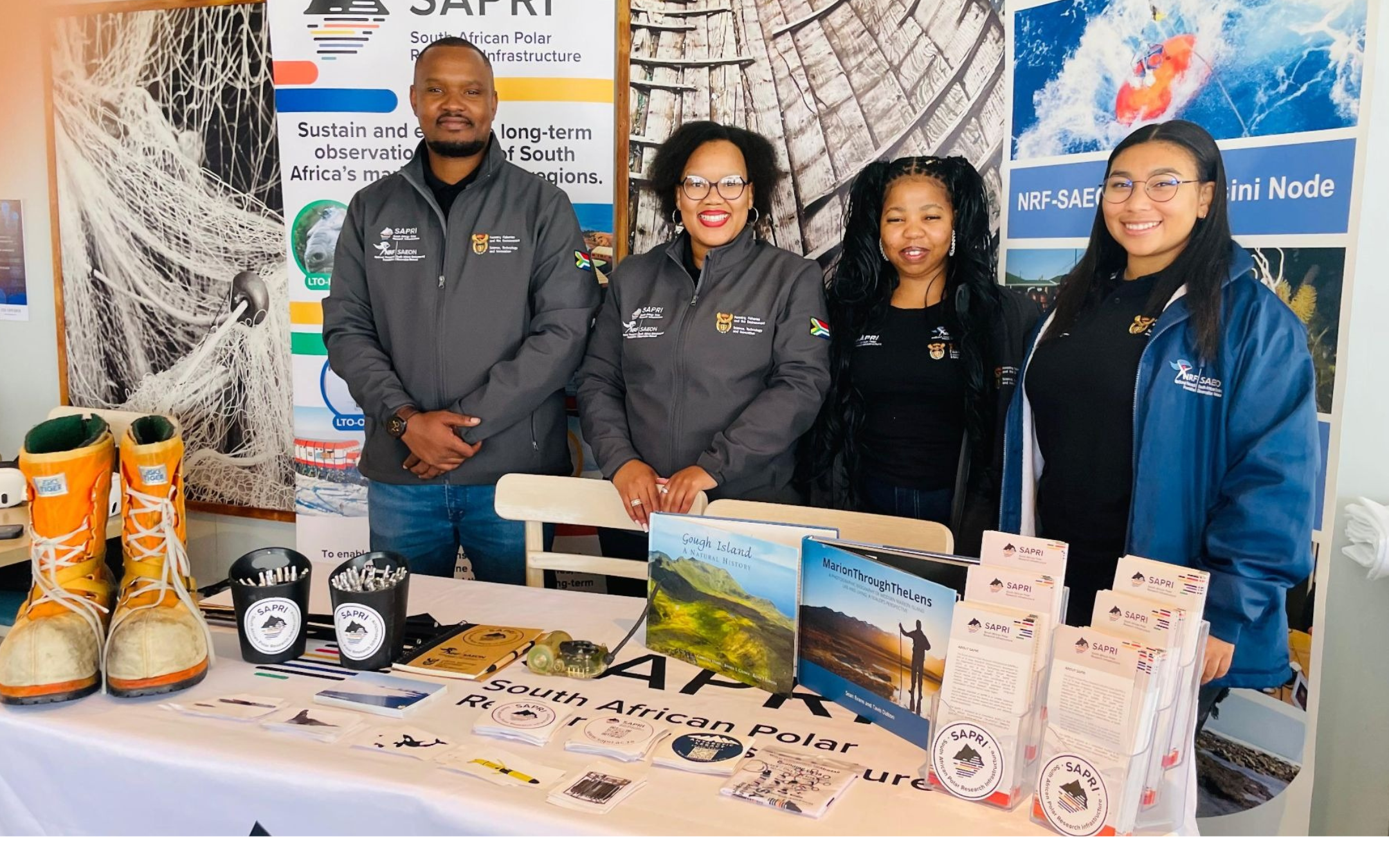
Our team at the Plett Ocean Festival Marine Science Symposium in Plettenburg Bay
The symposium featured presentations by leading marine scientists, conservation practitioners, policymakers and science communicators covering a diverse range of topics including ocean conservation, Marine Protected Areas, seabirds, sharks, marine mammals, fisheries, estuaries, and citizen science.
The event attracted symposium delegates, researchers, tourism stakeholders, hotel guests and members of the public, creating an excellent platform for conversations around South Africa’s marine environment and the country’s role in global ocean observation.
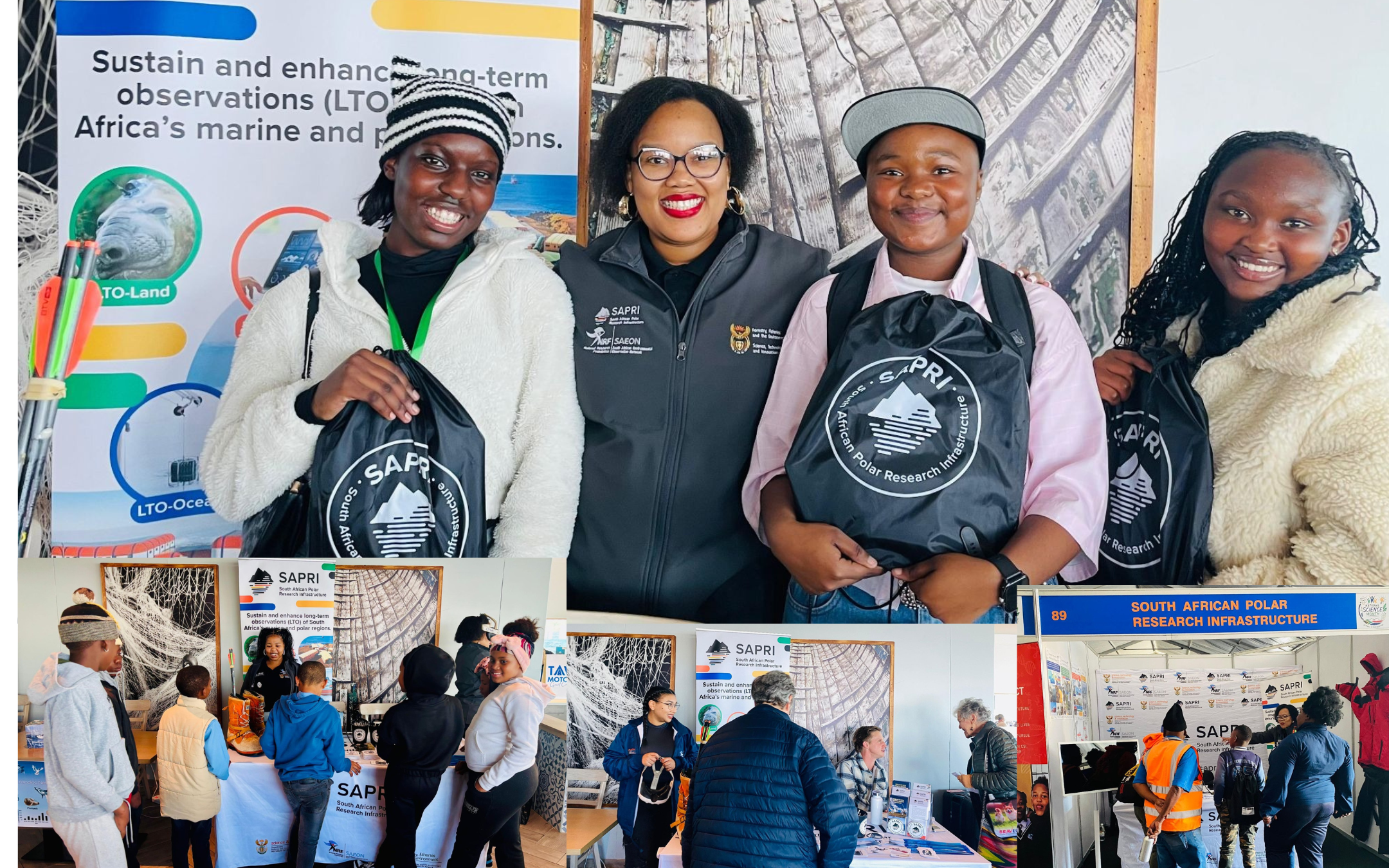
Meaningful engagements at the Plett Ocean Festival Marine Science Symposium in Plettenburg Bay
Our exhibition generated significant interest in Antarctic research, Southern Ocean observations, offshore marine monitoring and career pathways within marine and polar science. Visitors were particularly fascinated by the technologies used to monitor remote environments and the critical role these long-term observations play in understanding climate change and protecting ocean ecosystems. SAPRI demonstrated how South Africa’s national research infrastructures work together to advance scientific knowledge while making science accessible to wider audiences.
Honouring Nelson Mandela Day through education
In the spirit of Nelson Mandela Day, SAPRI visited Simanyene Secondary School at Lwandle, Strand in Somerset West, as part of the community outreach event hosted by the NRF iThemba LABS. The event was focused on empowering young people through education and awareness.
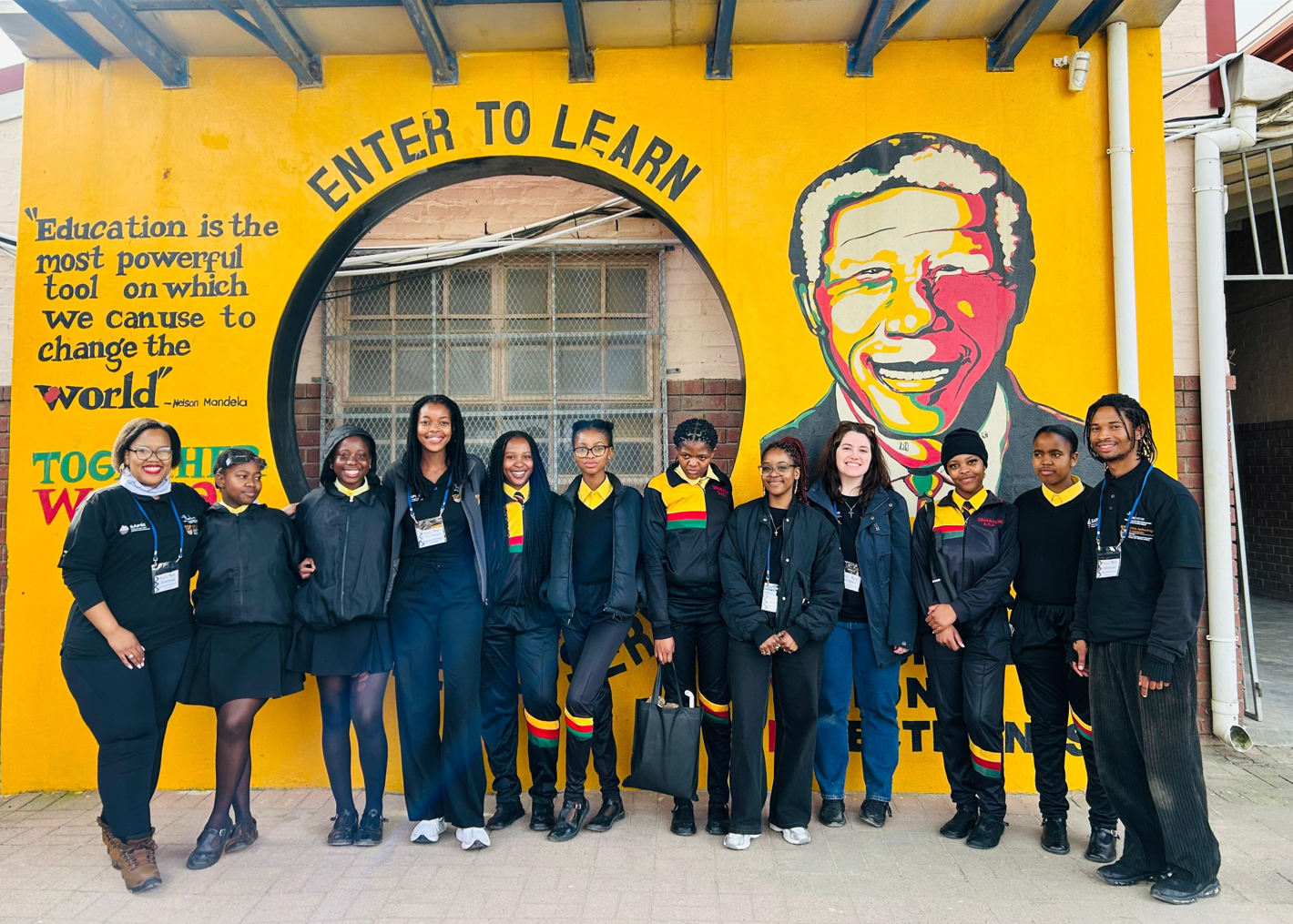
The SAPRI team with learners from Simanyene Secondary School, Strand
The event featured an inspirational guest speaker who engaged learners in meaningful discussions about substance abuse, highlighting the dangers associated with alcohol and drug use, the long-term consequences for individuals and communities, and the importance of making positive life choices.
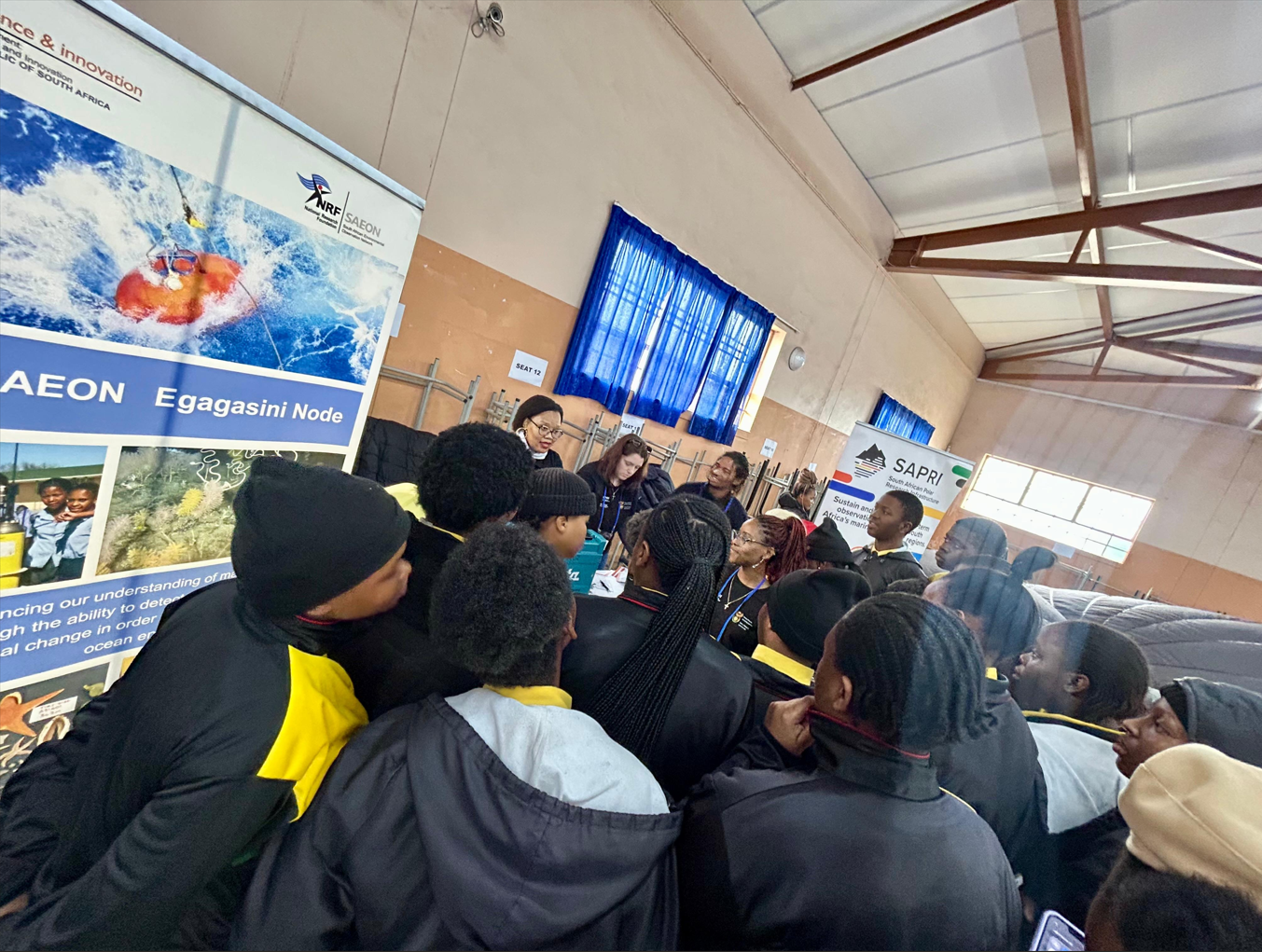
The SAPRI team engaging learners from Simanyene Secondary School during Mandela Day
Alongside these important life lessons, SAPRI encouraged learners to dream beyond their current circumstances by introducing them to careers in science and sharing opportunities available within South Africa’s marine and polar research sector. By combining social awareness with science education, the event reinforced the idea that informed choices and education can open doors to brighter futures.
Inspiring future scientists at the 1st Central Karoo Career Exhibition
In partnership with the NRF-SAEON Egagasini Node, we participated in the Accounting, Maths and Science Academy (AMASA) first Career Day held in Laingsburg within the Central Karoo District Municipality. The event brought together universities, government departments, research organisations and industry partners to inspire more than 430 Grade 9–12 learners and local youth by showcasing a wide range of study and career opportunities.
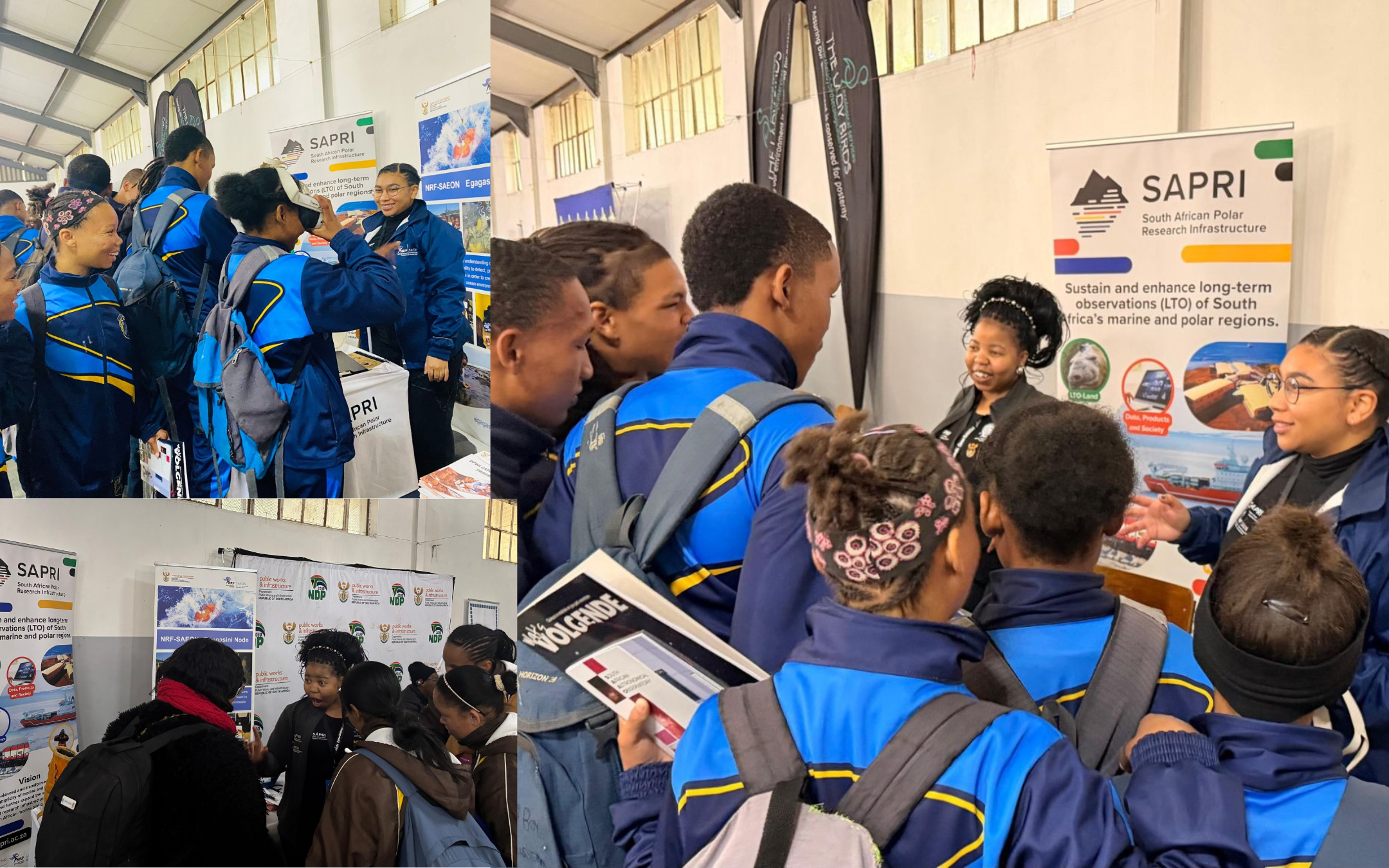
Student engagement during the AMASA Career Day in Laingsburg, Central Karoo District Municipality
Through engaging presentations, educational materials and interactive discussions, we introduced learners to the wide variety of careers available within marine and polar science. Many learners were surprised to learn that careers in Antarctica extend far beyond scientists and include engineers, technicians, environmental specialists, logisticians, meteorologists, data specialists, communications professionals and many other disciplines.
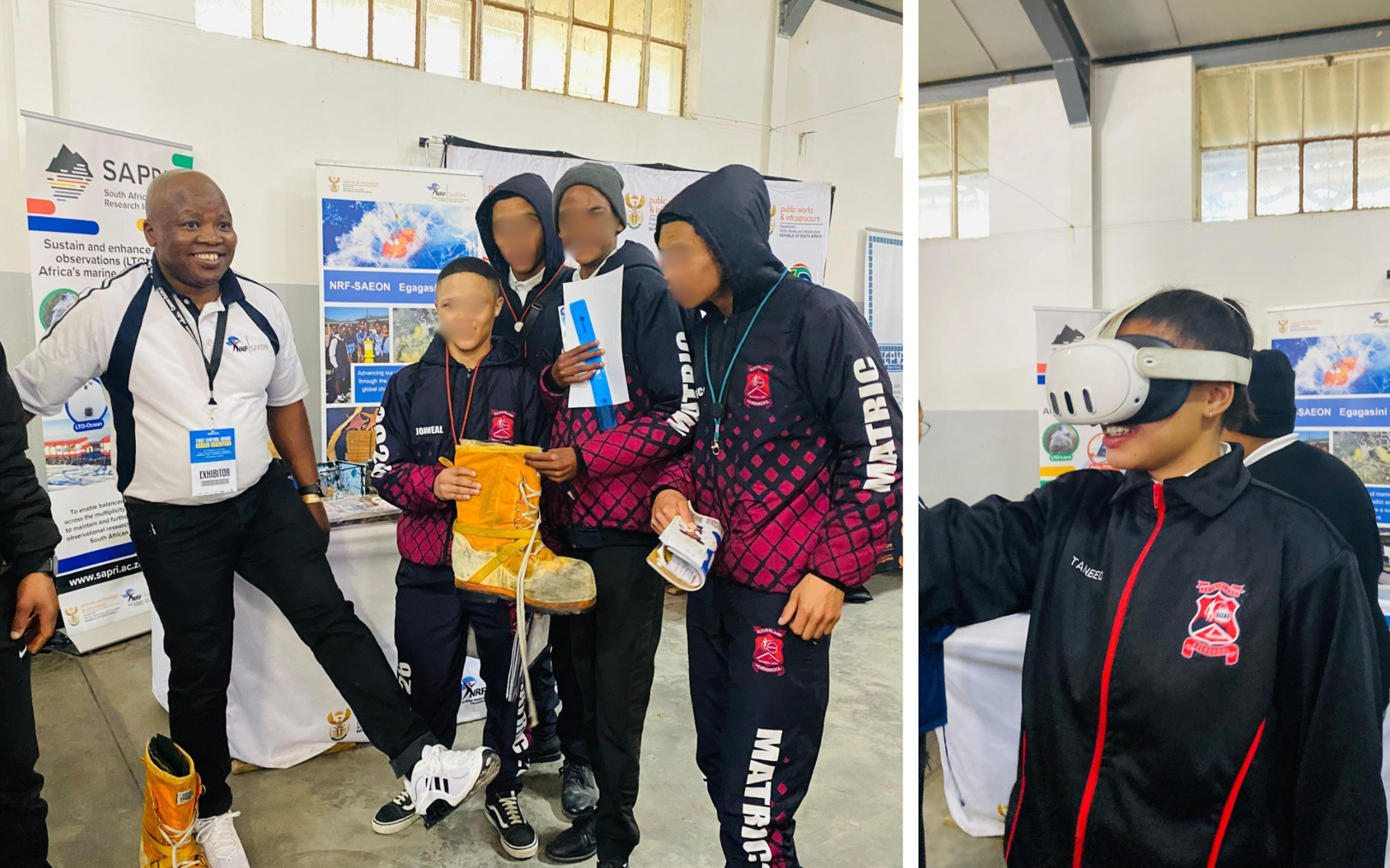
The NRF-SAEON Egagasini Node Engagement Officer, Thomas Mtontsi, interacting with learners at the AMASA Career Day in Laingsburg, Central Karoo District Municipality
By showcasing the diverse career pathways supported by SAPRI and the NRF-SAEON Egagasini Node, the exhibition encouraged learners to view mathematics and science as gateways to exciting and meaningful professions that contribute to understanding and protecting our planet.
Celebrating science at the NRF-SAIAB open day
National Science Month concluded with SAPRI participating in the NRF’s South African Institute for Aquatic Biodiversity (NRF-SAIAB) Open Day in Makhanda, Eastern Cape.
The open day welcomed learners, university students, educators, families and members of the public to discover how aquatic biodiversity research contributes to understanding, protecting and sustainably managing South Africa’s freshwater and marine ecosystems.
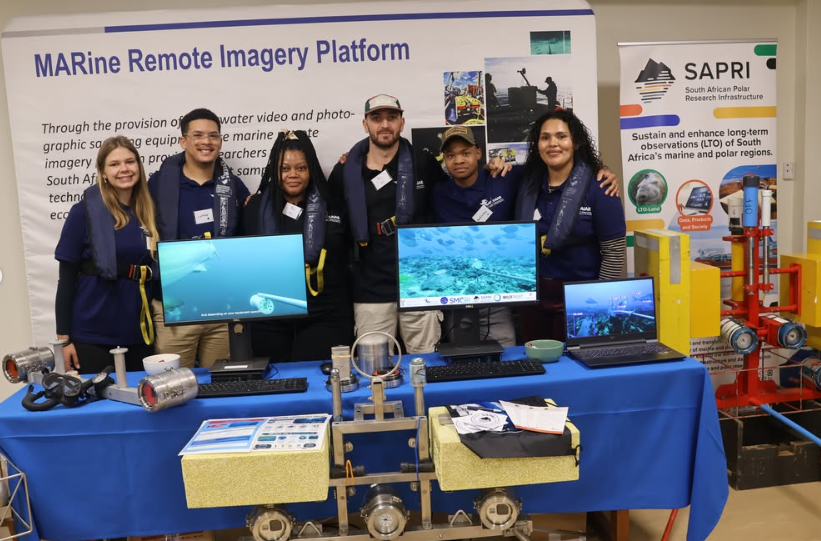
The NRF-SAIAB team during Open Day in Makhanda (photo: NRF-SAIAB)
SAPRI complemented the event by introducing visitors to the broader marine and polar research landscape, demonstrating how observations from the Southern Ocean contribute to global climate research, biodiversity conservation and sustainable ocean management.
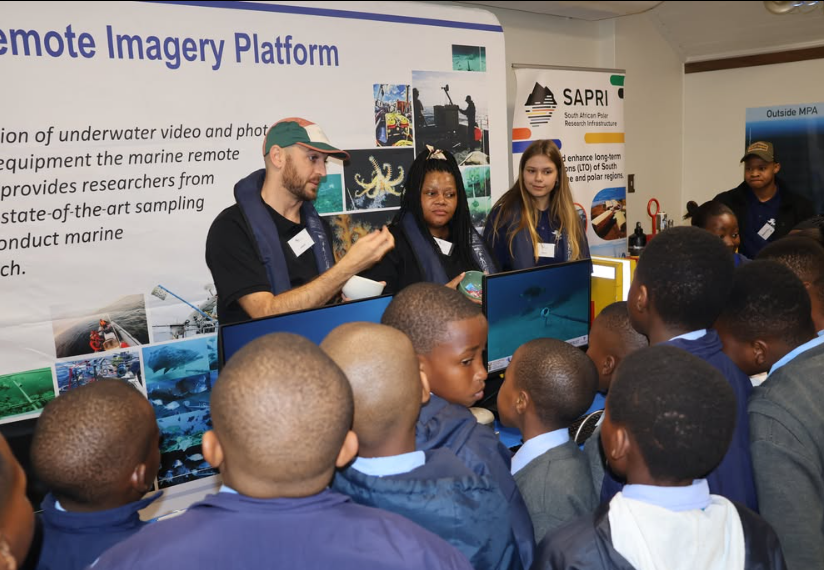
Engagement during the NRF-SAIAB Open Day (photo: NRF-SAIAB)
The event provided another valuable opportunity to strengthen partnerships across the National Research Foundation while inspiring future scientists through engaging conversations, interactive displays and career guidance.
Building a science-literate nation
National Science Month 2026 demonstrated the power of collaboration in bringing science closer to communities across South Africa.
Through exhibitions, career fairs, public festivals and community engagement activities, SAPRI successfully connected thousands of people with the remarkable work taking place in Antarctica and the Southern Ocean. Whether through immersive virtual reality experiences, conversations about climate science, or discussions about future careers, each interaction helped demystify polar research and showcase its relevance to everyday life.
As South Africa continues to invest in world-class research infrastructure, initiatives such as National Science Month play an essential role in nurturing curiosity, promoting scientific literacy and inspiring the next generation of researchers, innovators and problem-solvers.
For SAPRI, every conversation with a learner, educator or community member is another step towards ensuring that science is truly for everyone and that South Africans continue to play a leading role in understanding and protecting our oceans, our polar regions and our shared future.
Acknowledgements
SAPRI extends sincere thanks to:
- Kelebogile Morwa Mandi Mogotsi, SAPRI’s Engagement Officer
- Asisipo Mboneli, SAPRI’s Communications and Engagement Intern
- Abu Nguna, LTO-Land Research Coordinator at SAPRI
- Tlhonolofatso Steve Tebele, Senior Technician at SAPRI
- Gustav Rautenbach, SOMISANA Ocean Modeller at Egagasini Node
- Melissa Philander, Research Assistant at Egagasini Node
- Thomas Mtontsi, Engagement Officer at Egagasini Node
- NRF-SAASTA for funding opportunities and support
- Department of Science, Technology and Innovation
For their dedication, support and contribution to SAPRI and Egagasisni Node’s National Science Month activities. Their teamwork and commitment helped make the science engagements engaging, informative and memorable.
Written by Kelebogile Morwa Mandi Mogotsi (Kelly), SAPRI’s Engagement Officer
Rabia Mathakutha, South African Polar Research Infrastructure, 4 August 2026