
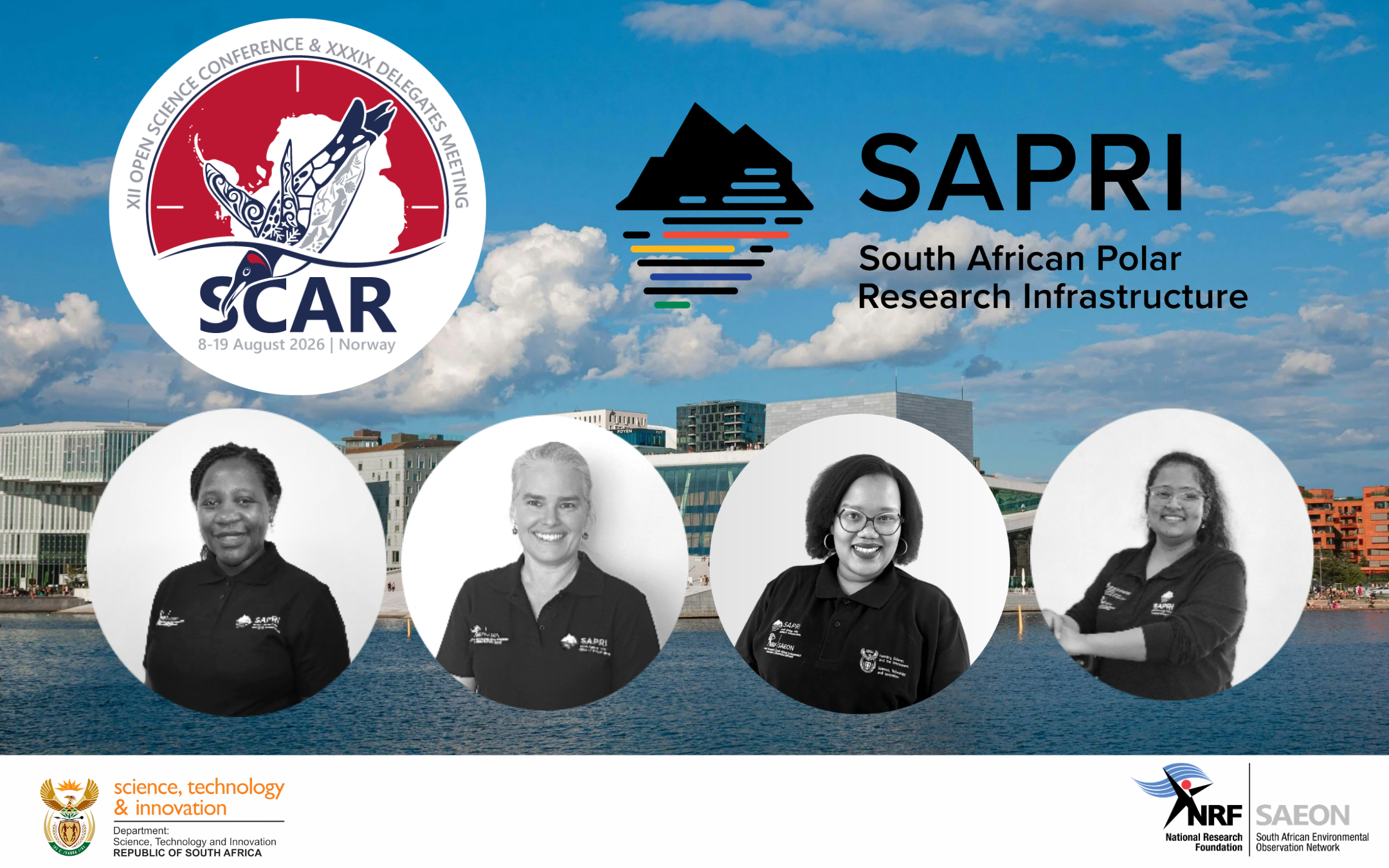
Four of our representatives at the South African Polar Research Infrastructure (SAPRI) participated in the 12th Scientific Committee on Antarctic Research (SCAR) Open Science Conference (OSC) and associated business meetings in Oslo, Norway, from 8–19 August 2026.
The delegation comprised Dr Anne Treasure (Data, Products and Society Integrated Facility Manager); Dr Riesna R Audh (Polar Lab Scientific Coordinator); Belinda Nhesvure (Data Curator); and, Kelebogile (Kelly) Mogotsi (Engagement Officer).
Held every two years, the SCAR OSC is one of the world’s leading Antarctic gatherings. The 2026 event welcomed more than 1,400 registered attendees and brought together scientists, research infrastructure specialists, data professionals, policymakers, communicators and early-career researchers. The main conference ran from 10-14 August, within a broader programme of business and governance meetings from 8-19 August.
Business meetings
Anne, Riesna and Belinda participated in a range of SCAR, research community and business meetings. Anne participated in meetings of SCADM, the SOOS Data Management Sub Committee (DMSC), C-CAGE, the SCAR EDI Action Group and the SCAR InSync Action Group, as well as the SCAR Life Sciences Group Business Meeting, where she represented South Africa as a member of the South African National Committee (SANC) for SCAR. She also held a number of side meetings with colleagues and representatives from international networks throughout the conference.
Belinda participated in SOOS DMSC activities, while Riesna participated in APECS meetings and activities.
Launching into the conference
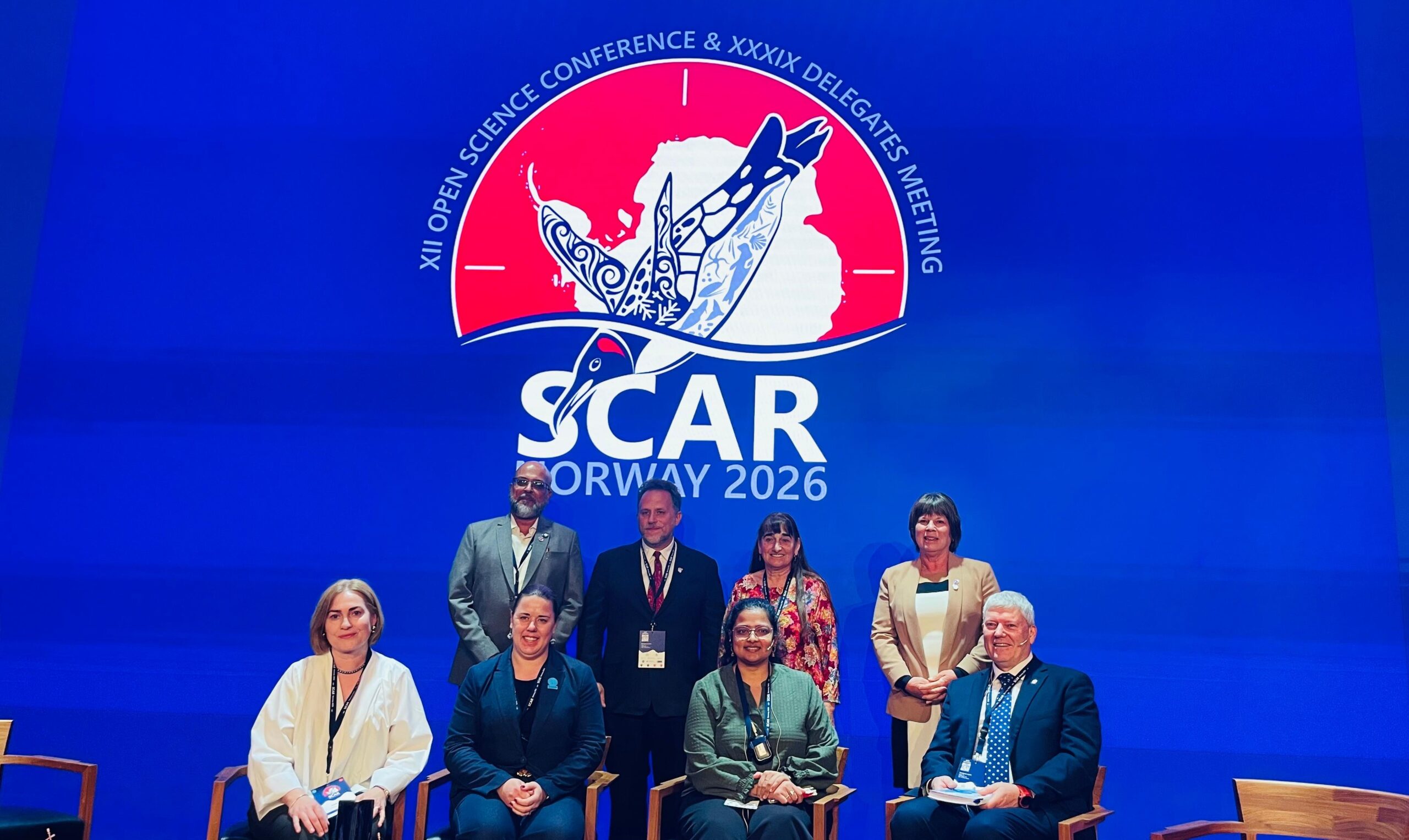
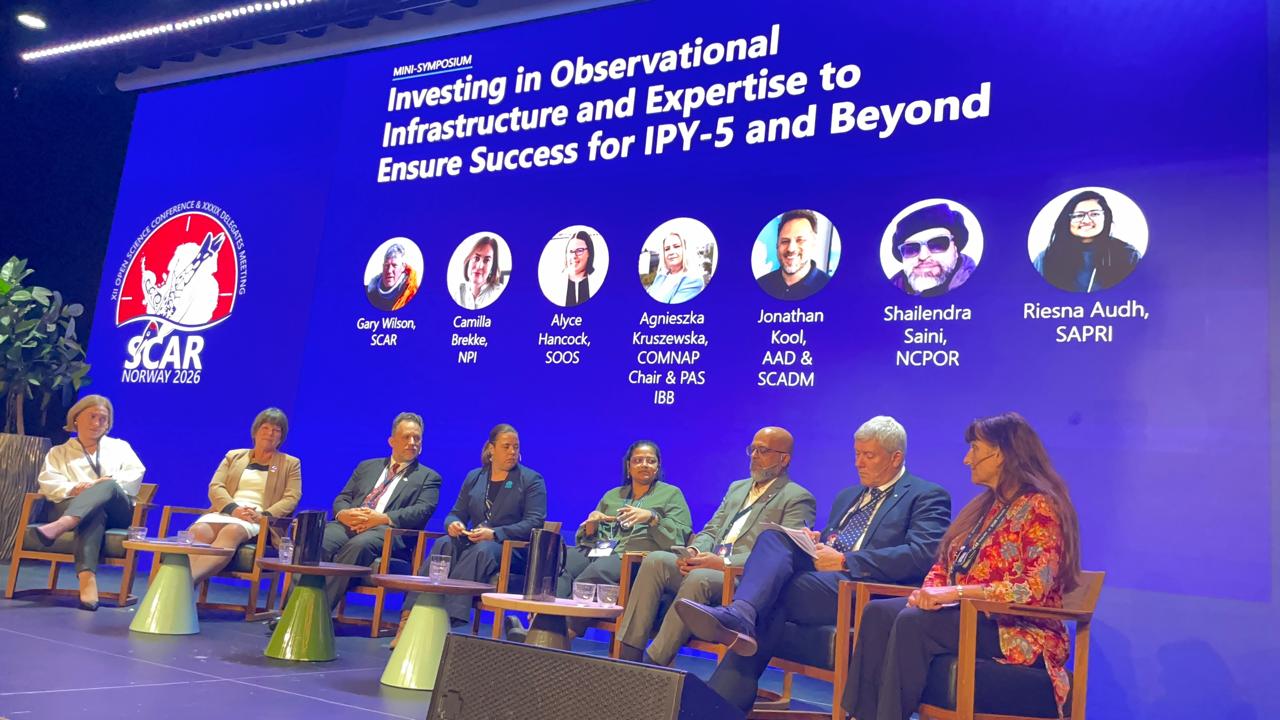
Dr Riesna R Audh represented the Association of Polar Early Career Scientists (APECS) and early-career researchers on an international panel at the mini-symposium, “Investing in observational infrastructure and expertise to ensure success for IPY-5 and beyond,” convened by SCAR, the Council of Managers of National Antarctic Programs (COMNAP) and the Norwegian Polar Institute. The discussion explored the observations, infrastructure, expertise and international partnerships needed to support the Fifth International Polar Year (IPY).
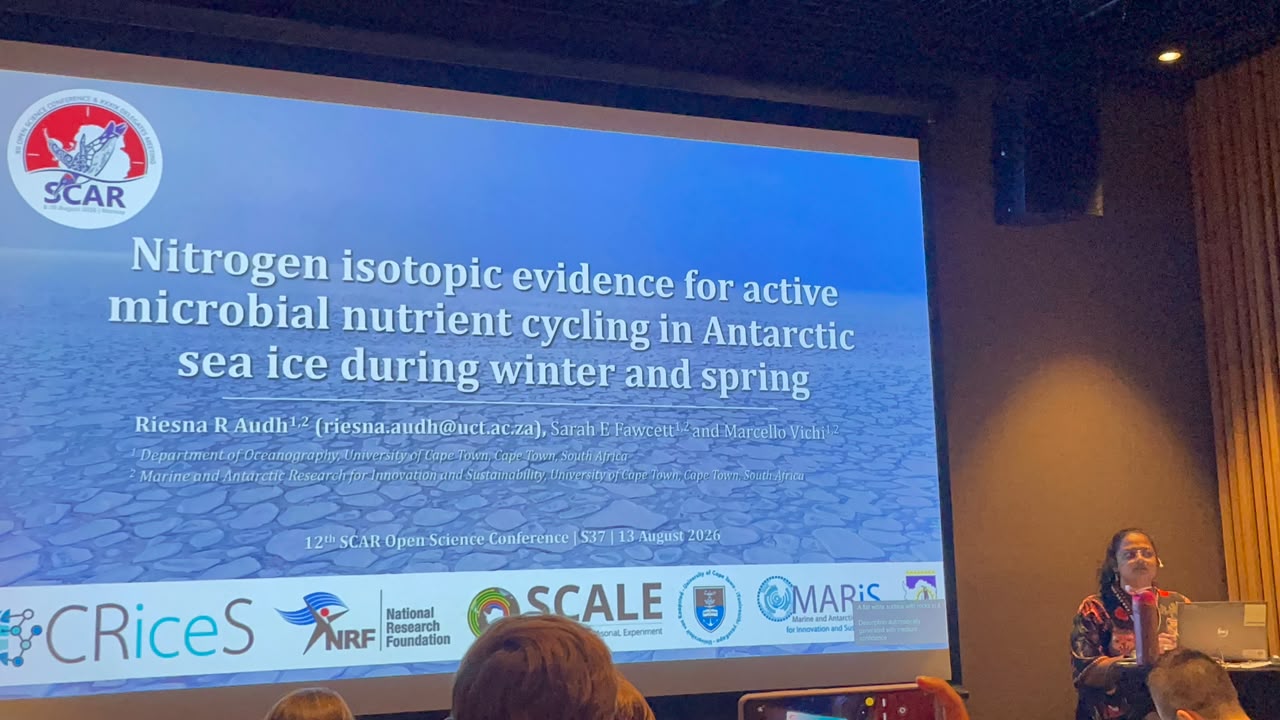
Riesna also presented her research, conducted at UCT, titled “Nitrogen isotopic evidence for active microbial nutrient cycling in Antarctic sea ice during winter and spring”, which demonstrated microbial processes remain active in the sea ice during winter and that the transition from winter to spring is shaped by a combination of biological and physical processes.
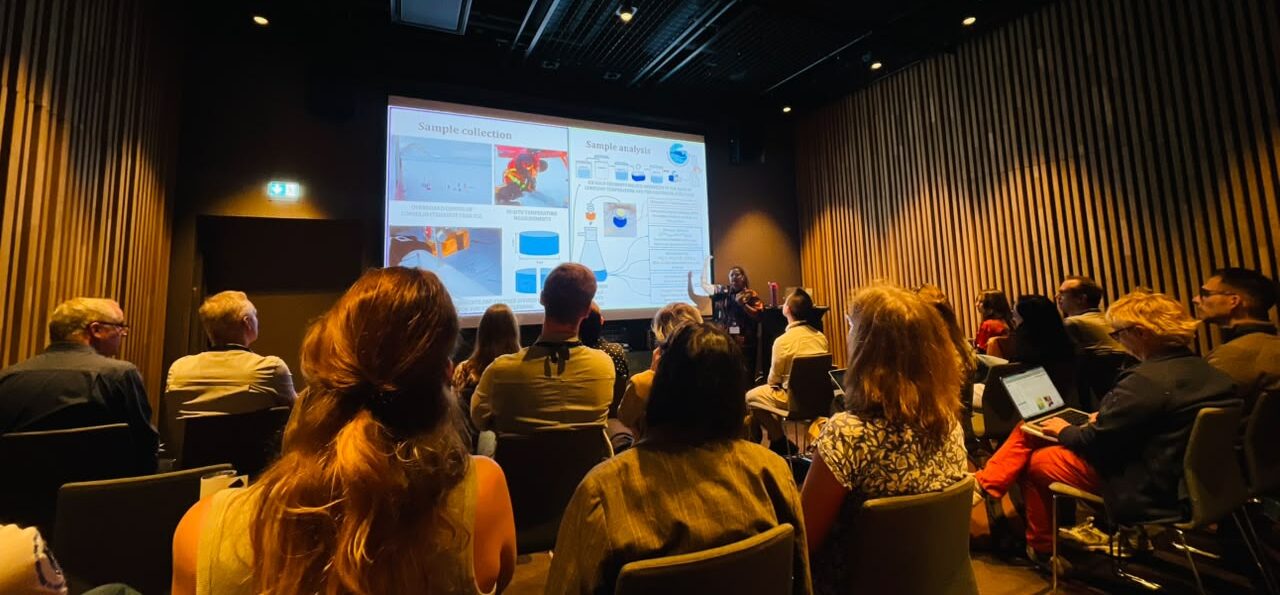
Bringing polar science closer to diverse audiences
Dr Audh contributed to the APECS workshop, “Science communication: meeting polar outreach needs as early-career researchers”, which brought together polar networks from several countries to share approaches to science communication.
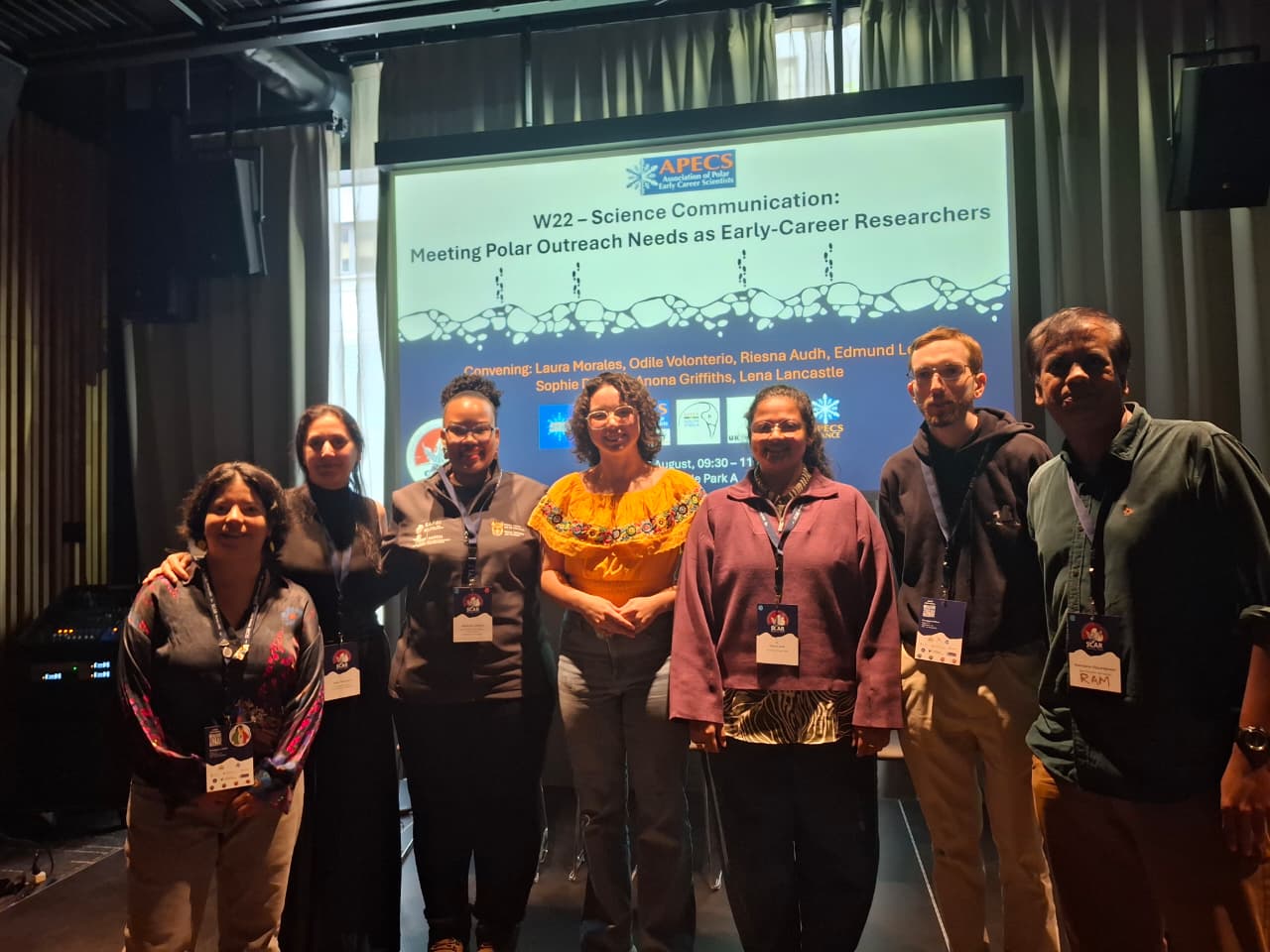
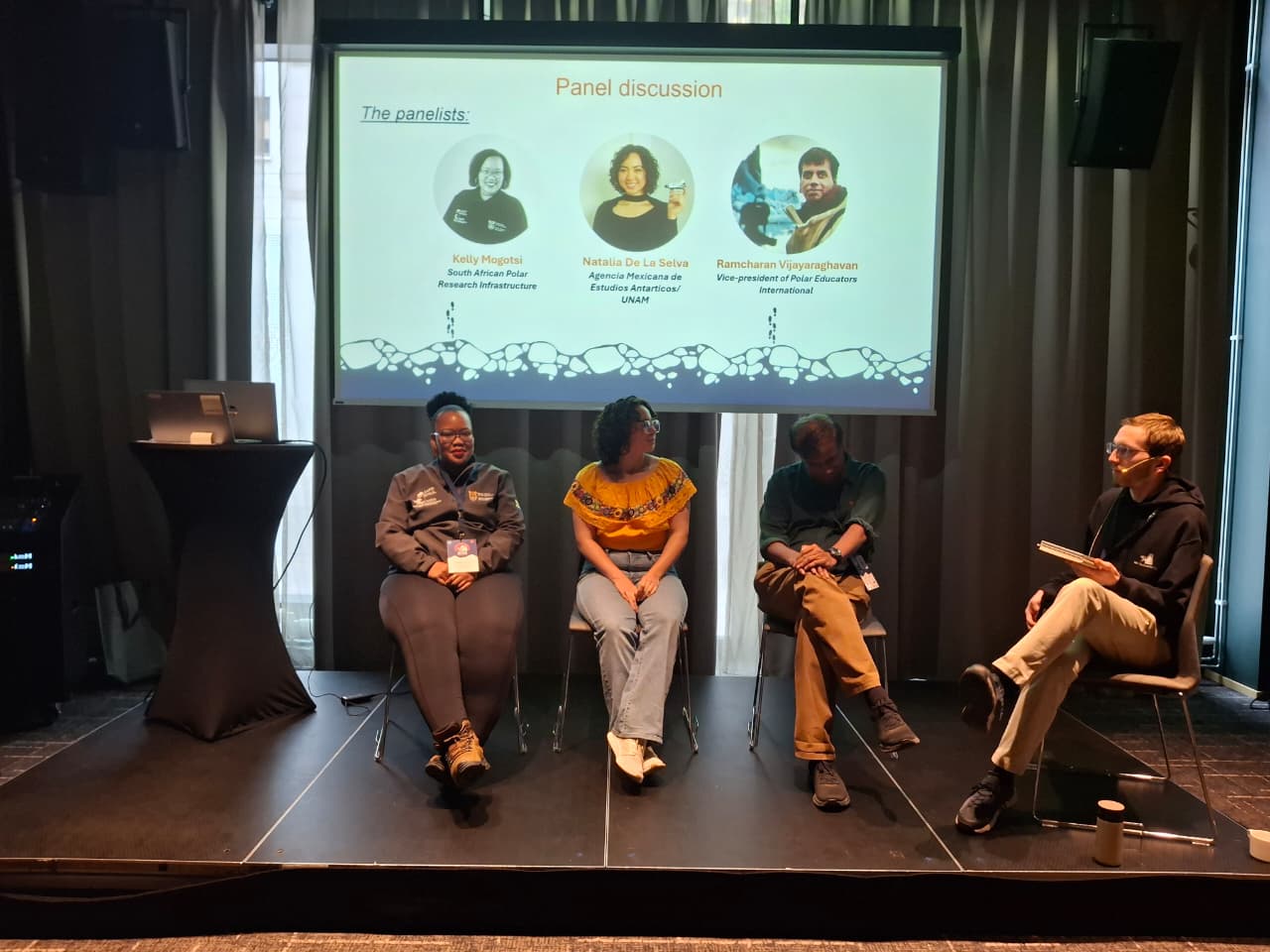
Following group discussions and breakout activities, Kelly Mogotsi participated in the workshop’s panel discussion, sharing a South African perspective on polar science engagement and practical approaches for making polar science relevant to diverse audiences. The panel compared approaches, explored common communication barriers and shared strategies for making complex polar concepts accessible, relevant and engaging. Participants left with practical ideas that could be adapted within their own countries and institutions.
Supporting a future for African Antarctic Researchers
Riesna and Kelly co-chaired a scoping workshop on behalf of fellow African researcher Ivaldo Fumo, who is leading efforts to establish the African Antarctic Research Network (AARN). The workshop introduced the vision for AARN and gathered perspectives on its potential role in supporting African Antarctic researchers.
Discussions highlighted the need to broaden African participation and representation in Antarctic research, particularly beyond South Africa. Fumo’s absence due to funding barriers also underscored the access challenges that AARN seeks to address by strengthening connections, visibility and opportunities for researchers across the continent.
Advancing FAIR and interdisciplinary Antarctic data
Dr Anne Treasure was lead convener of the cross-disciplinary parallel session, “Sharing Antarctic research data FAIRly to support interdisciplinary research collaborations”. The two-part session explored how Antarctic research data can be made Findable, Accessible, Interoperable and Reusable (FAIR), and the importance of high-quality metadata, international standards, trusted repositories and early collaboration between scientists and data professionals.
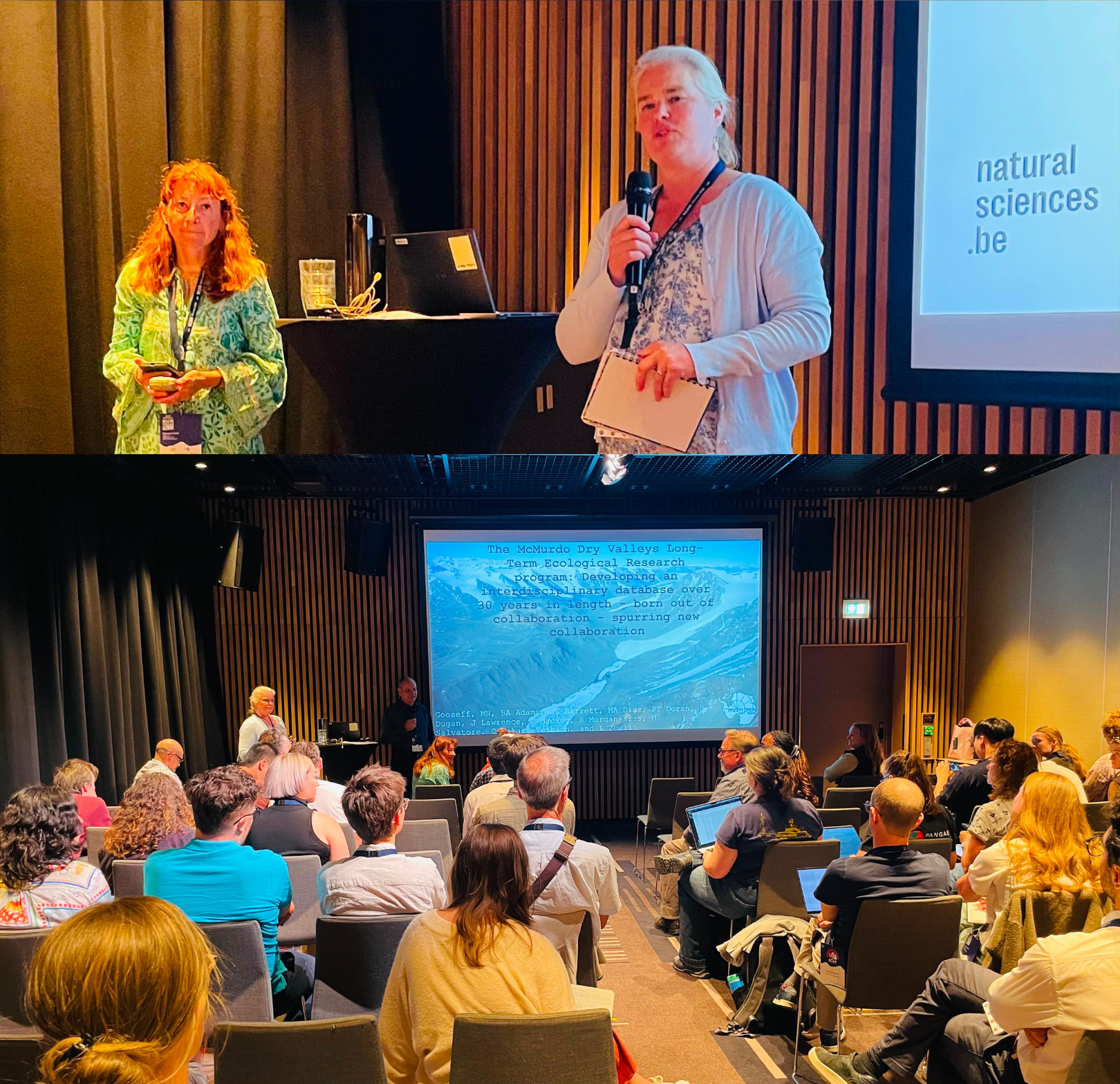
Anne also organised a “Data Management drop in parallel session” where she and members of SCADM held an open discussion with a packed room of delegates seeking advice on data management. Participants received information and resources, including flash drives containing materials contributed by SCADM members.
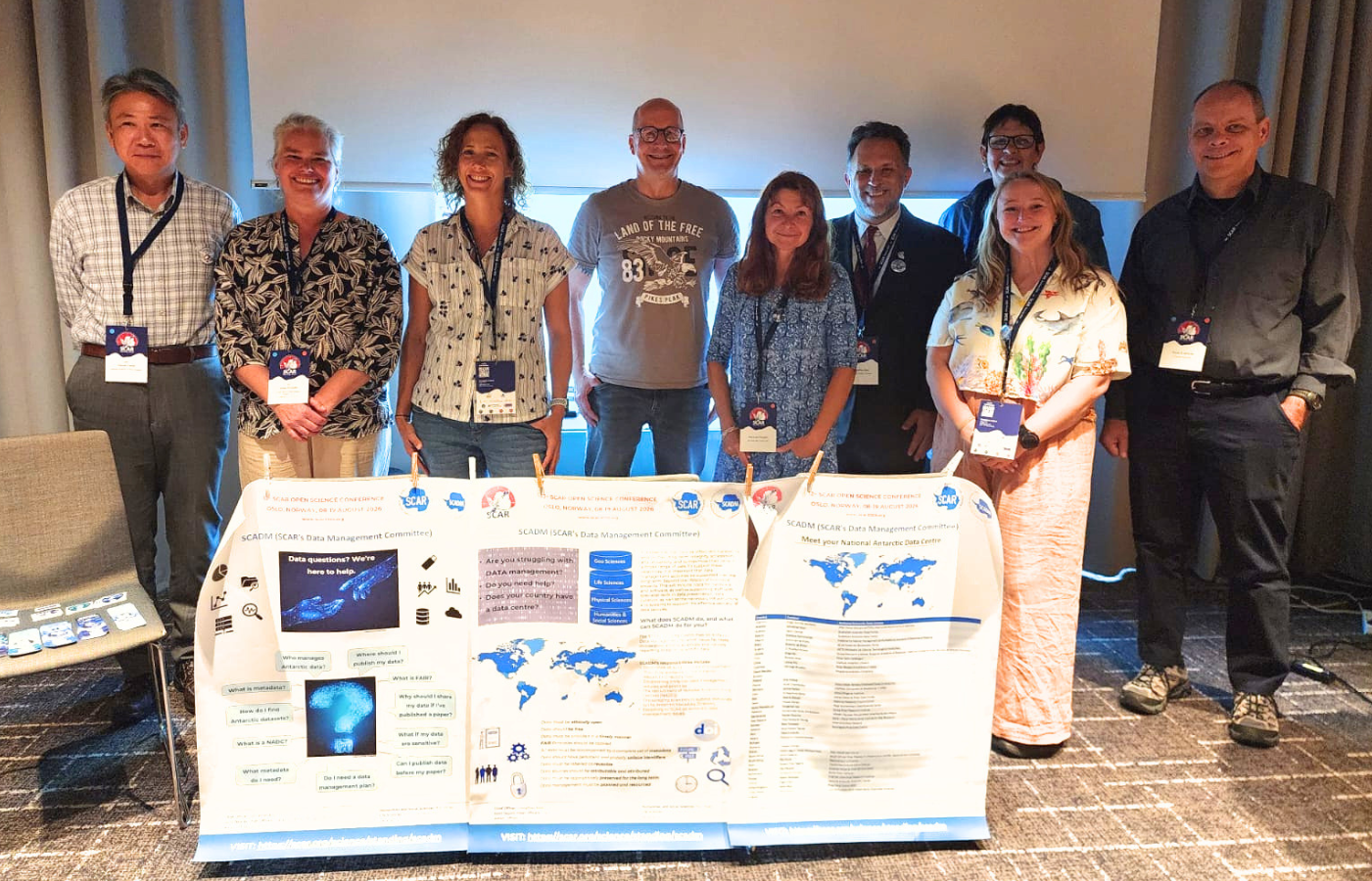
To provide more informal, ongoing support, Anne and Ria Olivier (ALSA) also organised a “Data Management Help Desk” in the SCAR information area. Delegates could drop by to ask questions or obtain information about data management, with SCADM members attending the conference assisting at the desk. Posters, leaflets, stickers, bookmarks and information on national Antarctic data centres were available to promote awareness of good data management practices.
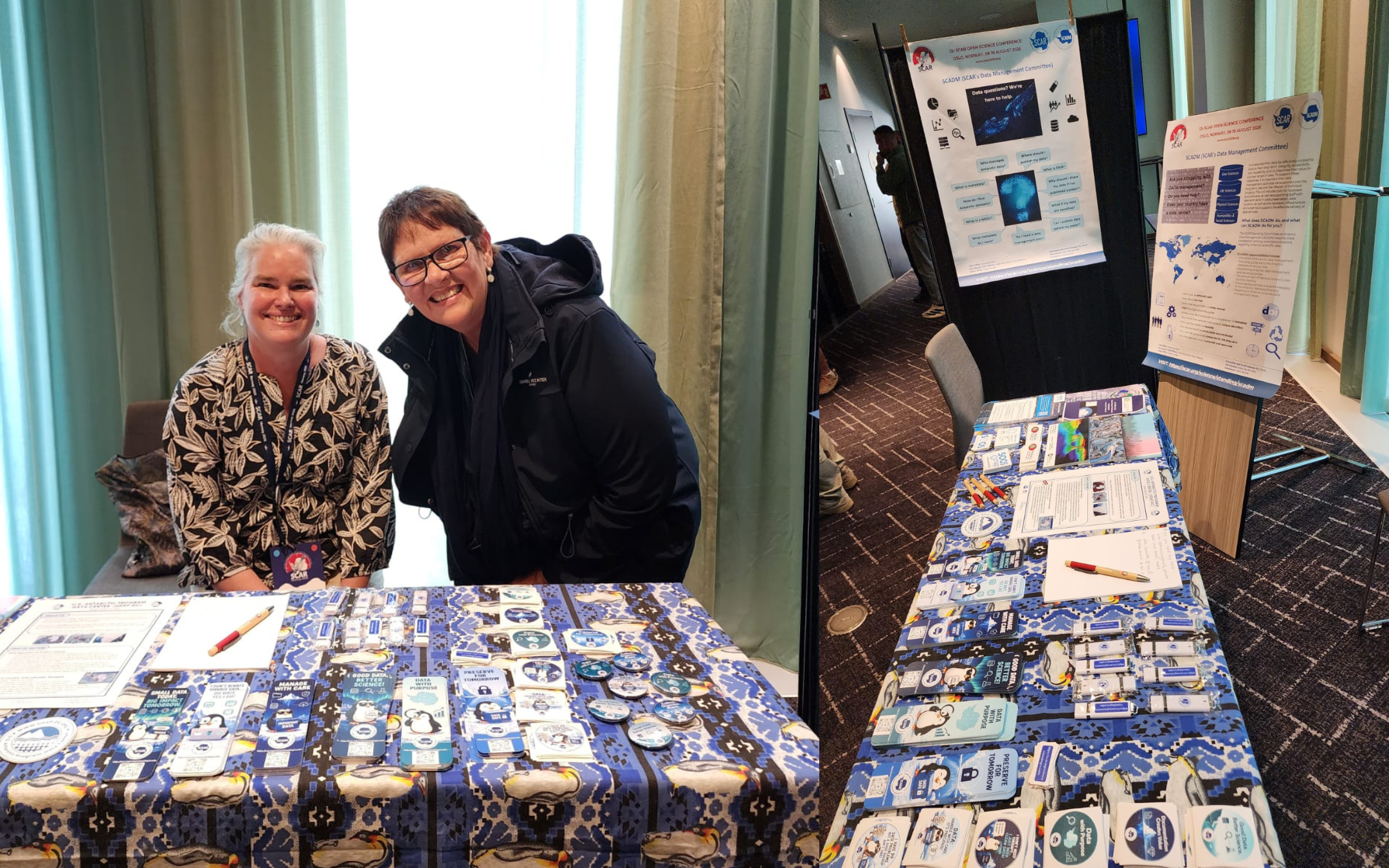
To provide additional information and promote knowledge sharing, Anne uploaded two posters to the online poster platform, titled “Making South African marine and polar research data accessible through SAPRI”, and “SCAR SCADM: ensuring Antarctic data stewardship”.
Together, these activities provided practical opportunities for delegates to access data-management expertise, resources and guidance, reinforcing that effective data stewardship is an essential part of the research process and supports the transparency, reproducibility and long-term value of Antarctic research data.
Automating the archive for the future
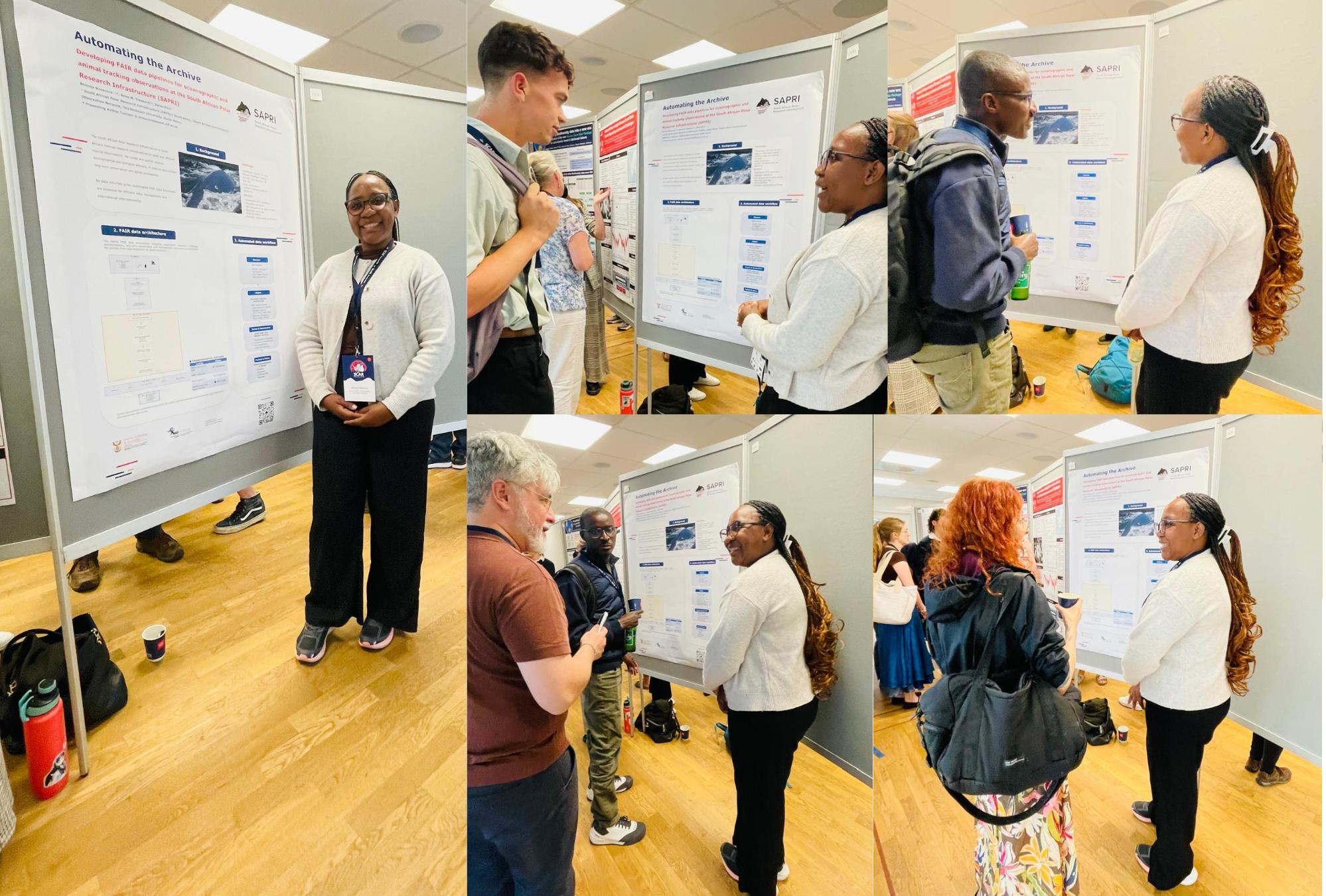
Belinda Nhesvure presented her informative poster, “Automating the archive” as part of the data session. She demonstrated how automation can improve consistency, reduce repetitive manual processes and make historical records easier to discover and reuse. The poster also highlighted the role of data curators in connecting legacy information with modern digital research systems and preserving institutional knowledge for future generations.
Making Antarctica matter through engagement and mentorship
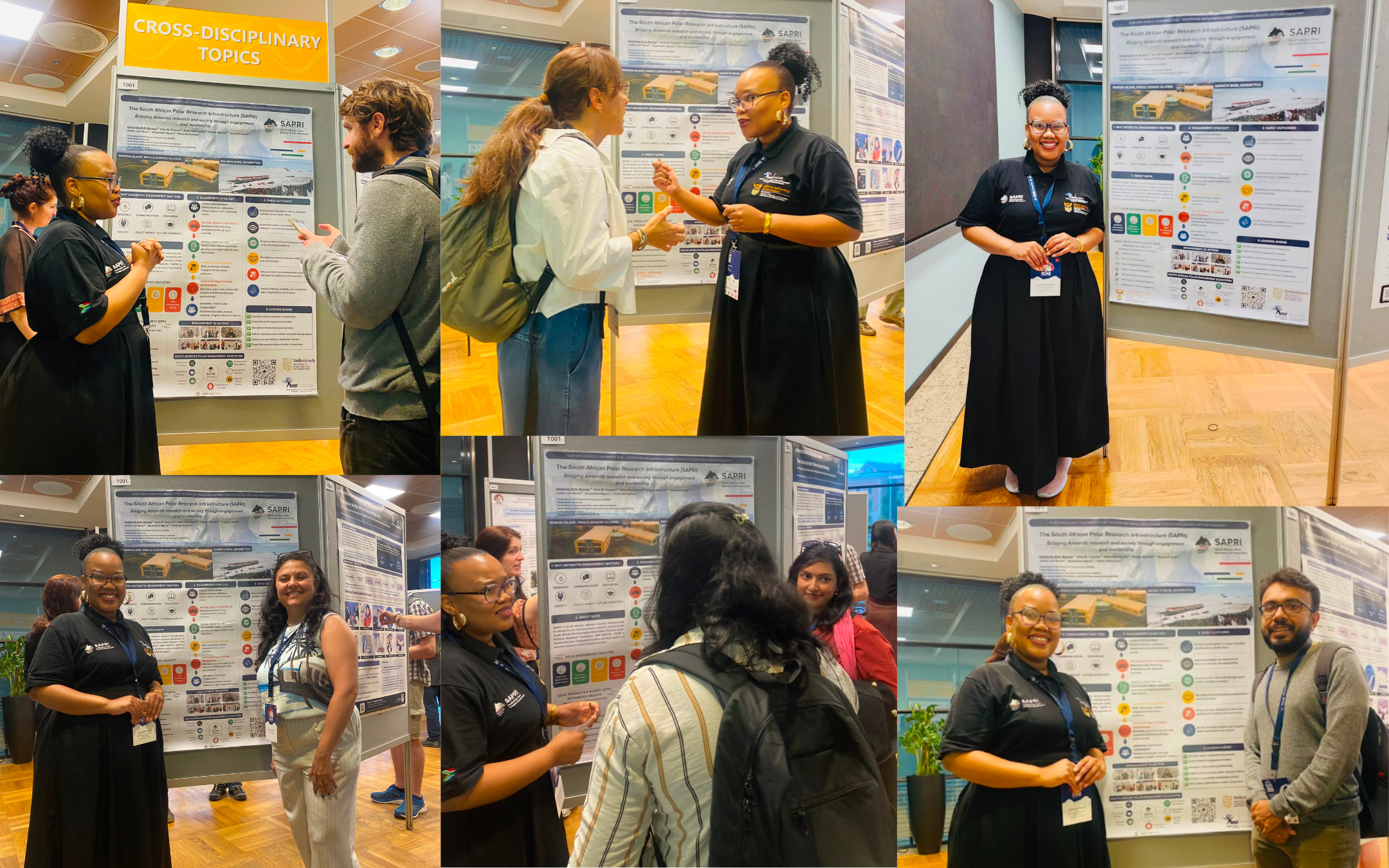
Kelly concluded SAPRI’s formal presentations with her poster, “The South African Polar Research Infrastructure: bridging Antarctic research and society through engagement and mentorship”. Kelly’s poster showcased how SAPRI connects Antarctic and Southern Ocean research with society through public exhibitions, interactive technologies, learner engagement, career-development and the Mahlalela Mentorship Programme.
From the conference halls to Oslo’s polar history
Attending the conference proved enriching both scientifically and culturally. While lectures, workshops, poster sessions and meetings facilitated valuable knowledge exchange and collaboration, delegates also had opportunities to engage with Oslo’s rich polar heritage. Together, these experiences highlighted the continuum between the achievements of early explorers and the collaborative, multidisciplinary Antarctic science being advanced today.
SAPRI at SCAR 2026
Through scientific research, data stewardship, archive innovation, public engagement and mentorship, SAPRI’s participation demonstrated the breadth of expertise and infrastructure needed to support modern Antarctic science. The conference provided opportunities to share South African expertise, strengthen international connections and highlight SAPRI’s contribution to accessible data, research infrastructure and meaningful engagement with society.
Collectively, these contributions reinforced South Africa’s role in the international community and demonstrated that the future of Antarctic research depends on excellent science, accessible data, strong international partnerships and meaningful engagement with society.
Dr Riesna R Audh would like to acknowledge and thank Robyn Verrinder from UCT-MARiS, whose funding support made her attendance and participation at SCAR possible.
Written by Kelebogile Morwa Mandi Mogotsi (Kelly), Anne Treasure and Riesna R. Audh (SAPRI)
Rabia Mathakutha, South African Polar Research Infrastructure, 16 September 2026