

The South African Polar Research Infrastructure (SAPRI) has been responsible for the long-term monitoring of top predators on sub-Antarctic Marion Island since 2024, taking over from the Marion Island Marine Mammal Programme (MIMMP) and the FitzPatrick Seabird Research Programme.
This transition has ensured the continuity of critical long-term monitoring and conservation research on seabirds and marine mammals breeding on the sub-Antarctic Prince Edward Islands – a research programme that has continued uninterrupted for more than four decades.

A view of Marion Island and its research station (photo: Yinhla Shihlomule)
Since assuming responsibility for the programme, SAPRI has deployed three teams of field researchers to Marion Island to continue this vital research and conservation work. Each team spends 13 months on the island, braving the elements and navigating challenging terrain before being relieved by the next cohort. It is a demanding experience, requiring resilience, adaptability, and teamwork.
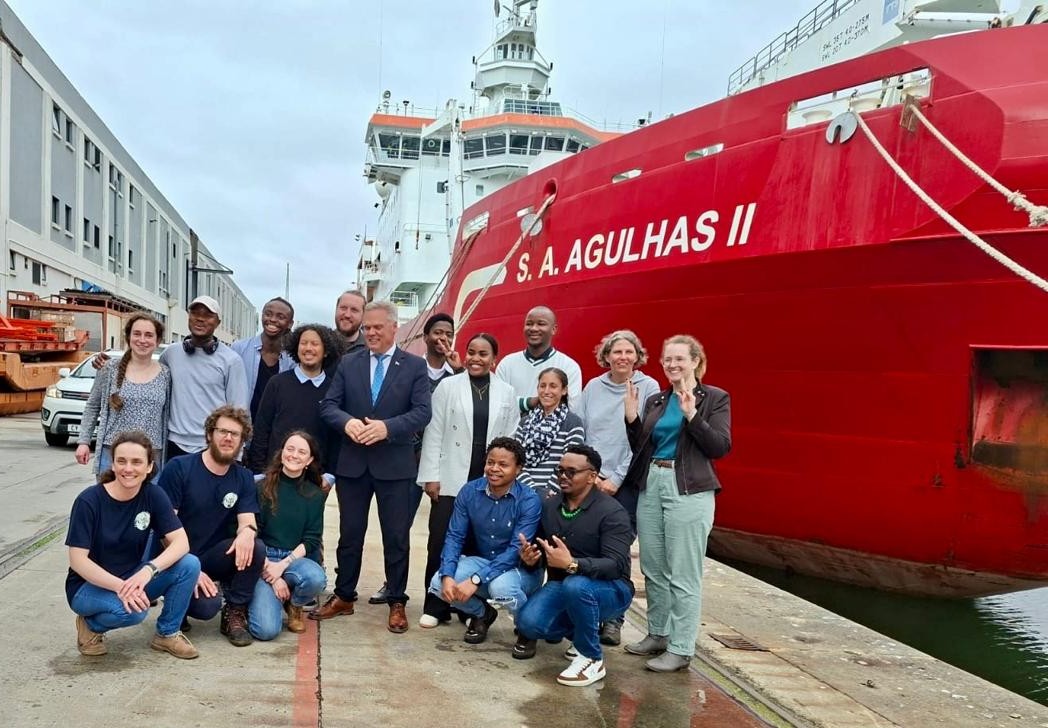
Some members of the M83 team and DFFE Minister, Mr. Willie Aucamp, welcoming back the M82 team in May 2026 who had just returned from Marion Island via S.A. Agulhas II, in Cape Town (photo: unknown)
The 2026/27 (M83) overwintering team will take over from the 2025/26 (M82) team, who have recently returned to the mainland after completing their year on the island. We are excited to introduce the new team and wish them every success as they prepare to continue this important long-term research programme.
This year’s expedition marks the 83rd Marion Island relief voyage (M83) since the launch of South Africa’s National Antarctic Programme (SANAP) in the sub-Antarctic and Antarctic region.
Meet the 2026/27 SAPRI Marion Island (M83) Overwinterers
Asive Tyawana
Seal Field Researcher
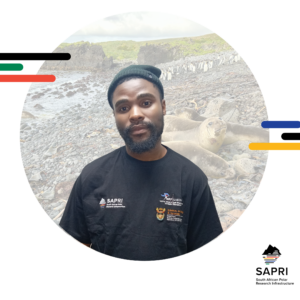 Asive is a qualified Marine Scientist with a Post Graduate Diploma in Marine sciences.
He is experienced in seal pup growth rates studies in Kleinzee, home to one of South Africa’s largest Cape fur seal colonies.
Asive says he is eager to expand his knowledge and skills as a Seal Field Researcher at Marion Island, and advance his career.
Marc Limbert
Seal Field Researcher
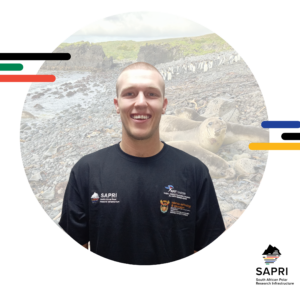
Marc holds a BSc in Biology and Genetics from the University of Cape Town. He has gained hands-on field experience across an unusually broad range of disciplines — from botany to marine estuary ecology — working alongside Masters and PhD students whose research took him into the field from the earliest years of his degree.
Alongside his academic work, Marc led hikes for the UCT Mountain and Ski Club, eventually heading an expedition across Botswana’s Makgadikgadi Salt Pans — one of Africa’s most remote and unforgiving landscapes.
During his undergraduate years, one of his tutors returned from Marion Island and spoke about her time there. That conversation lit something in Marc that didn’t go out. From that point, he oriented his energy — his field experience, his fitness, his skills — in one direction.
Now he finds himself living that dream as one of this year’s overwintering Seal Field Researchers (sealer) at Marion Island. Marc is currently building toward a career in research expeditions — gathering data from remote and inaccessible places, contributing to the scientific understanding of ecosystems, and finding ways to break down the boundaries between science and communities. Marion Island is not a destination for him but rather the beginning.
Tara Naeser
Killer Whale / Seal Field Researcher
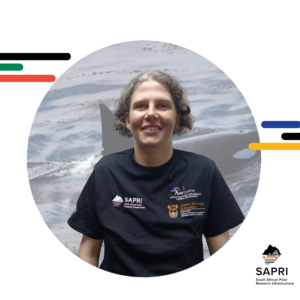
Tara started her journey developing a passion for the great outdoors through being able to spend time within the conservation areas in and around Cape Town. This led her to study conservation through Nelson Mandela University, George Campus.
Through her practical year in the Kalahari she fully grasped that conservation is a field of determination, hard work and as many sunsets as your heart’s desire.
She left the academic world and spent many years working across different projects and animal species, such as baboons, meerkats and Cape parrots, across South Africa.
She gained many new skills and resilience to the harsh realities of the conservation field but also an understanding on how research can help to inform conservation decisions.
The opportunity arose for her to once again further her studies towards a Masters through Rhodes University. Her masters has been looking into the communication of rock hyrax (dassies, Procavia capensis) in north-western Namibia. This masters has enabled Tara to gain a better grasp on the practical uses of acoustic monitoring and to dive into the scientific uses of collected acoustic data.
The opportunity of spending a year on Marion Island and helping to contribute to long set data has been an adventure Tara has always wanted to go on. She is looking forward to both the adventure and the challenge that the position of the Killer Whale Field Researcher (Killer Whaler) will present within such a remote location.
Shani Fourie
Seabird Field Researcher
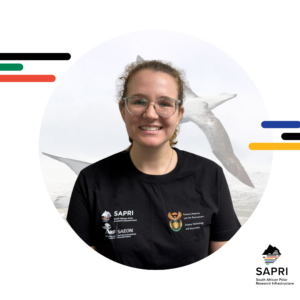
Shani holds a Masters in Biological Sciences from the university of Cape Town.
She is a marine science graduate and educator with a passion for science communication, environmental education, and inspiring young learners.
She has experience in tutoring, research, marine conservation outreach, and fieldwork. Shani especially enjoys hands-on outdoor scientific work. In her free time, She enjoys hiking, rock climbing, reading, and playing board games.
Rhiannon Gill
Seabird Field Researcher
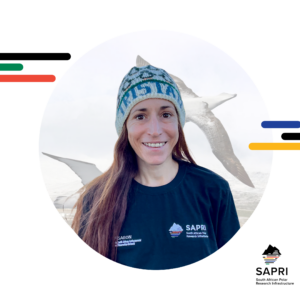
It is an immense privilege to be selected to return to Marion Island for another overwintering period as a Seabird Field Researcher (Birder) for SAPRI.
From a young age growing up in Pretoria, I longed to explore remote regions and work closely with wildlife as a conservationist, inspired by teachers and documentarians.
I pursued an integrated BSc with Honours in Wildlife Biology from the University of South Wales, UK. Returning to South Africa, I began my journey into the conservation of seabirds working for SANCCOB as a Seabird Rehabilitator and my passion for all birds grew from there.
In between undertaking a variety of fieldwork positions conducting Avifaunal surveys, I was taken on as an Aviculturist for the Gough Island Restoration programme and finally realised my dreams of exploring remote regions. Two years later I found myself on Marion Island as a Birder for SAPRI, where walking up to a Wandering Albatross is an experience forever etched in my heart. Returning for another year is an honour and one where I hope to achieve and explore more than the first-time round.
Now that I know the island, understand the terrain and weather, I’m keen to return with new respect for Marion and the life she supports, and hope the ongoing monitoring of its seabirds will help us protect them with more vigour, especially knowing what they are up against in a changing climate and the continual threat of invasive mice on the island.
In my spare time. I’m an avid runner, a member of the Mountain Club of South Africa (Cape Town sector) and struggle to go a day without doing some form of exercise, fieldwork on Marion is perfect for someone like me! I also enjoy reading and learning new things. On Gough I took up looming (generally creating beanies with wool) and find it a great way to relax after a long day and a way to quiet a busy mind and restore focus.
Wishing the new team a safe, successful, and rewarding experience on the island. May your journey be filled with discovery, resilience, and unforgettable experiences.
Text supplied by the SAPRI M83 Overwintering team.
Rabia Mathakutha, South African Polar Research Infrastructure, 26 June 2026