
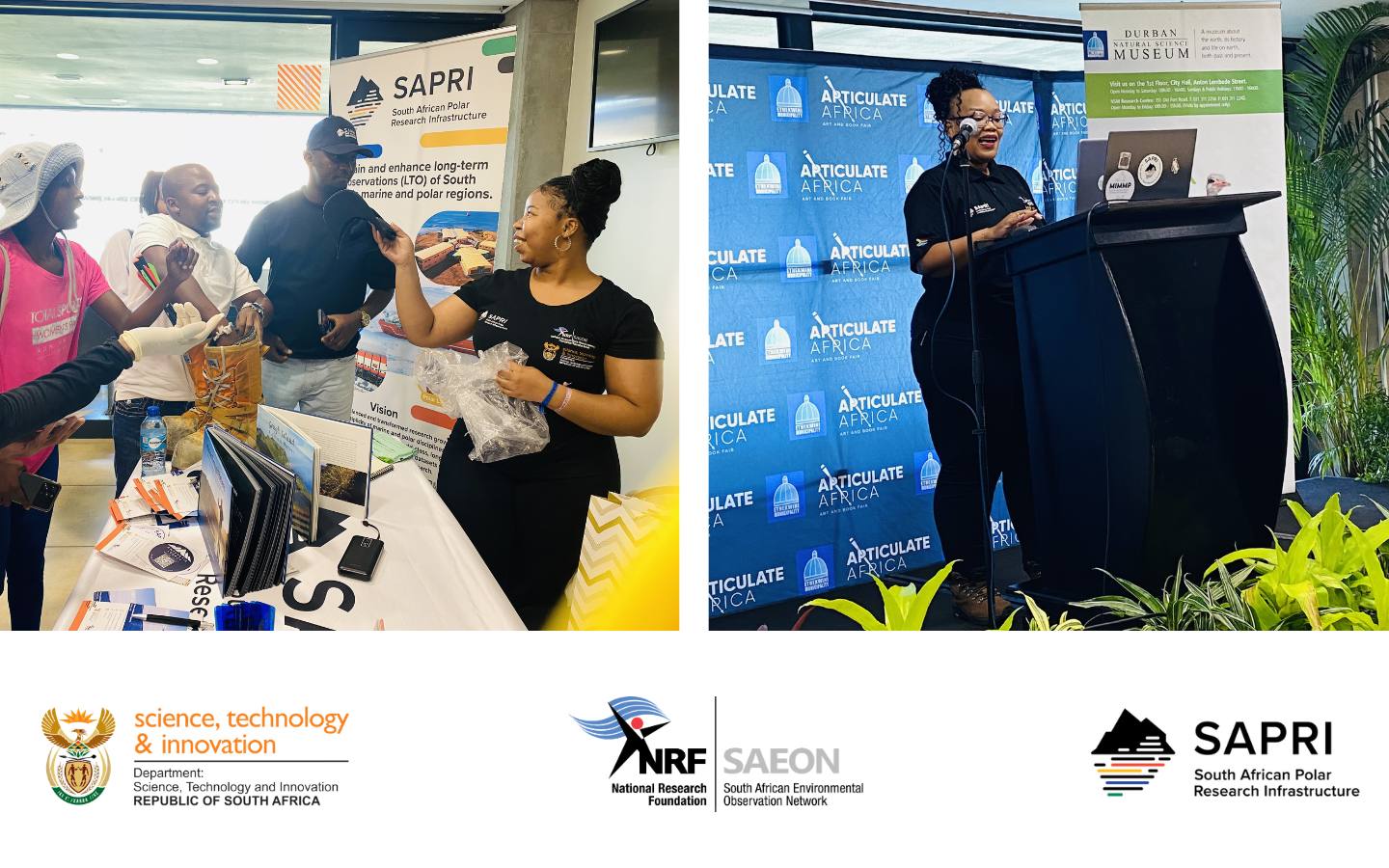
On 09 May 2026, the South African Polar Research Infrastructure (SAPRI) participated in the prestigious Ian Player Magqubu Ntombela Annual Lecture held at Moses Mabhida Stadium, Durban, where members of the public, working professionals, and students gathered for a lecture centred on conservation, environmental stewardship, and social connection.
The annual lecture honours the legacy of Dr Ian Player and Mr Magqubu Ntombela, whose partnership played a transformative role in South African conservation history, particularly through efforts that helped save the white rhino from extinction. The event continues to provide a platform for meaningful conversations around biodiversity, society, and humanity’s relationship with nature.
Representing SAPRI, Engagement Officer Kelebogile Mogotsi (Kelly) delivered a keynote presentation titled: “South African Polar Research Infrastructure (SAPRI): bridging Southern Ocean and Antarctic research and society through engagement and mentorship in South Africa”. The presentation explored how Southern Ocean and Antarctic research can be made more visible, inclusive, and accessible to society through engagement, education, storytelling, and mentorship initiatives.
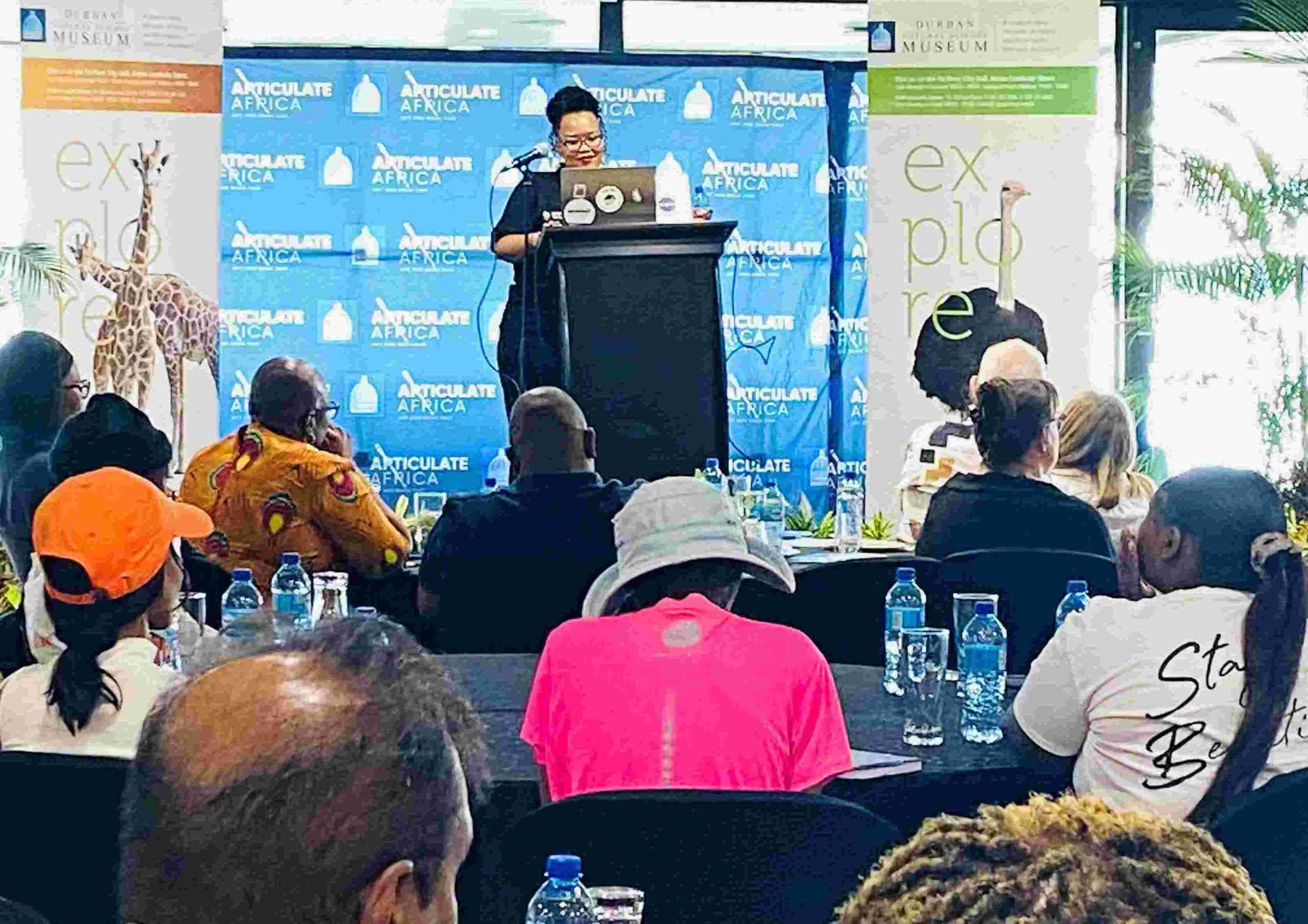
Kelly delivering the keynote presentation at the Ian Player Magqubu Ntombela Annual Lecture, Durban, 09 May 2026
A major highlight of the event was the strong public interest and curiosity surrounding life and research in remote sub-Antarctic and polar environments such as Marion Island, Gough Island, and Antarctica. The audience was captivated by the visual storytelling incorporated into the presentation.
Two captivating videos provided attendees with a rare glimpse into life on Marion Island. The first followed the journey of overwintering team members preparing for departure, life aboard the research vessel travelling through the southwest Indian Ocean, and the helicopter transfer from the ship onto Marion Island. The video also showcased daily life on the island, offering insight into the realities of living and working in one of the world’s most remote environments.
The second video focused on the human side of polar expeditions, highlighting team bonding, celebrations, social events, and everyday moments shared among the overwintering team. The footage resonated strongly with the audience, helping to humanise marine and polar research and reveal the strong sense of community formed in isolation.
In addition to the keynote presentation, SAPRI hosted an interactive exhibition featuring virtual reality (VR) headsets, which proved to be one of the most popular attractions of the exhibition. The VR experience allowed attendees to almost see themselves in polar environments and engage with sub-Antarctic research in an innovative and memorable way. Learners, students, and working professionals alike expressed excitement and fascination as they virtually explored these remote regions.
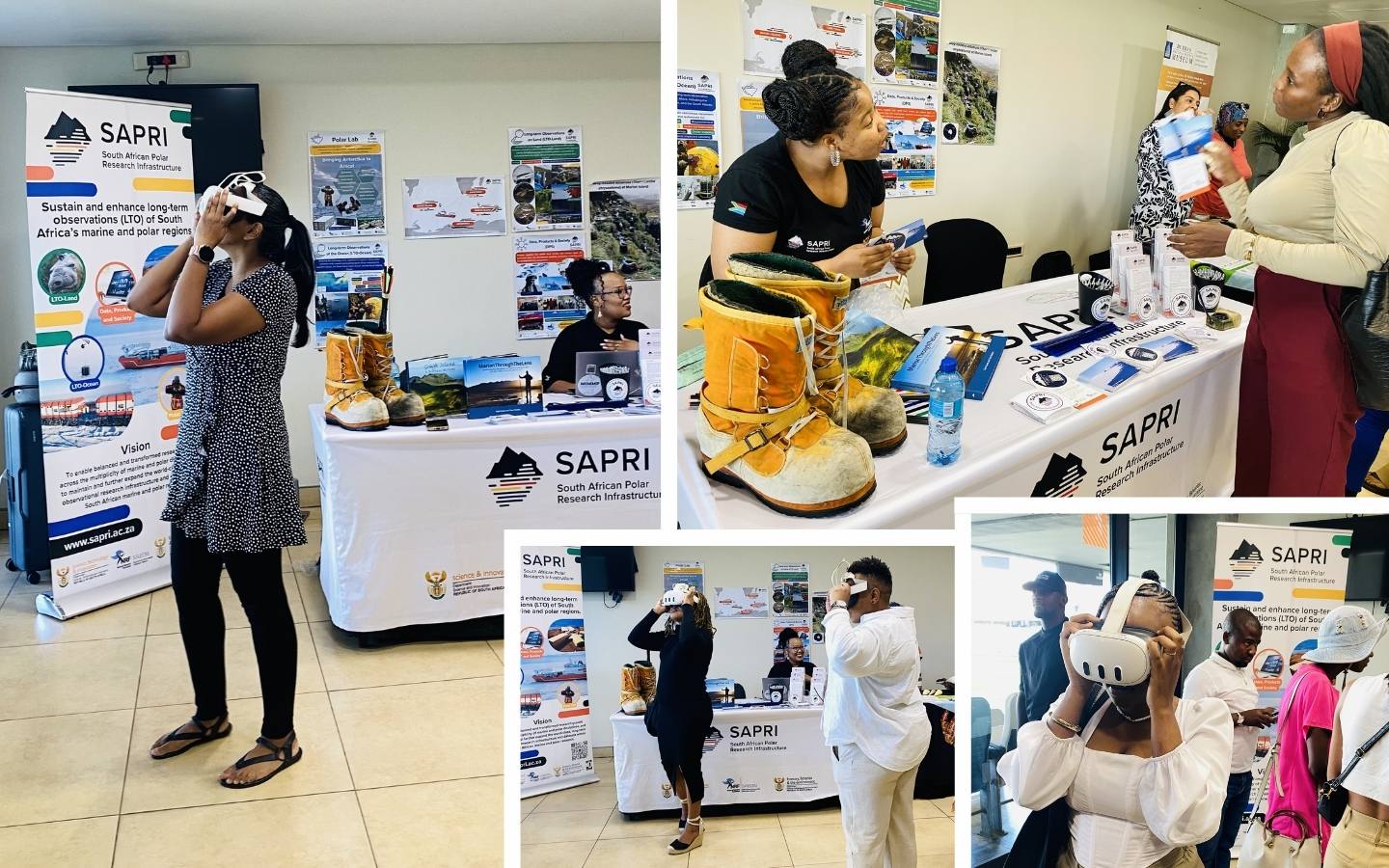
Kelly and Asisipo at the SAPRI exhibit, Ian Player Magqubu Ntombela Annual Lecture, Durban, 09 May 2026
The event created meaningful engagement between researchers, communicators, and the broader public, reinforcing the importance of connecting society to environmental, marine and polar research. Discussions following the presentation reflected growing interest in marine and polar research careers, mentorship opportunities, climate research, and South Africa’s role in global Antarctic research initiatives.
Through initiatives such as these, SAPRI continues to strengthen its mission of bridging science and society by ensuring that marine and polar research is not only conducted in remote environments, but also shared in ways that inspire, educate, and empower communities across South Africa.
Written by Kelebogile Morwa Mandi Mogotsi, SAPRI Engagement Officer. Photos by Asisipo Mboneli and Kelebogile Mogotsi
Anne Treasure, South African Polar Research Infrastructure, 27 May 2026