
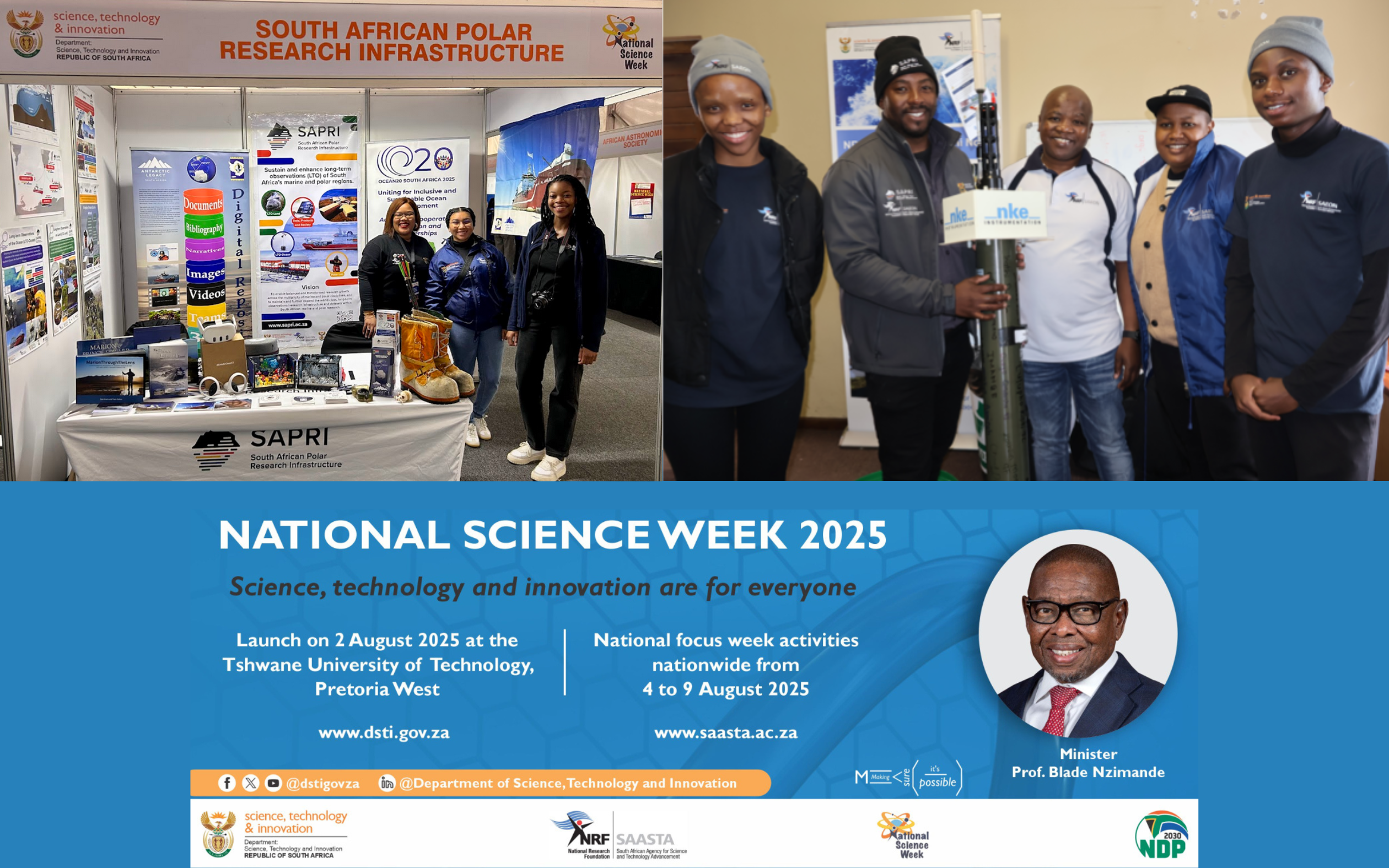
National Science Week (NSW) is a nationwide annual celebration of science, technology, engineering and mathematics (STEM) in South Africa, designed to increase public awareness and participation in science. The programme is coordinated by the National Research Foundation’s South African Agency for Science and Technology Advancement (NRF-SAASTA) on behalf of the Department of Science, Technology and Innovation (DSTI).
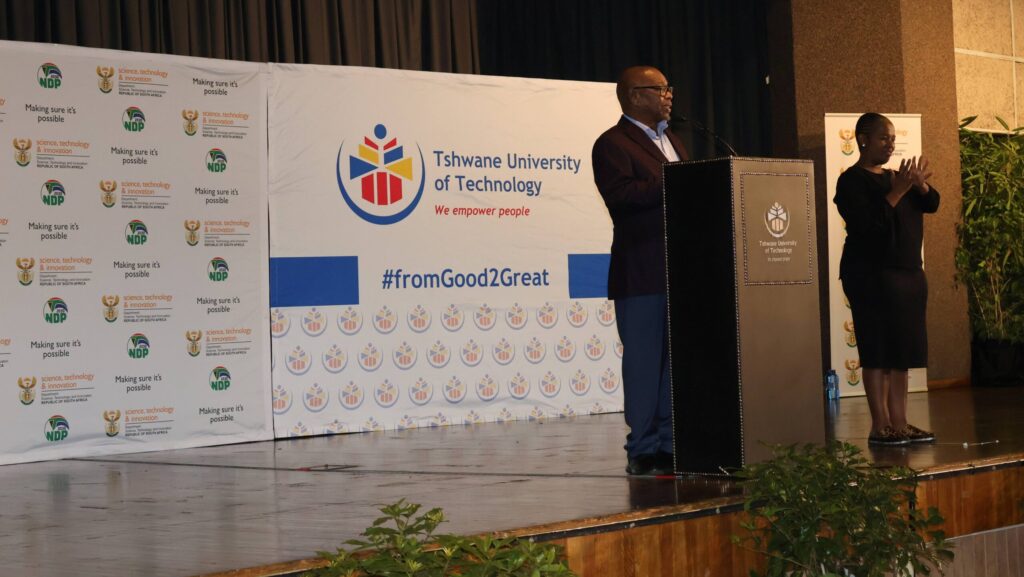
Minister Prof. Blade Nzimande officially launching the National Science Week at Tshwane University of Technology, Pretoria
This year’s NSW was more than a celebration of science, it was an unforgettable journey of discovery, and the South African Polar Research Infrastructure (SAPRI) participated and played a key role. From the official launch in Pretoria to focus week programmes along the West Coast and in KwaZulu-Natal, SAPRI inspired learners, educators, and communities, by breaking down barriers between research and real life, with demonstrations from the marine and polar research infrastructure.
This year’s theme, “Science, Technology and Innovation are for Everyone,” came alive through SAPRI’s exhibitions, dialogues, and hands-on activities that reached thousands of learners across South Africa.
National Science Week Launch at the Tshwane University of Technology (TUT), 2 August 2025
At the Tshwane University of Technology, the National Science Week launch drew over 2,000 participants including learners, educators, the general public, and government officials. Among the 109 exhibitors, SAPRI’s booth became a magnet for curiosity and imagination.
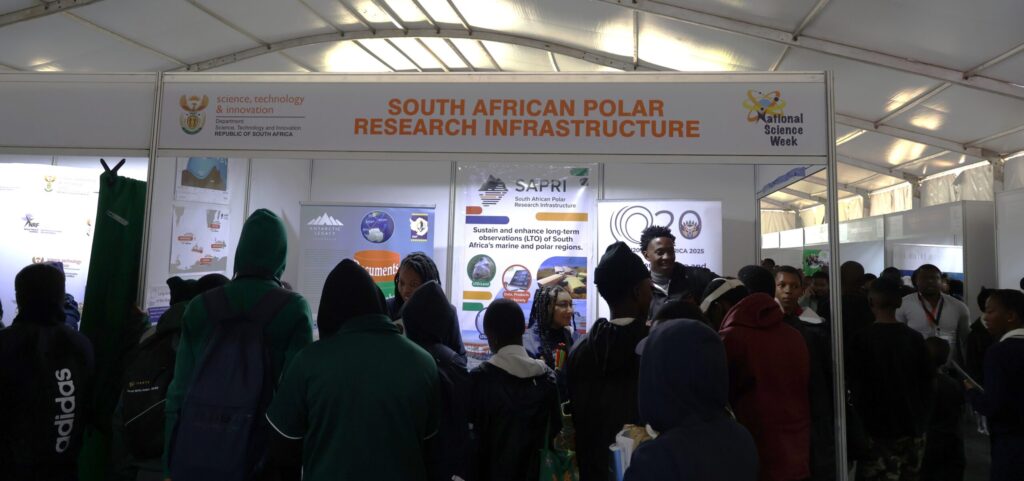
Visitors to the SAPRI booth at the NSW Launch at TUT, in Pretoria
The star attraction was SAPRI’s Virtual Reality (VR) headsets, which transported visitors straight on to South Africa’s polar research vessel, S.A. Agulhas II and sub-Antarctic Marion Island. For the first time, many South Africans found themselves standing virtually among penguins and seals, seeing research stations in remote icy landscapes.
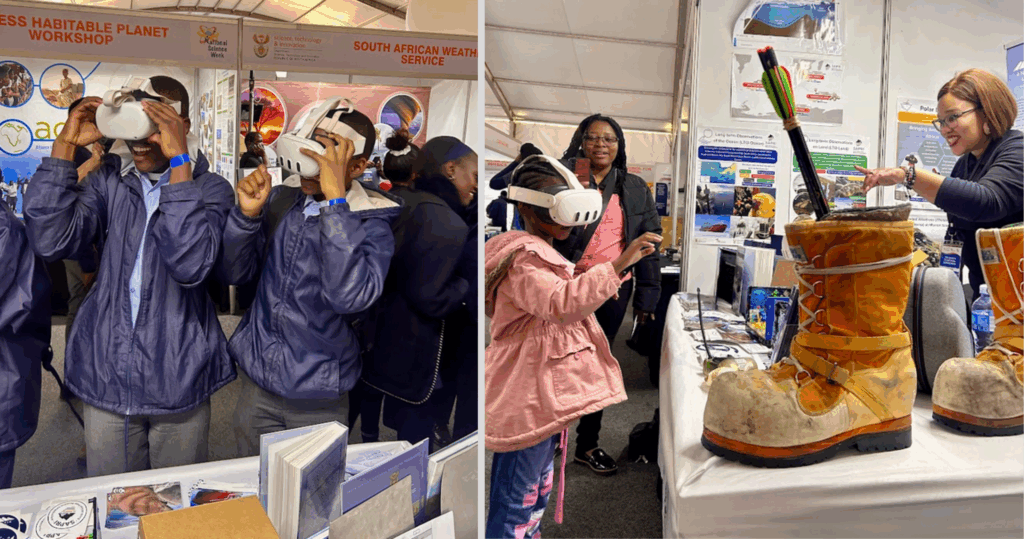
Learners and the general public interacting with VR headsets at the SAPRI booth during the NSW Launch at TUT, in Pretoria
What started as an interactive tool became a gateway to dreaming. Dozens of learners voiced aspirations to become marine biologists, environmental scientists, or polar researchers. Parents and educators lingered at the booth, asking about study pathways and career opportunities. Even officials were drawn in, noting how effective immersive technology can be for science engagement.
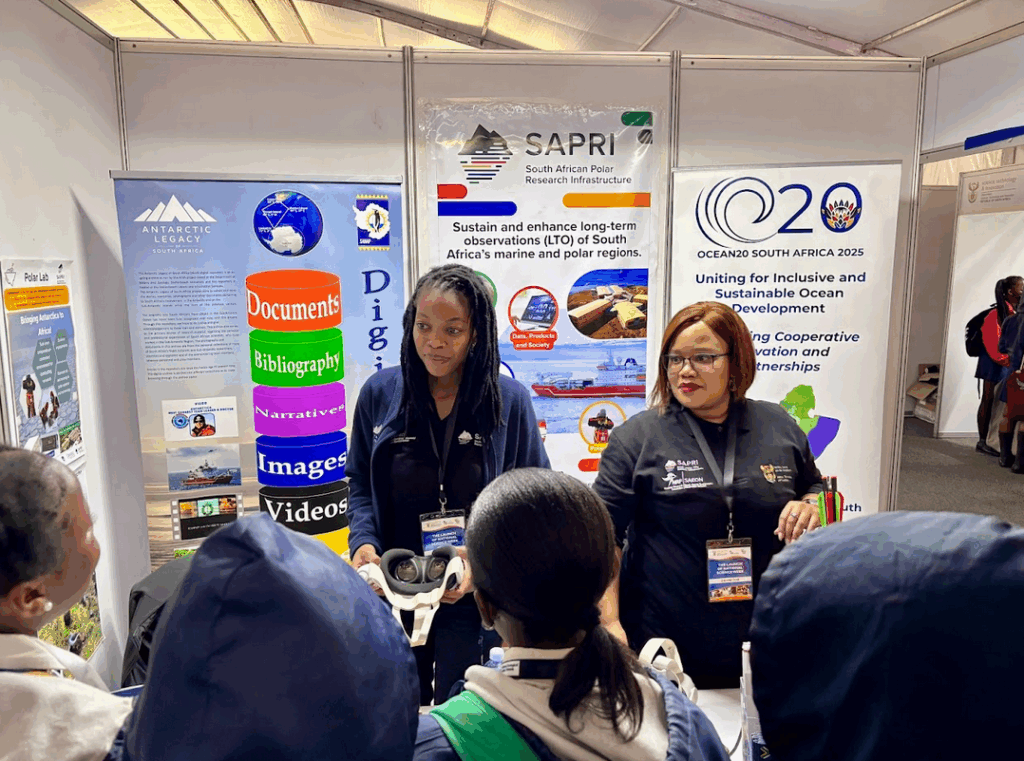
Rabia and Kelly interacting with learners and students at the SAPRI booth during the NSW Launch at TUT, in Pretoria
The momentum carried through the keynote address by the Minister of Science, Technology and Innovation, who unveiled bold plans: expanding NSW into a month-long programme in 2026, establishing flagship science centers, and boosting participation in STEM Olympiads. These announcements set the stage for a future where young South Africans have more opportunities than ever to step into science.
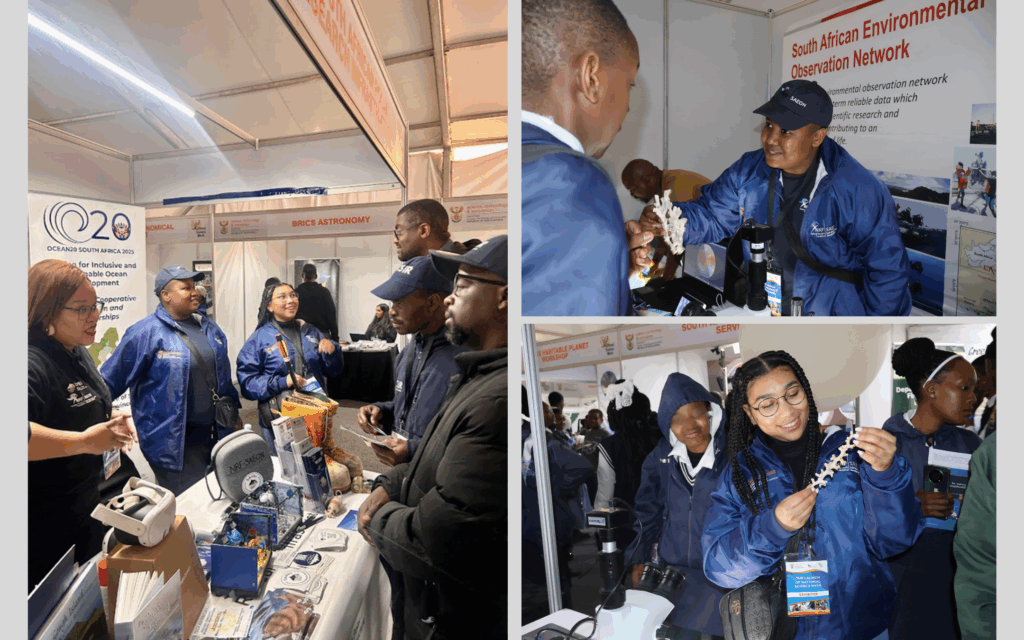
Public engagement at the SAPRI and NRF-SAEON booths during the NSW Launch at TUT, in Pretoria
SAPRI’s presence at the launch was not simply an exhibit, it was a catalyst for inspiration. It showed that science is not locked in laboratories or faraway continents, but accessible through technology and innovation, exciting, and waiting for the next generation to explore.
National Science Week Focus Week, 4 – 9 August 2025
Turning Classrooms Into Laboratories: SAPRI Visits the West Coast for NSW Focus Week, 4 – 6 August 2025
From Diazville High Schooll in Saldanha Bay to New Vredenburg High School, SAPRI joined the South African Environmental Observation Network (NRF–SAEON) Egagasini Node team for a three-day outreach that turned ordinary classrooms into living laboratories of science.
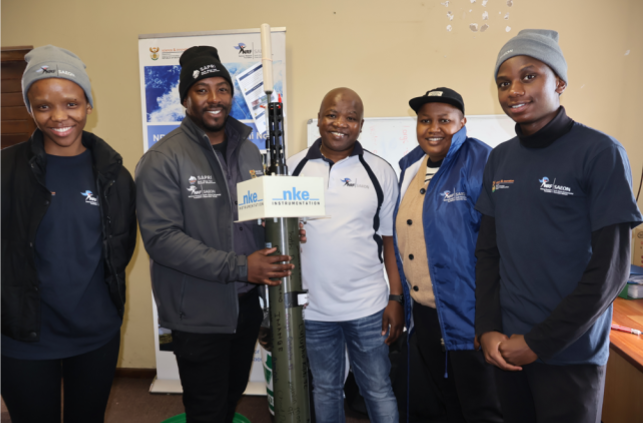
The NRF-SAEON and SAPRI team posing with an Argo float following its adoption by the New Vredenberg High School. L-R: Zinhle, Tlhonolofasto, Thomas, Rendani and Inathi
The team was young, dynamic, and diverse which included ocean modelers, marine biologists, technicians, interns, and students. Each brought their own story and expertise, offering learners a panoramic view of science careers.
Learners coded in Python for the first time, explored marine biodiversity, and discovered how South Africa’s ocean connects to global policy through initiatives like Ocean20. They met role models not much older than themselves, students from Cape Peninsula University of Technology (CPUT), who spoke openly about subject choices, university life, and their own paths into science. These peer-to-peer exchanges proved transformative, making careers in science feel not only possible but relatable.
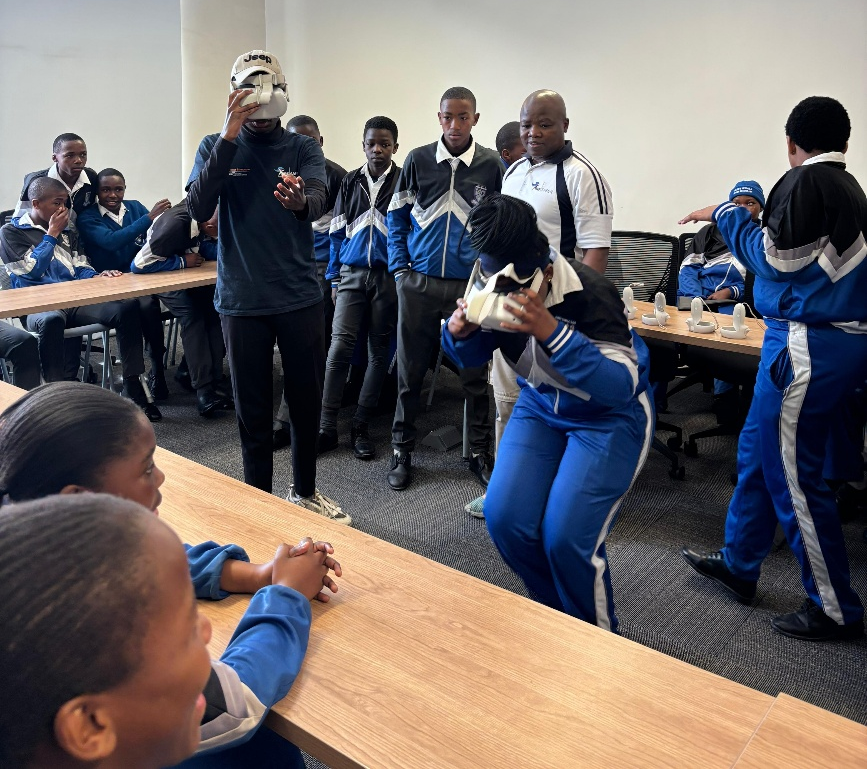
Learners interacting with VR headsets at New Vredenburg High School
Then came a moment the learners will never forget: SAPRI’s Argo Float demonstration. Senior Technician, Tlhonolofatso Steve Tebele, unveiled the sophisticated instrument, explained its global importance in oceans monitoring, and invited learners to sign their names on it before its upcoming deployment. In that instant, science was no longer abstract, it was personal, their signatures literally set to travel the seas with data bound for the world’s climate models.
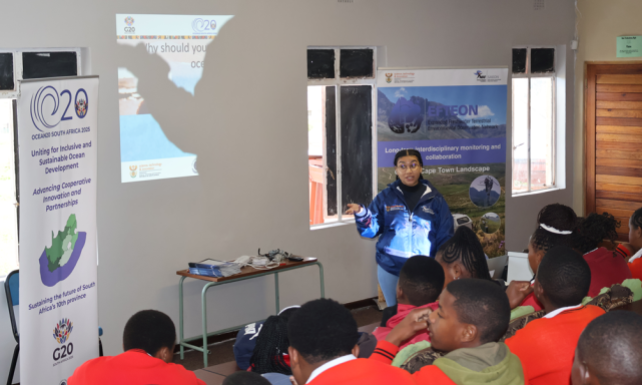
Melissa Philander inspiring the youth to be the voice of the ocean and drive Ocean20 initiatives into their communities.
Interactive demonstrations kept the energy high. Learners simulated wind and temperature using meteorological sensors, watching real-time data on screens as they experimented. For many, it was their first time seeing how scientists collect and interpret environmental data.
By the end of the tour, hundreds of learners had not only learned about science, but they had also lived it. They left with notebooks filled, eyes wide, and, as one learner said, “a new idea of who I can be when I grow up.”
Exploring Futures in Science: SAPRI visits the KwaZulu-Natal province for the NSW Focus Week, 6 – 9 August 2025
KwaZulu-Natal’s programme, themed “Exploring Futures: Careers in Science & Innovation for the 21st Century,” brought science directly into schools, universities, and community spaces across Durban and Pietermaritzburg.
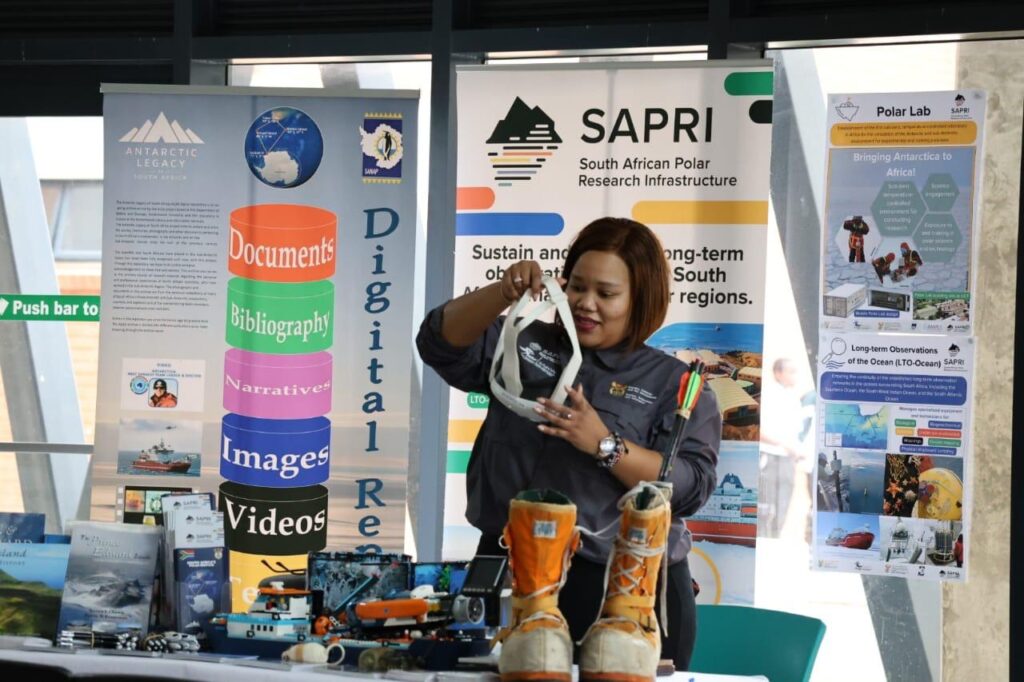
Kelly representing SAPRI, NRF-SAEON and ALSA at the National Science Week focus week in Durban
The NRF-SAEON’s and SAPRI’s role was multi-layered and impactful, represented by our Engagement Officer, Kelebogile Morwa Mandi Mogotsi – Kelly. At Anton Lembede Academy, Kelly facilitated a career dialogue panel that guided learners to see the connections between polar science, marine research, and global challenges like climate change and water security. Exhibitions showcased South Africa’s polar contributions, while discussions encouraged learners to picture themselves as the next generation of researchers and innovators.
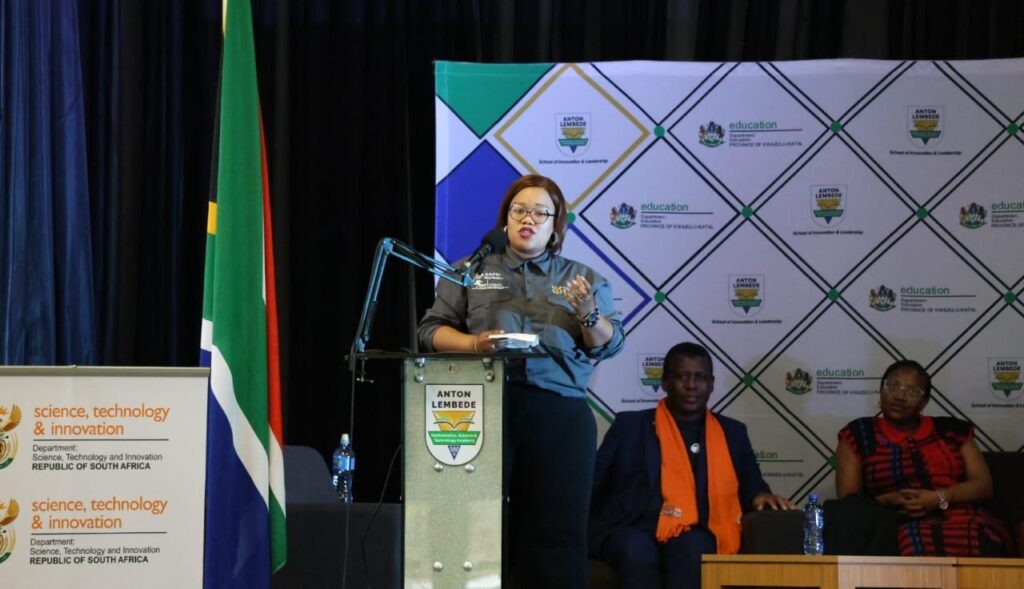
Kelly facilitating a Panel Dialogue: Exploring Futures: Careers in Science & Innovation for the 21st Century at Anton Lembede Academy, Durban
At Mangosuthu University of Technology (MUT), over 500 learners from Umlazi township schools rotated through SAPRI’s interactive stand, engaging with examples of marine and polar research equipment, ocean-climate science, and hands-on activities. Many learners expressed their frustration at the lack of laboratory facilities in their schools but were equally motivated by the careers on display, proof that their ambitions need not be limited by current constraints.
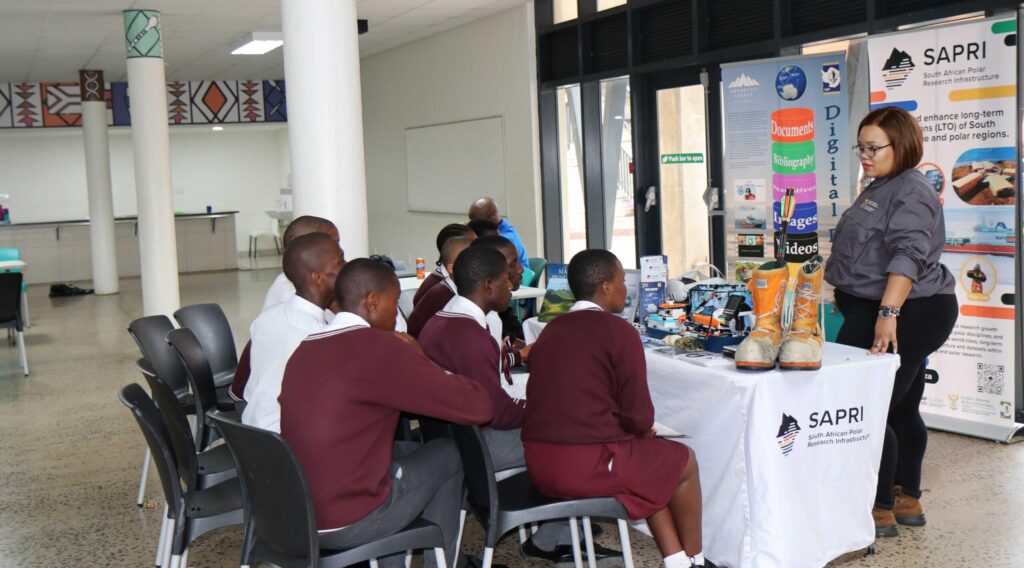
Kelly engaging learners about careers in the marine and polar research fields at the Anton Lembede Academy, Durban
Back at Anton Lembede, SAPRI supported the Astro Quiz competition and deepened community engagement by showing how global polar science ties directly to local challenges. Finally, as part pf the National Women’s Day celebrations on the 9th of August 2025, SAPRI proudly joined a dialogue celebrating women scientists, delivering the vote of thanks on behalf of NRF–SAASTA and affirming its commitment to gender equality in STEM.
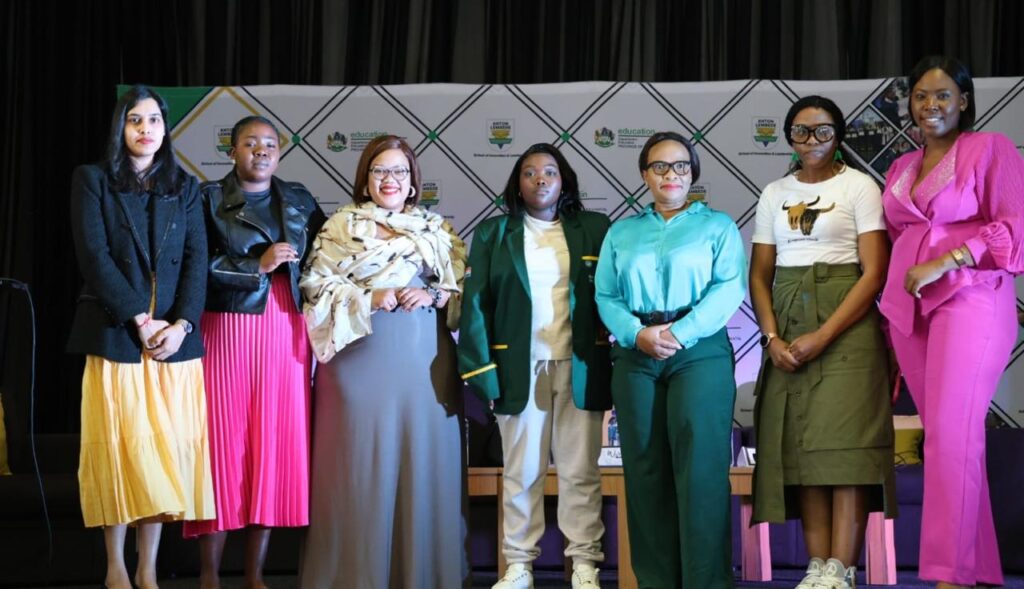
National Women’s Day celebrations during the National Science Week focus week in Durban
By the close of the week, SAPRI had engaged over 1,000 learners in KwaZulu-Natal alone, leaving behind a trail of inspiration and a renewed sense of what futures in science could look like.
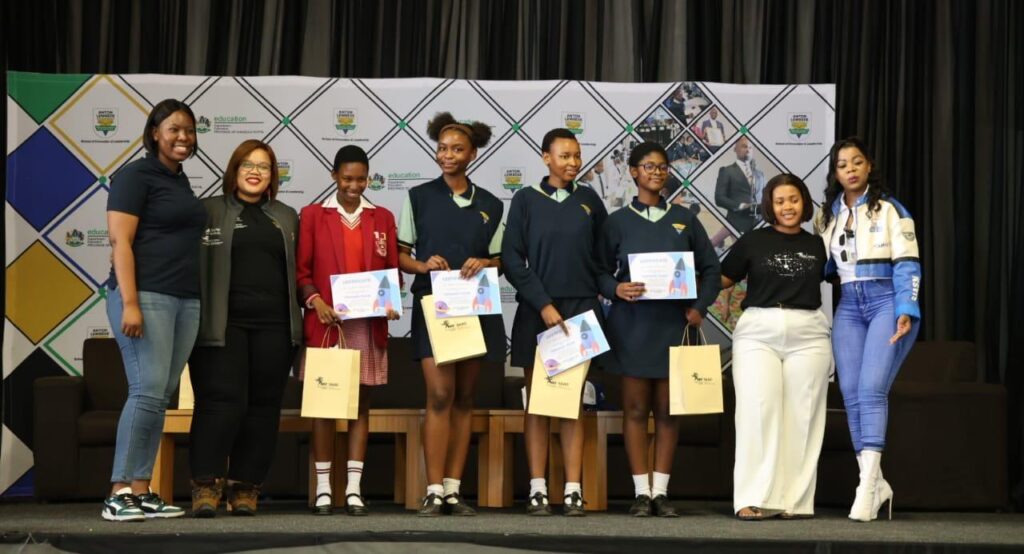
Learners who won prizes during the Astro Quiz Competition at the National Science Week focus week at Anton Lembede Academy in Durban
Looking Ahead
From the bustling halls of TUT to classrooms on the West Coast and community halls in KwaZulu-Natal, National Science Week 2025 proved that science belongs to everyone. SAPRI’s presence ensured that learners not only discover new knowledge but also feel empowered to dream bigger, explore deeper, and see themselves as part of South Africa’s scientific future.
Through immersive technology, personal storytelling, and hands-on demonstrations, SAPRI continues to open new worlds of possibility, nurturing the curiosity today that will become the innovation of tomorrow.
Text supplied by Kelebogile Morwa Mandi Mogotsi – Kelly, Tlhonolofatso Steve Tebele (SAPRI) & Melissa Zoe Philander (Ocean20, NRF-SAEON Egagasini Node)
Rabia Mathakutha, South African Polar Research Infrastructure, 16 November 2025