
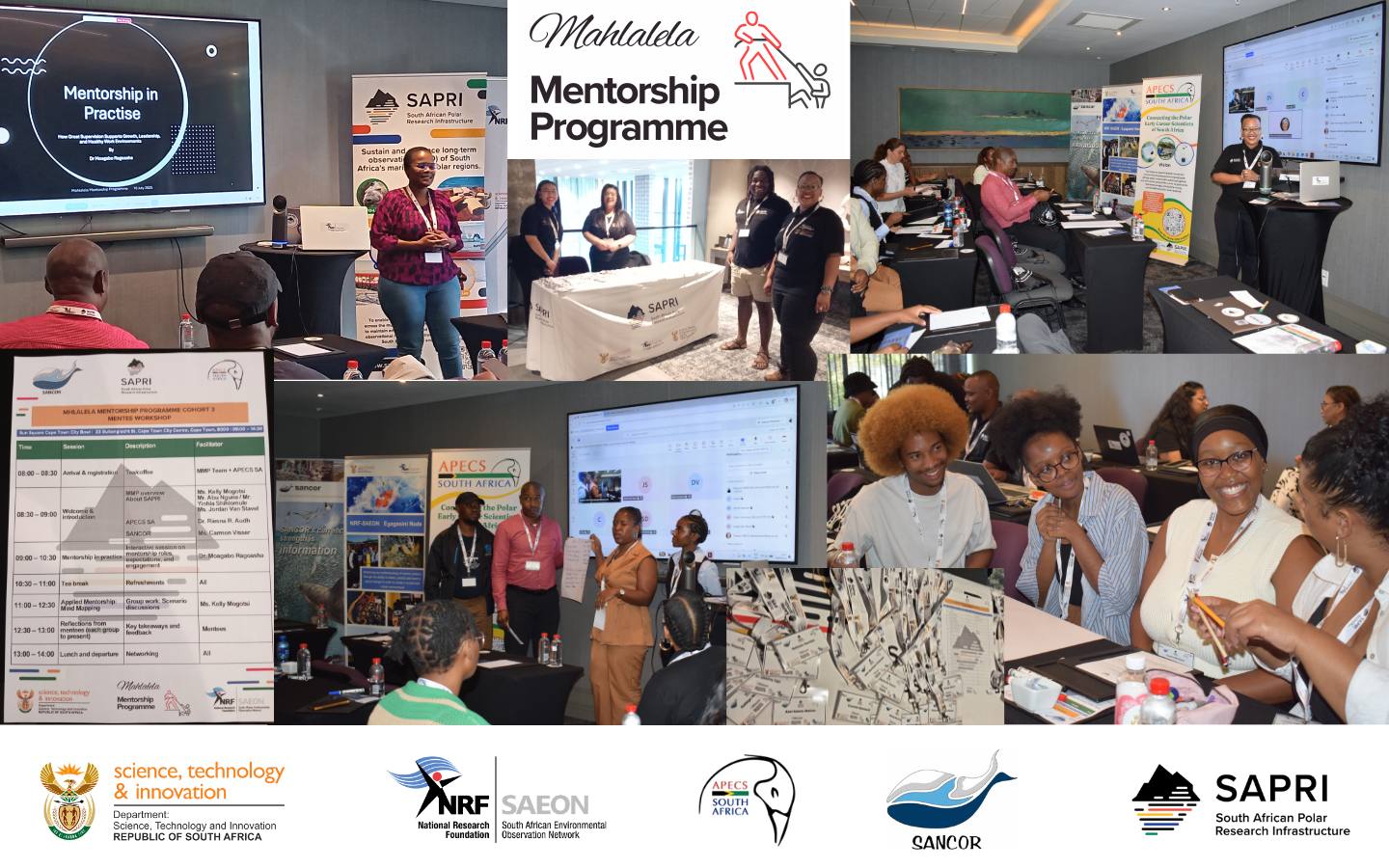
The Mahlalela Mentorship Programme (MMP), a collaboration between the South African Polar Research Infrastructure (SAPRI), the Association of Polar Early Career Scientists of South Africa (APECS SA) and the South African Network for Coastal and Oceanic Research (SANCOR), recently hosted a Cohort 3 in-person workshop. The event brought together a vibrant and diverse group of postgraduate students, early-career researchers, and mentors from across the marine and polar research community. With approximately 38 participants joining both in person and online, the workshop was more than just a gathering. It was a space filled with energy, curiosity, and a shared sense of purpose. From the moment the day began, it was clear that this was a community coming together not only to learn, but to connect, support, and grow alongside one another.
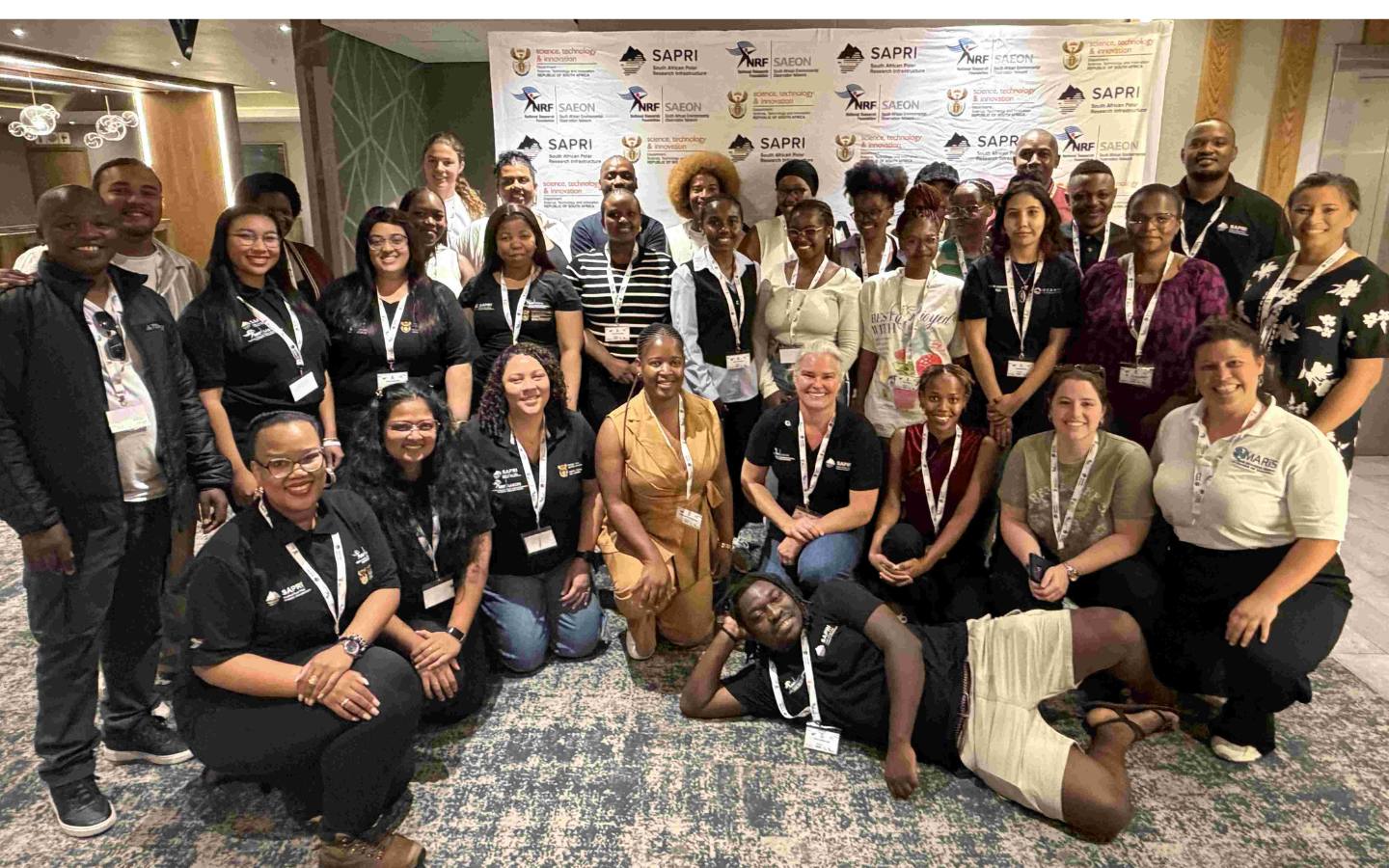
Participants of the Mahlalela Mentorship Programme (MMP) Cohort 3 workshop, Cape Town, 31 March 2026
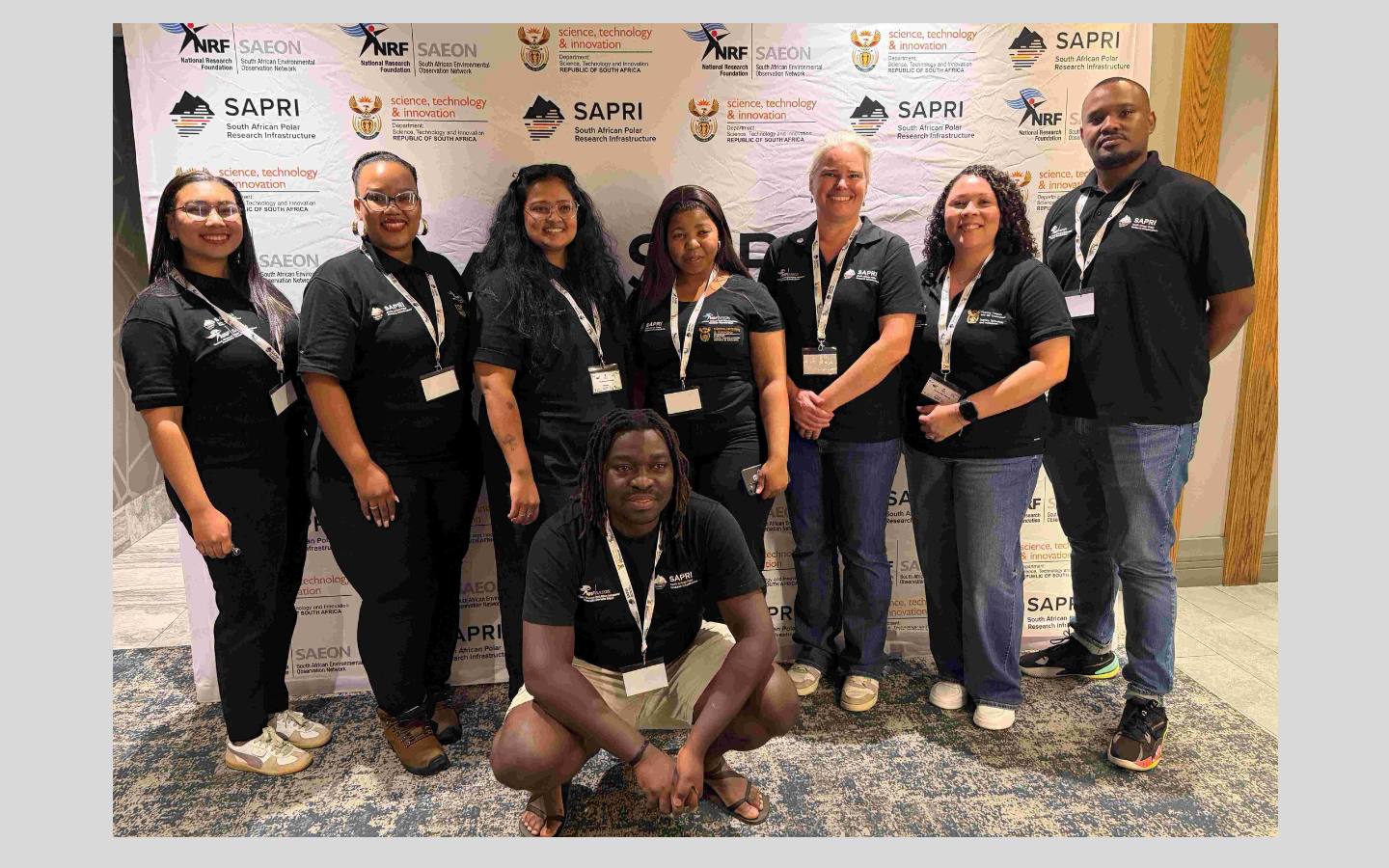
SAPRI team at the Mahlalela Mentorship Programme (MMP) Cohort 3 workshop, Cape Town, 31 March 2026
The workshop opened with a reflection on the journey of the Mahlalela Mentorship Programme by Ms. Kelly Mogotsi, who traced its evolution from its launch in March 2025 as a series of skills development webinars to the structured mentor-mentee platform it is today. The MMP has steadily grown into a programme grounded in collaboration, peer learning, and real-world application. A mini-pilot of the mentor-mentee matching process at the SANAP Symposium 2025 also helped to lay the foundation for the interactive, community-driven approach now seen in Cohort 3.
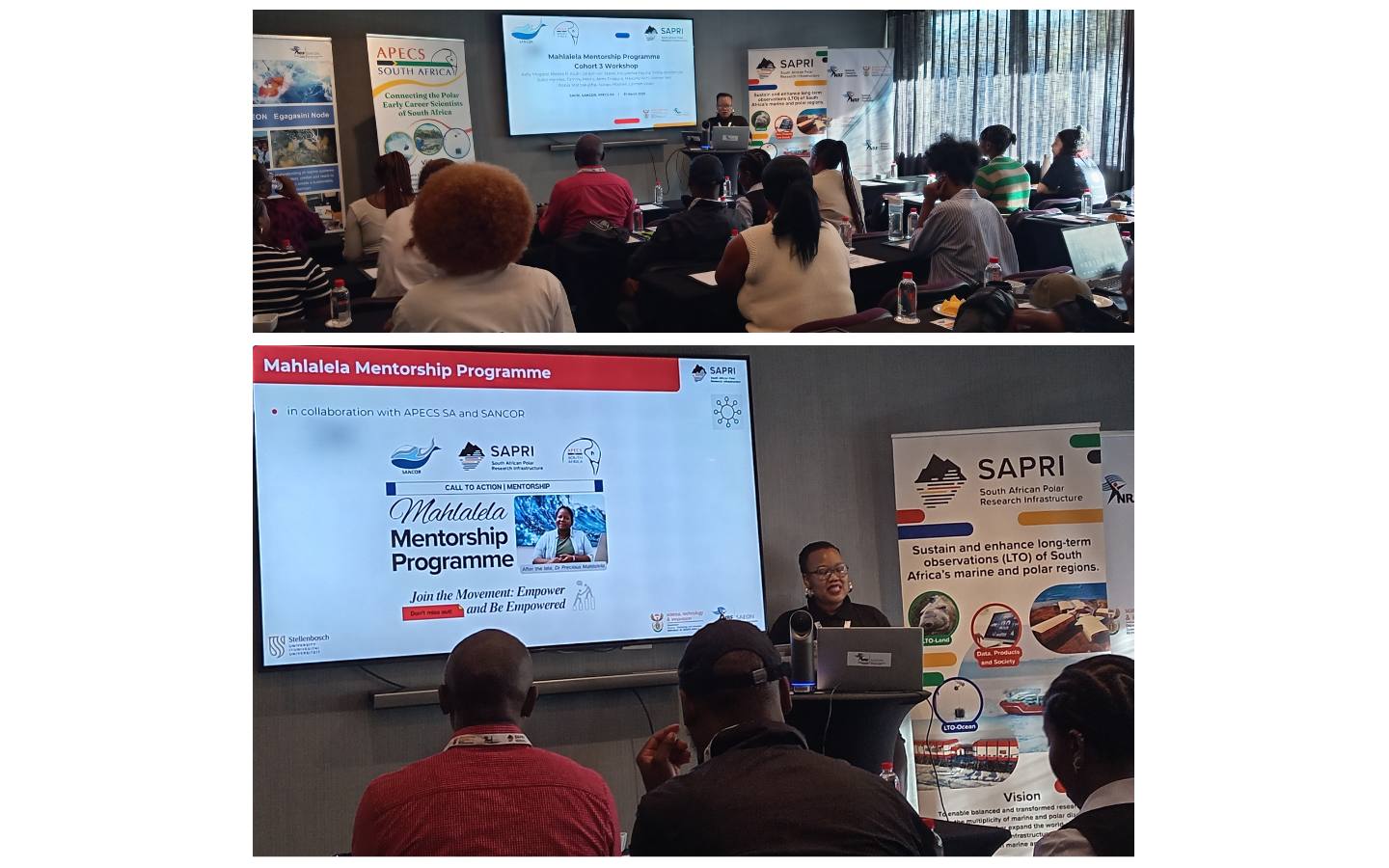
Kelly presenting on the Mahlalela Mentorship Programme (MMP) at the MMP Cohort 3 Workshop, Cape Town, 31 March 2026
Participants were then introduced to SAPRI through engaging presentations to provide insight into the organisation’s four integrated facilities (IFs) and the broader marine and polar research landscape. Abu Nguna (Research Coordinator, Long-Term Observation on Land (LTO-Land) IF), together with Yinhla Shihlomule (Top Predator Monitoring Coordinator), shared perspectives on land-based observation systems and terrestrial monitoring. Jordan van Stavel (Research Coordinator, Long-Term Observations of the Ocean (LTO-Ocean) IF), highlighted the importance of ocean-based research, while Dr Riesna Audh (Research Coordinator, Polar Lab, and APECSSA Chairperson), offered valuable insights into polar research and student engagement through APECS SA within the Antarctic and Southern Ocean community. The session concluded with Carmen Visser, who provided an informative overview of SANCOR, connecting participants to broader national networks and opportunities within marine research.
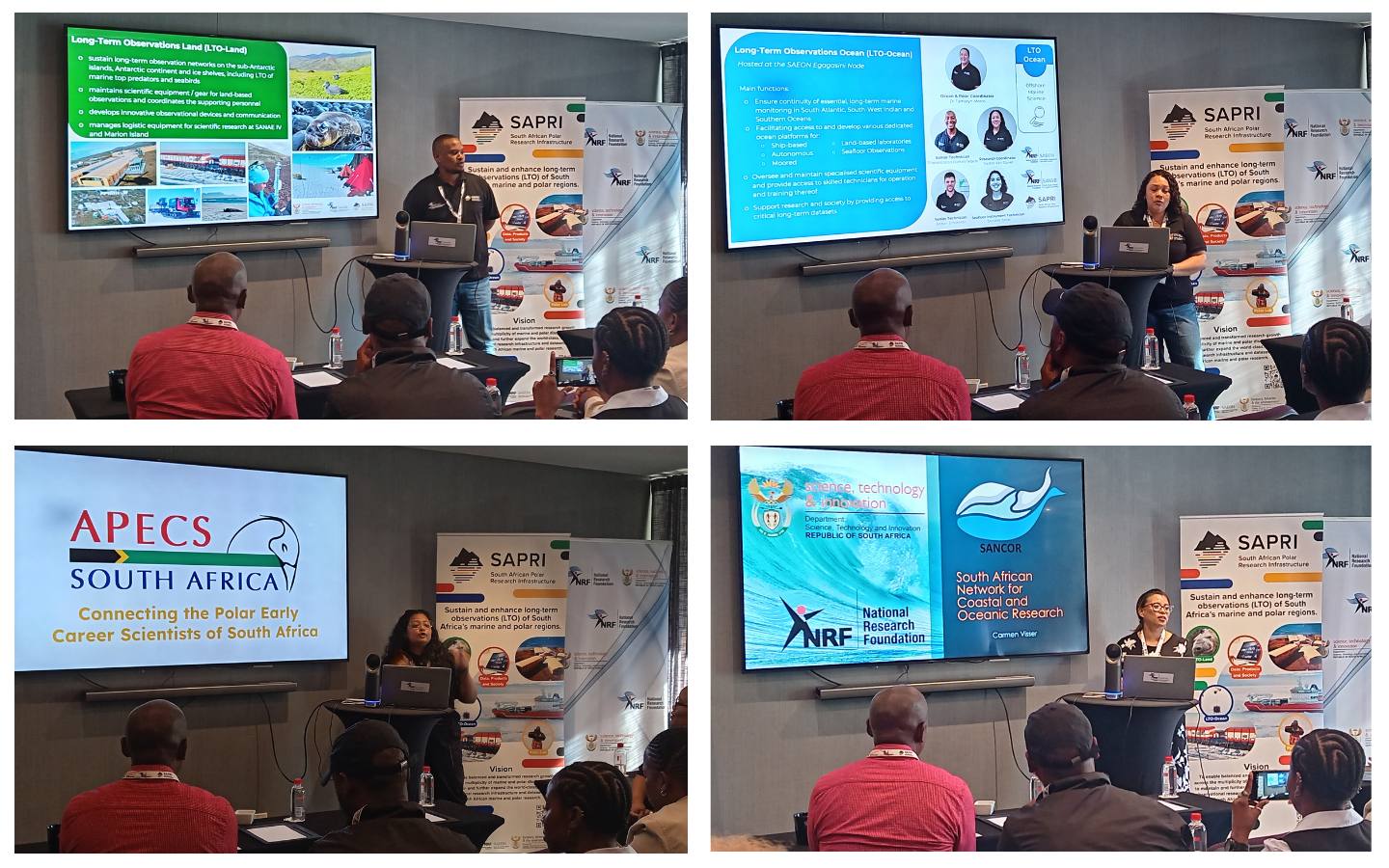
Presentations on SAPRI, APECS SA and SANCOR at the Mahlalela Mentorship Programme (MMP) Cohort 3 Workshop, Cape Town, 31 March 2026 (clockwise from top left: Abu, Jordan, Carmen, Riesna)
The heart of the workshop was the “Mentorship in Practice” session facilitated by Dr Moagabo Ragoasha (University of Cape Town), a session that truly brought the room to life. What stood out was not just the content, but the level of engagement. Participants leaned into the discussions, asked thoughtful questions, and shared openly, creating an environment built on trust and mutual respect.
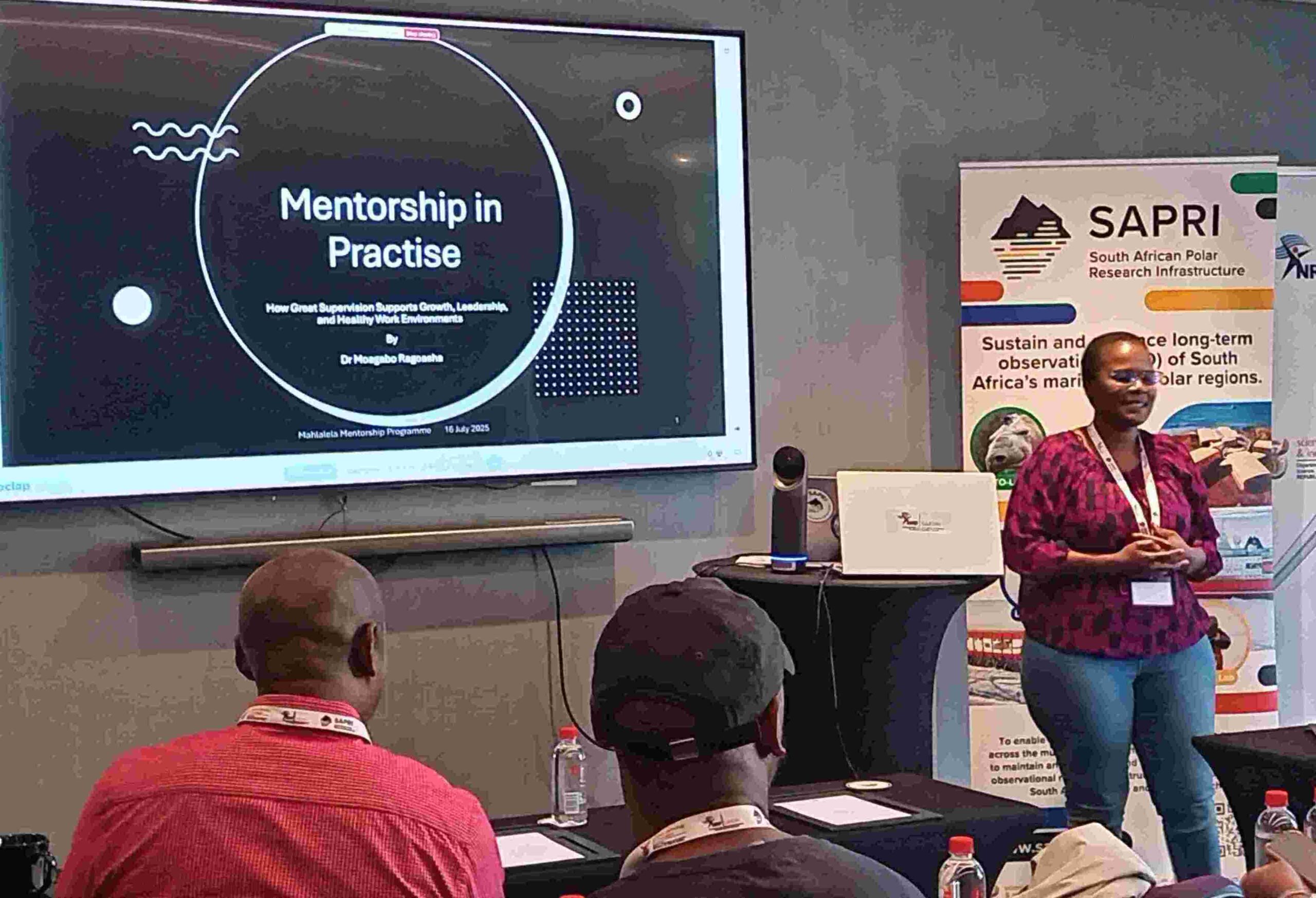
Dr Moagabo Ragoasha (University of Cape Town) facilitating a session called “Mentorship in Practice” at the Mahlalela Mentorship Programme (MMP) Cohort 3 Workshop, Cape Town, 31 March 2026
Dr Ragoasha encouraged attendees to take ownership of their journeys, reminding them to:
“Be the captain of your own expedition.”
She further described mentorship as something broader and more interconnected:
“Mentorship is a constellation, not a single star.”
And importantly, she emphasised shared responsibility within the community:
“The health of the ecosystem is your responsibility.”
These messages set the tone for a highly interactive and reflective session and provided a powerful reminder that mentorship is not a one-way exchange, but a shared journey of learning and growth.
This momentum carried seamlessly into the applied mentorship activities, where participants worked in groups on mind mapping and scenario-based discussions. Here, the shift was tangible. Conversations turned into collaboration, and collaboration into confident action. As groups presented back, there was a noticeable sense of ownership, clarity, and confidence in their ideas. Mentees who may have arrived unsure of their place in the room were now speaking with confidence, engaging critically, and contributing meaningfully.
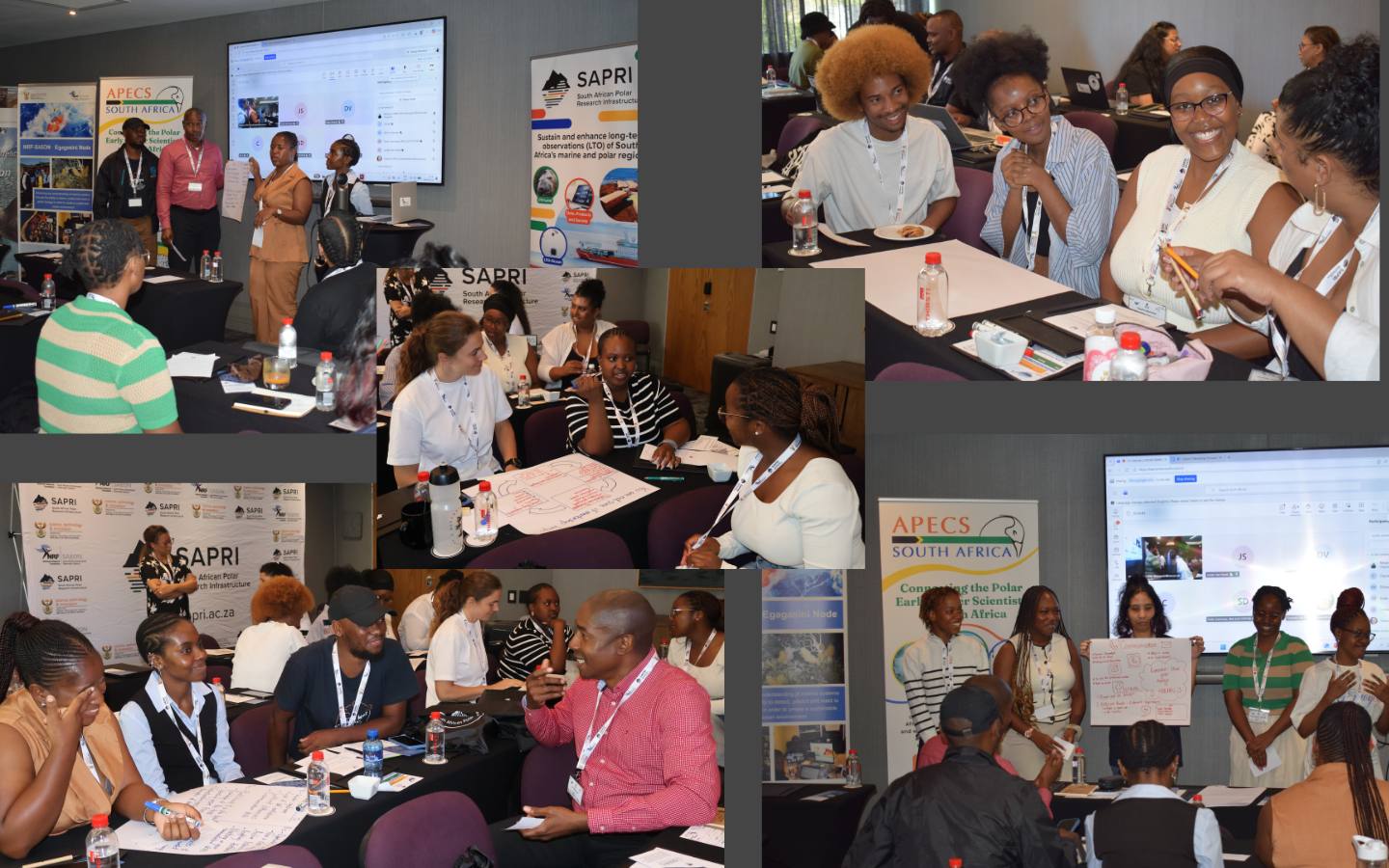
Group activities during the Mahlalela Mentorship Programme (MMP) Cohort 3 Workshop, Cape Town, 31 March 2026
The closing reflections captured the essence of the day. Participants spoke of feeling included, inspired, and excited to be part of a like-minded community. There was a shared recognition that this was not just the start of a programme, but the beginning of a supportive network that would extend beyond the workshop itself.
As Cohort 3 embarks on its six-month mentorship journey, participants will engage in structured, group-based sessions designed to support their academic development, research challenges, and career pathways. The connections formed during this workshop have already laid a strong foundation for what lies ahead.
Ultimately, the success of the workshop speaks to something deeper than programme delivery; it reflects the power of creating spaces where people feel seen, heard, and empowered. The Mahlalela Mentorship Programme continues to grow into more than an initiative; it is becoming a community, a support system, and a catalyst for the next generation of marine and polar researchers in South Africa. The outcomes of the workshop already demonstrate this in practice.
Written by Kelebogile Morwa Mandi Mogotsi, SAPRI Engagement Officer. Photos by Leila Nefdt (MARiS, University of Cape Town) and Anne Treasure (SAPRI)
Anne Treasure, South African Polar Research Infrastructure, 10 April 2026