
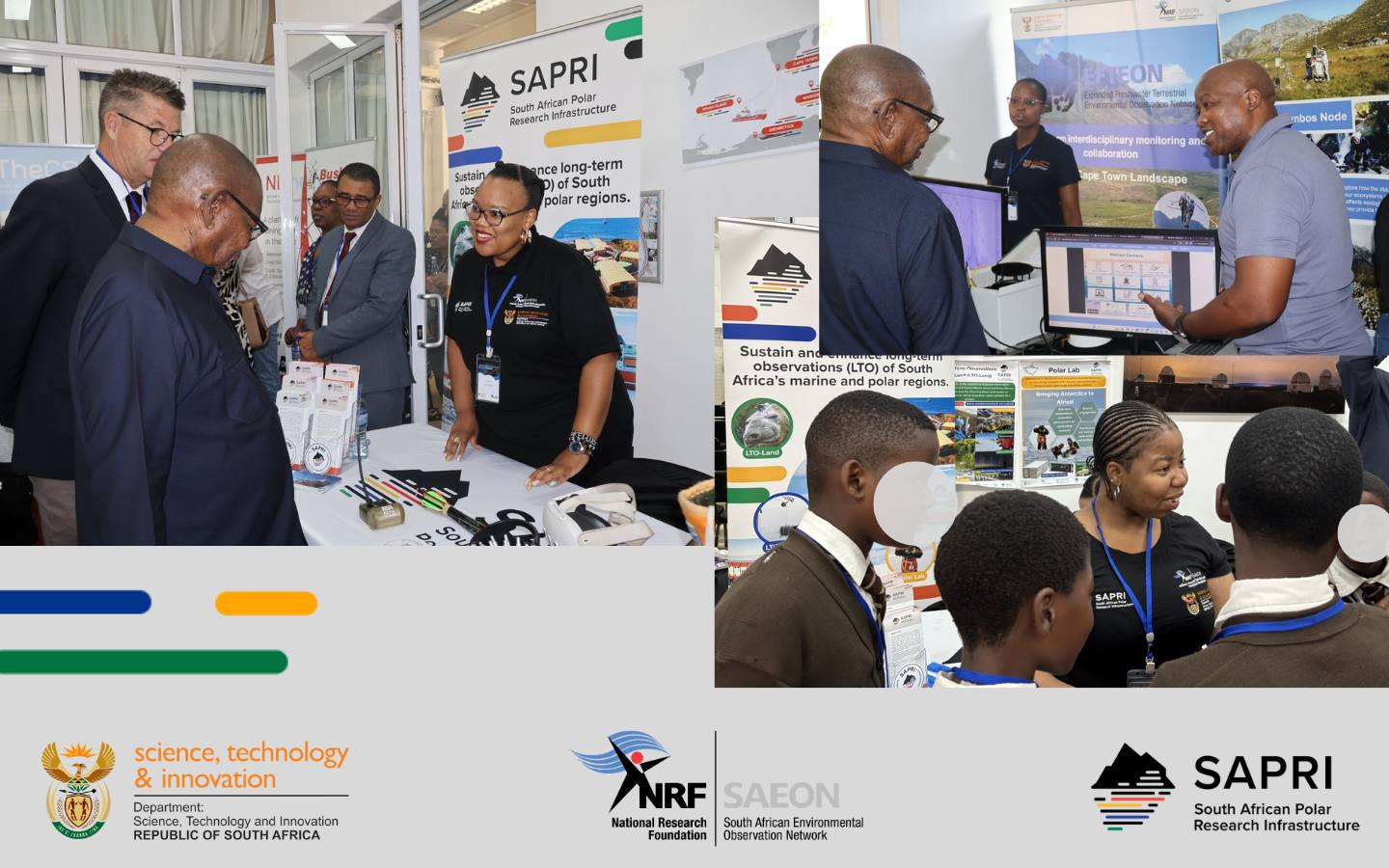
The Ministerial Pre-State of the Nation Address (Pre-SONA) Science Outreach Programme, held on 12 February 2026 at the National Research Foundation-South African Astronomical Observatory (NRF-SAAO) in Cape Town, brought science to life for 80 learners and 50 delegates.
In his address, the Minister of the Department of Science, Technology and Innovation (DSTI), Professor Blade Nzimande, emphasised the critical role of science, technology and innovation in shaping South Africa’s future, urging learners to remain committed to mathematics and science.
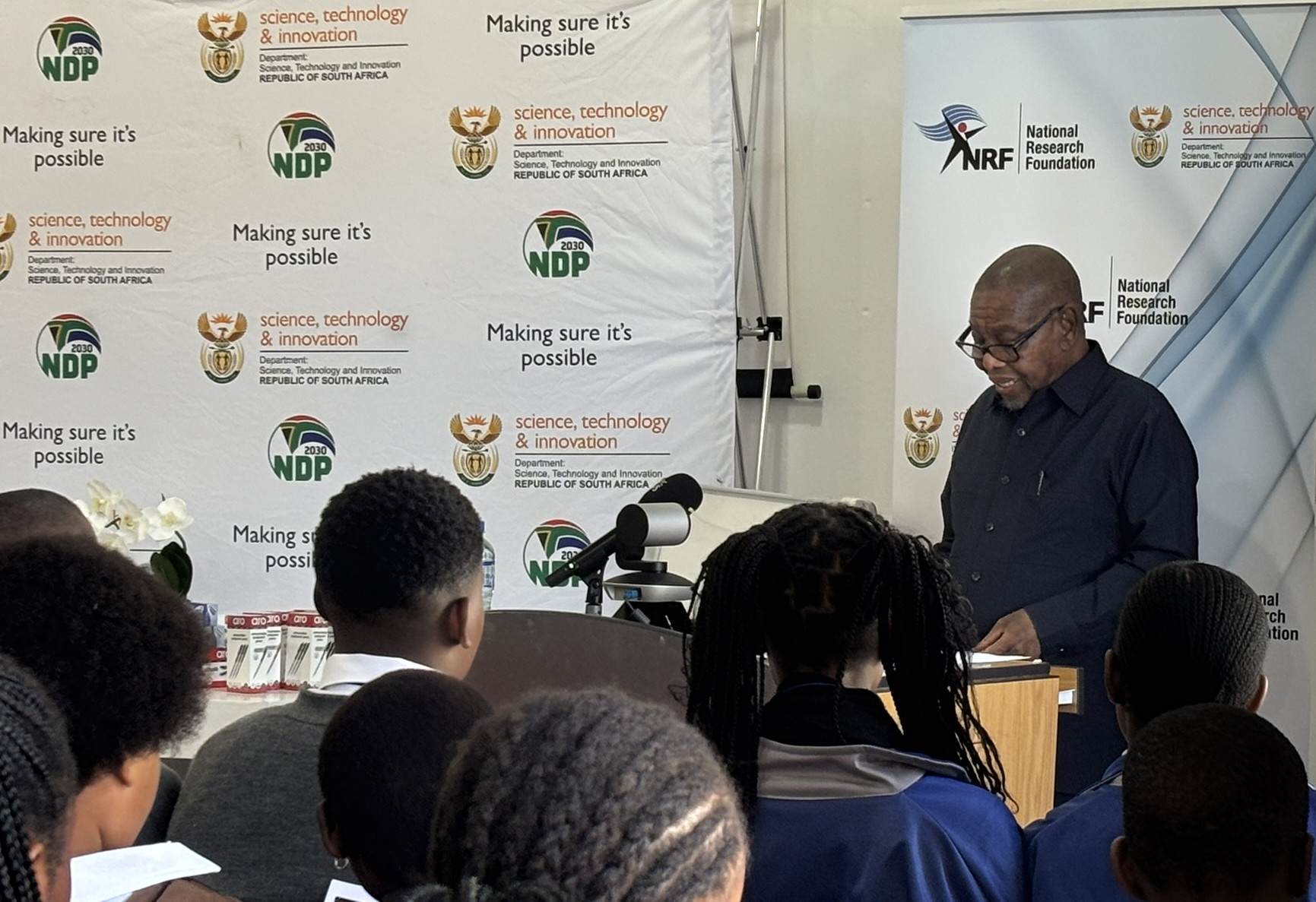
Minister Professor Blade Nzimande delivers a powerful message encouraging learners to pursue STEM excellence (photo by Melissa Philander)
While the historic observatory provided the setting, the South African Polar Research Infrastructure (SAPRI) in collaboration with its host institution, the NRF-South African Environmental Observation Network (NRF-SAEON) Egagasini Node, created an immersive ocean-to-polar experience that left learners inspired.
Engaging 80 learners and 50 delegates, the SAPRI team transformed complex marine and polar science concepts into an accessible, exciting journey of discovery. Led by Miss Kelly Mogotsi, Miss Asisipo Mboneli, Miss Melissa Philander, Ms Makgethwa Masemola and Mr Thomas Mtontsi, the team showcased how South Africa’s oceans are living laboratories shaping climate systems, biodiversity, fisheries and coastal resilience. Learners explored cutting-edge marine research, long-term ocean monitoring and South Africa’s strategic role in understanding global climate processes. The journey did not stop at the shoreline. Learners were introduced to the Southern Ocean, and the broader sub-Antarctic regions, discovering South Africa’s research presence on Marion Island in the southern Indian Ocean, Gough Island in the south Atlantic Ocean and in Antarctica itself. Many were astonished to learn that scientists live and conduct research in these remote, icy environments for extended periods.
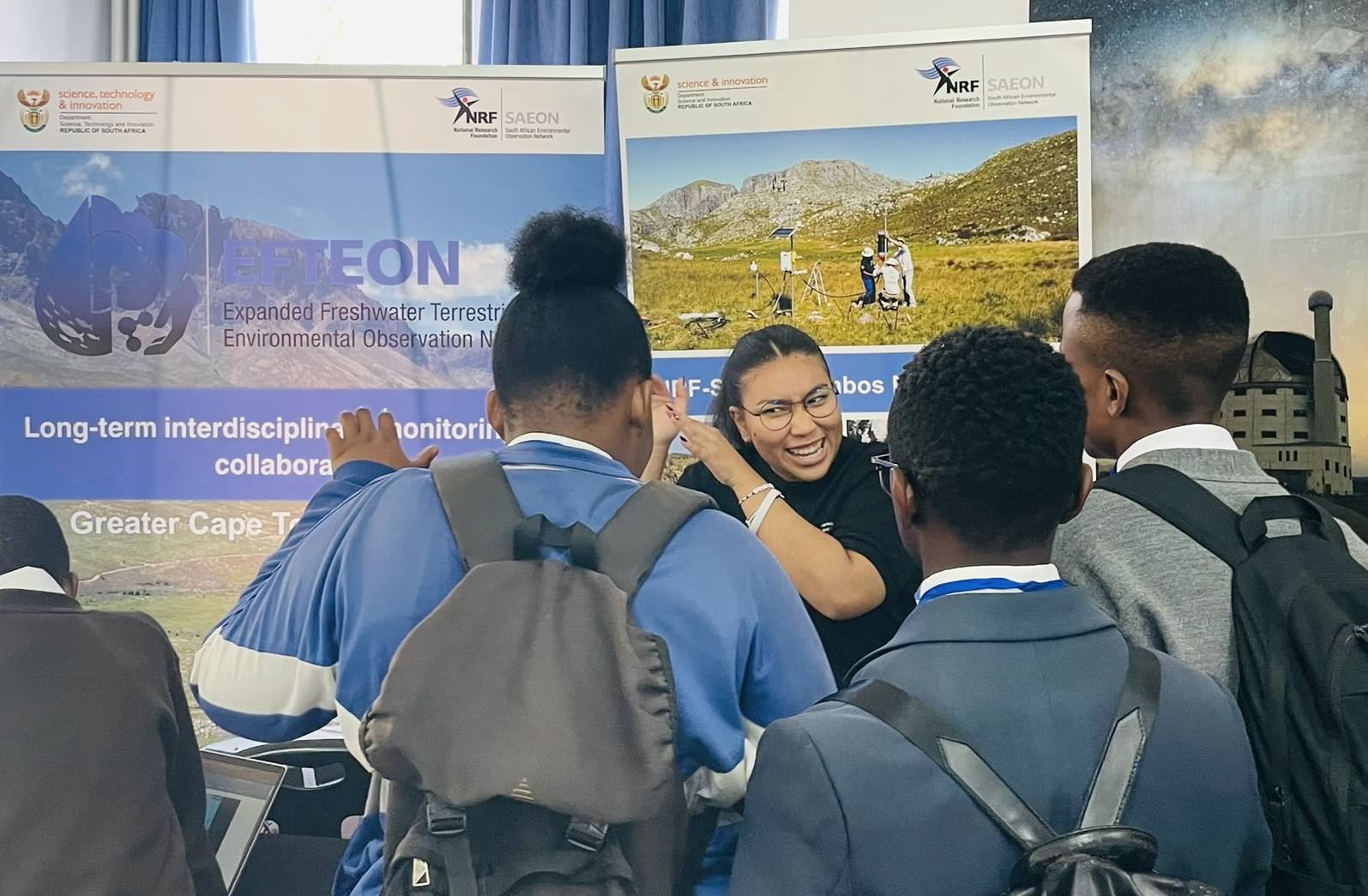
Miss Melissa Philander brings marine and polar science to life through interactive engagement with learners (photo by Asisipo Mboneli)
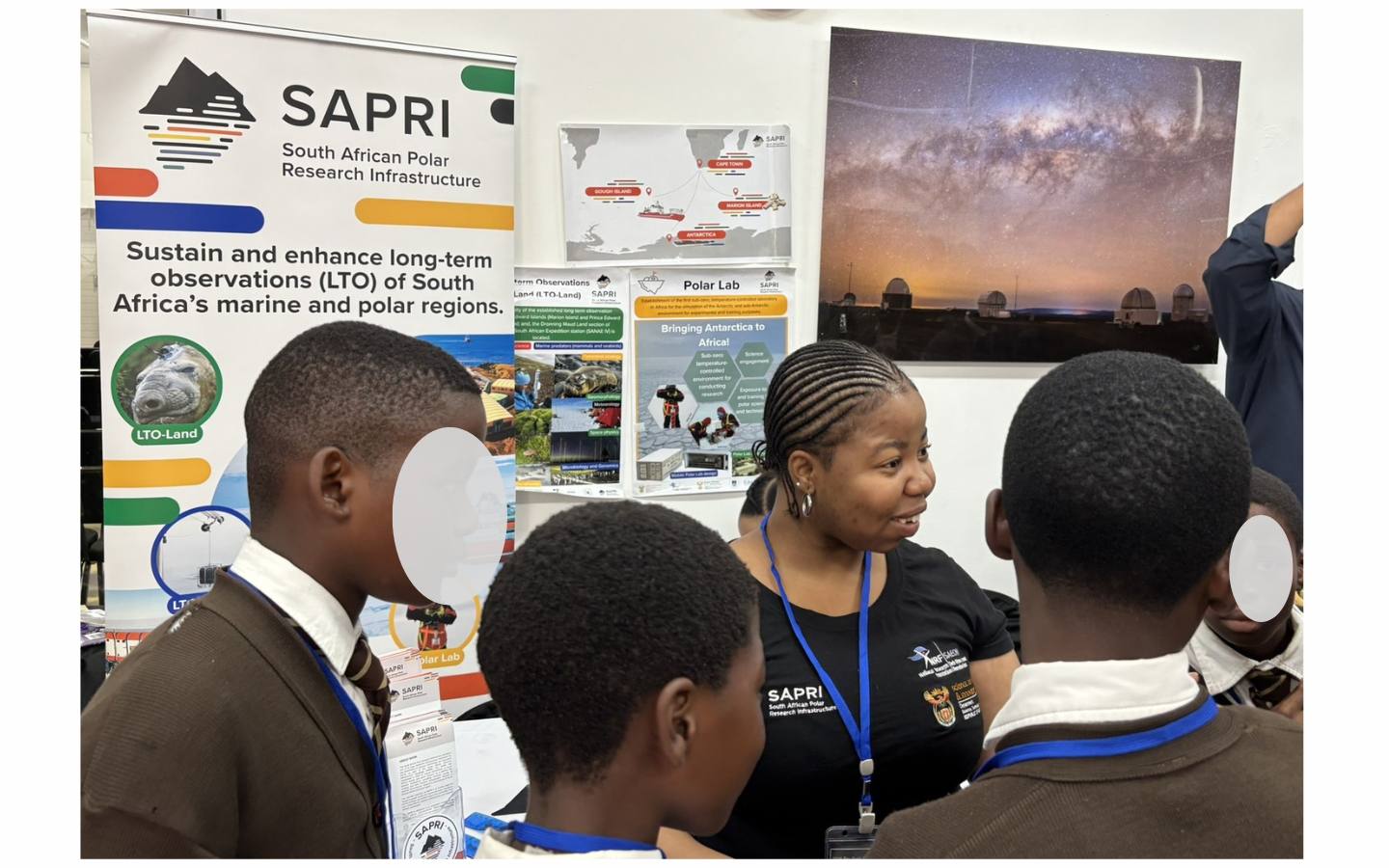
Miss Asisipo Mboneli introduces learners to South Africa’s ocean and Antarctic research (photo by Melissa Philander)
The highlight of the day was the virtual reality journey to Marion Island. Using VR headsets, learners were transported into the rugged sub-Antarctic landscape experiencing towering cliffs, seabird colonies and southern elephant seals as if they were there. Their reactions, gasps of amazement and eager questions reflected a moment of genuine connection with science.
The SAPRI stand quickly became a focal point of the exhibition area. Dr Angus Paterson (Deputy CEO of the NRF), Mr Bishen Singh (Group Executive of the NRF) and Minister Professor Blade Nzimande personally stopped at the stand. They were impressed by the dynamic and interactive setup, particularly the iconic Antarctic “pumpkin” boots worn by expeditioners and the VR headsets experience. Their engagement affirmed the importance of ensuring that marine and polar science is visible, accessible and inspiring to young learners.
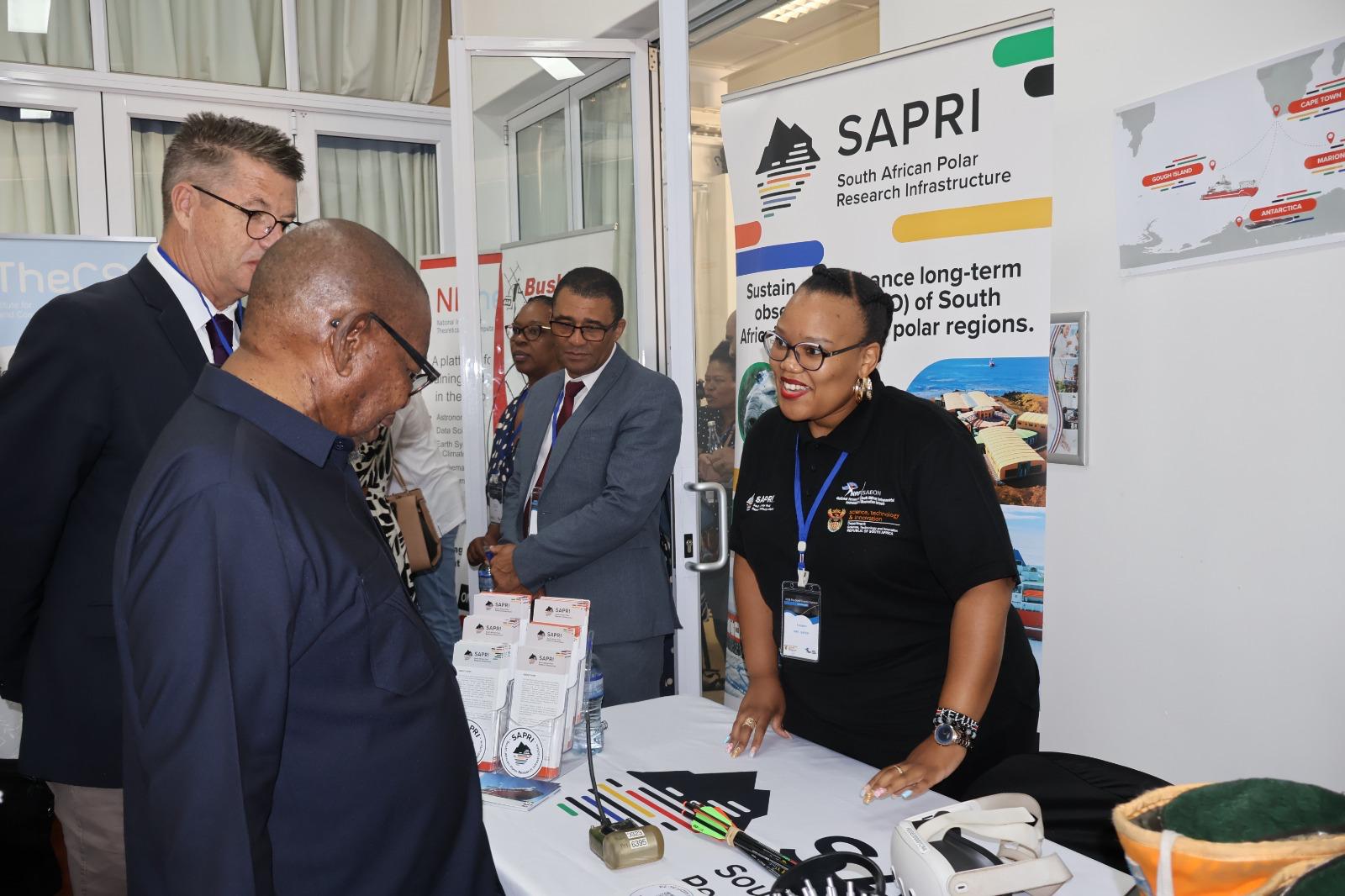
Miss Kelly Mogotsi (R) receives encouragement from (L to R) Dr Angus Paterson (NRF DCEO) and DSTI Minister Professor Blade Nzimande, applauding SAPRI’s inspiring work with learners (photo by Melissa Philander)
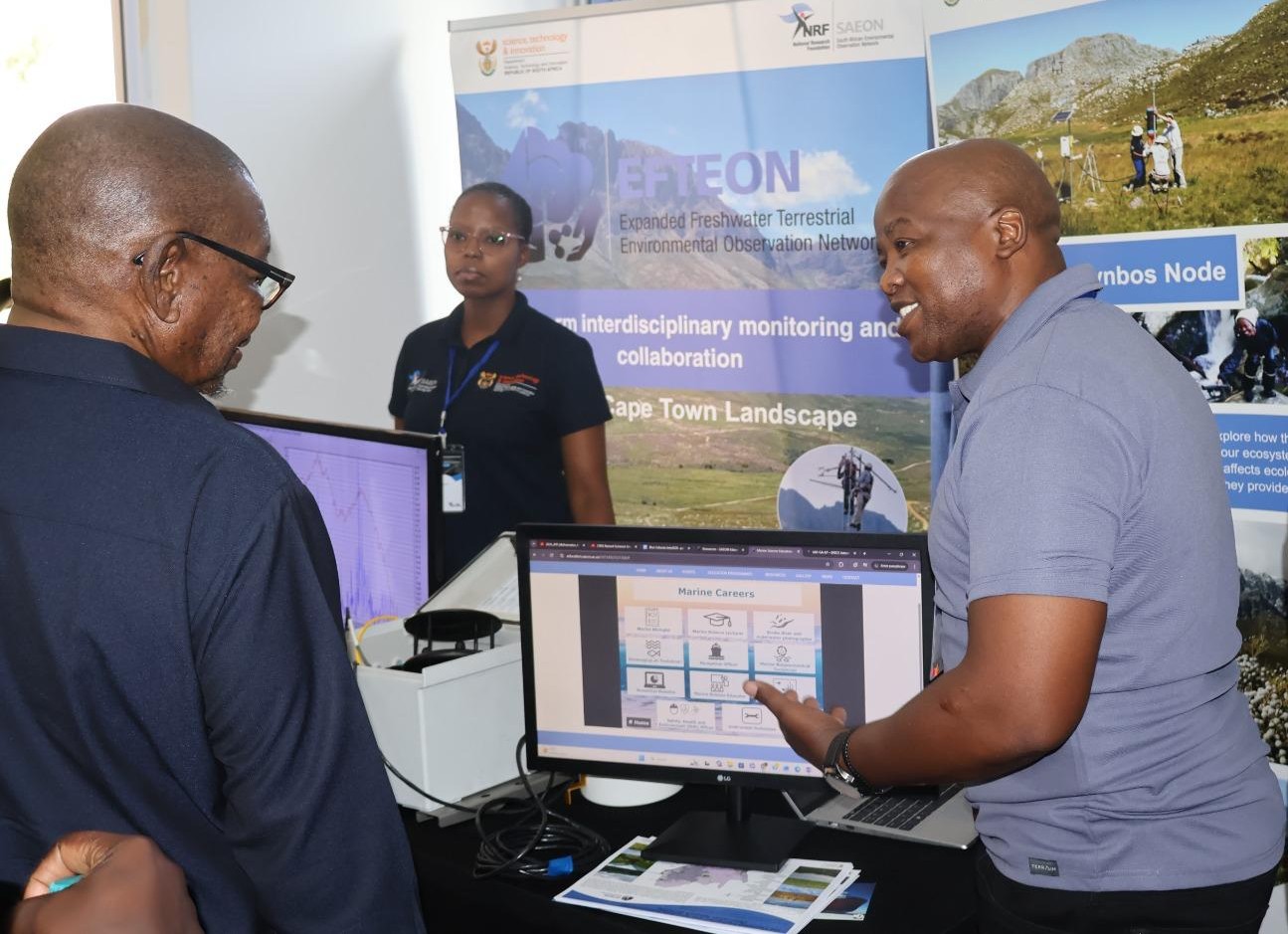
Mr Thomas Mtontsi engages DSTI Minister Professor Blade Nzimande on Egagasini Node’s marine and coastal modelling research impact (photo by Melissa Philander)
The outreach extended beyond the observatory grounds. Mr Thomas Mtontsi participated in radio interviews with Bush Radio and Zibonele FM, where he shared insights into the work of the Egagasini Node in marine science and explained SAPRI’s role in advancing polar research and capacity development. Through these platforms, marine and polar science reached communities across Cape Town, reinforcing the importance of public engagement in science.
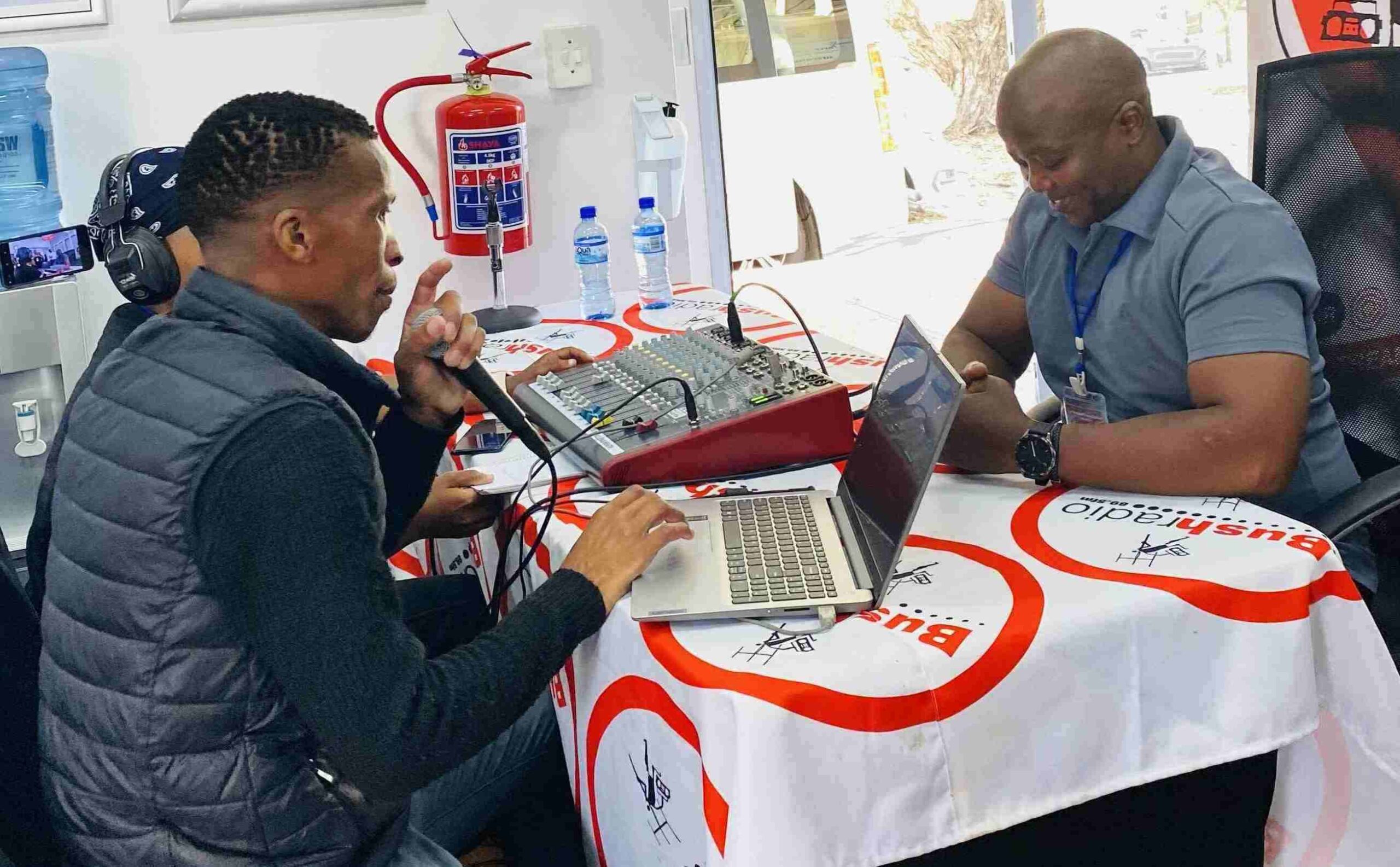
Thomas Mtontsi during a live interview with Bush Radio, sharing insights on marine and polar research (photo by Melissa Philander)
The programme also featured other NRF-SAEON nodes, including the Expanded Freshwater and Terrestrial Environmental Observation Network (EFTEON) and the Fynbos Node, showcasing the breadth of environmental observation and research underway across the country. Together, the nodes demonstrated how ocean, freshwater and terrestrial systems are interconnected and why integrated science is essential for sustainable development.
Throughout the day, one message stood clear: science is not distant or abstract, it is alive, relevant and filled with opportunity. Learners were left with renewed appreciation for the ocean’s role in shaping climate and life on Earth, and a clearer vision of the possibilities within science, technology, engineering and mathematics (STEM).
From observatories to ocean depths, from Cape Town to Antarctica, SAPRI and NRF-SAEON demonstrated that South Africa’s scientific future is not only bright, it is boldly blue, driven by curiosity and powered by the next generation of innovators.
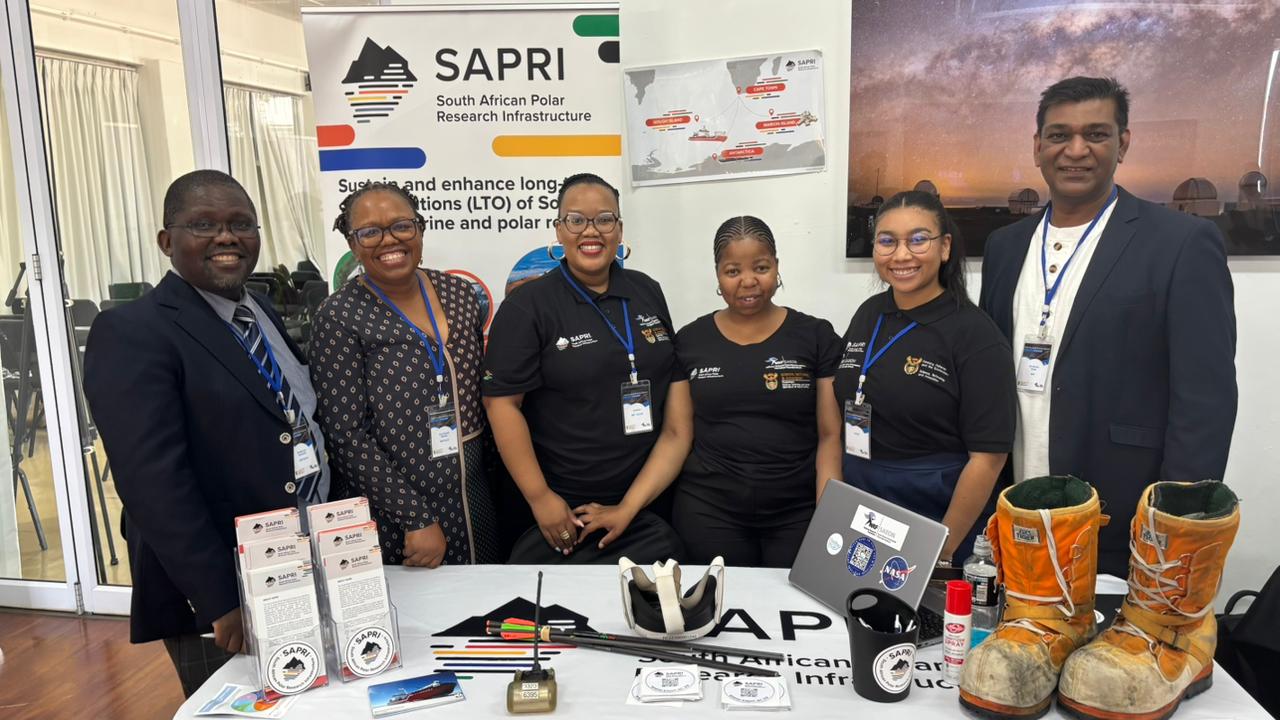
NRF Executive and the SAPRI Team (photo by Melissa Philander)
Written by Kelebogile Morwa Mandi Mogotsi, SAPRI Engagement Officer
Anne Treasure, South African Polar Research Infrastructure, 26 February 2026