
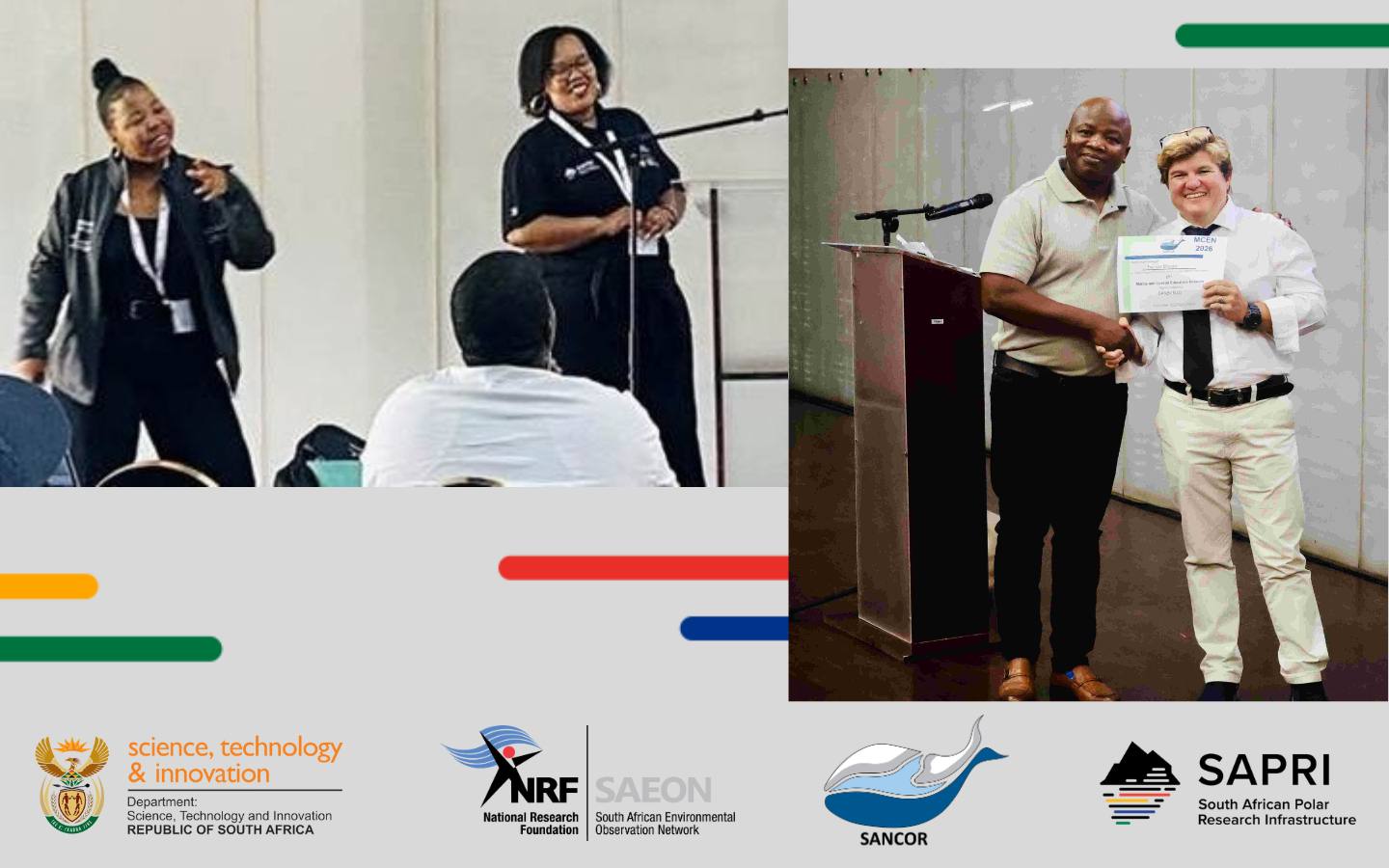
The South African Polar Research Infrastructure (SAPRI) and its host institution, the South African Environmental Observation Network (NRF-SAEON), were proudly represented at the Marine and Coastal Educators Network (MCEN) 2026 Conference, held from 18-23 January 2026 in Gauteng under the theme “Digital Literacy for Future Readiness”. MCEN is a group of the South African Network for Coastal and Oceanic Research (SANCOR), and the conference brought together educators, researchers, NGOs, and government stakeholders committed to advancing marine and coastal education in South Africa.
SAPRI’s contribution was presented by Miss Kelly Mogotsi and Miss Asisipo Mboneli, who shared an overview of SAPRI’s mandate, programmes, and its role in strengthening inclusive, transdisciplinary marine and polar research and education. The presentation highlighted SAPRI’s commitment to connecting science, society, and policy, while supporting the development of ocean-literate and future-ready citizens. A key highlight of the presentation was the screening of “Life of an Islander”, a video that powerfully illustrated the lived experiences of coastal communities and their deep connection to the ocean. The storytelling approach resonated strongly with delegates, reinforcing the importance of human-centered narratives in marine education and engagement. In recognition of the quality and impact of the presentation, SAPRI was awarded the Best Novice Presentation Award, an achievement that reflects the relevance of SAPRI’s work within the marine and coastal education community.
Representing SAPRI’s host institution, the South African Environmental Observation Network (NRF-SAEON), the SAEON Egagasini Node’s Science Engagement Officer, Mr Thomas Mtontsi, actively participated in the conference, including the robotics workshop where he contributed extensively to discussions on digital innovation and science engagement. Ndanduleni Malwela, also from NRF-SAEON’s Egagasini Node, was also in attendance and participated enthusiastically throughout the conference. In addition, Mrs Kogie Govender, Science Engagement Coordinator at NRF-SAEON, was one of the conference’s keynote speakers, presenting on the Blue Schools Programme and highlighting the importance of accessible ocean literacy pathways for learners and communities across South Africa.
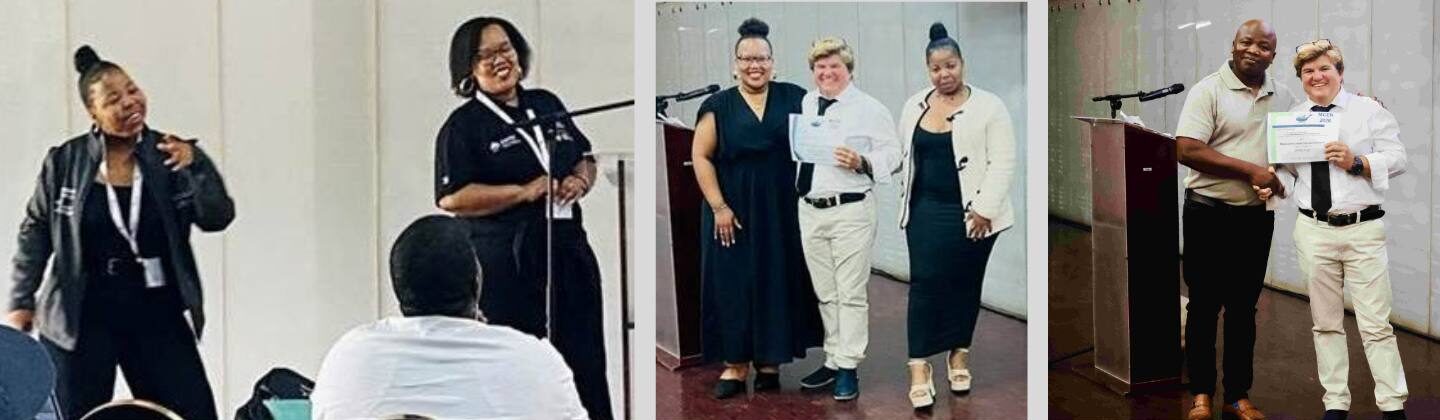
(Left) Asisipo and Kelly showcasing SAPRI’s work at MCEN 2026; (Middle) Kelly (L) and Asisipo (R) receiving the Best Novice Presentation Award from MCEN Chairperson, Dr Deborah Robertson-Andersson, at the MCEN Gala Dinner; (Right) Thomas Mtontsi (L) receiving an award for participating at MCEN 2026 from Dr Deborah Robertson-Andersson (R)
The conference programme included educational site visits to the National Zoological Garden in Pretoria, the Pretoria National Botanical Garden, Freedom Park, and the Ditsong Museum. These visits provided delegates with immersive, place-based learning experiences that linked environmental education, biodiversity conservation, heritage, and science communication. The integration of these sites into the programme enriched the conference by grounding discussions in real-world contexts, fostering reflective learning, and strengthening connections between natural sciences, culture, and society. The programme also featured fun activities, including a regional potjie contest.
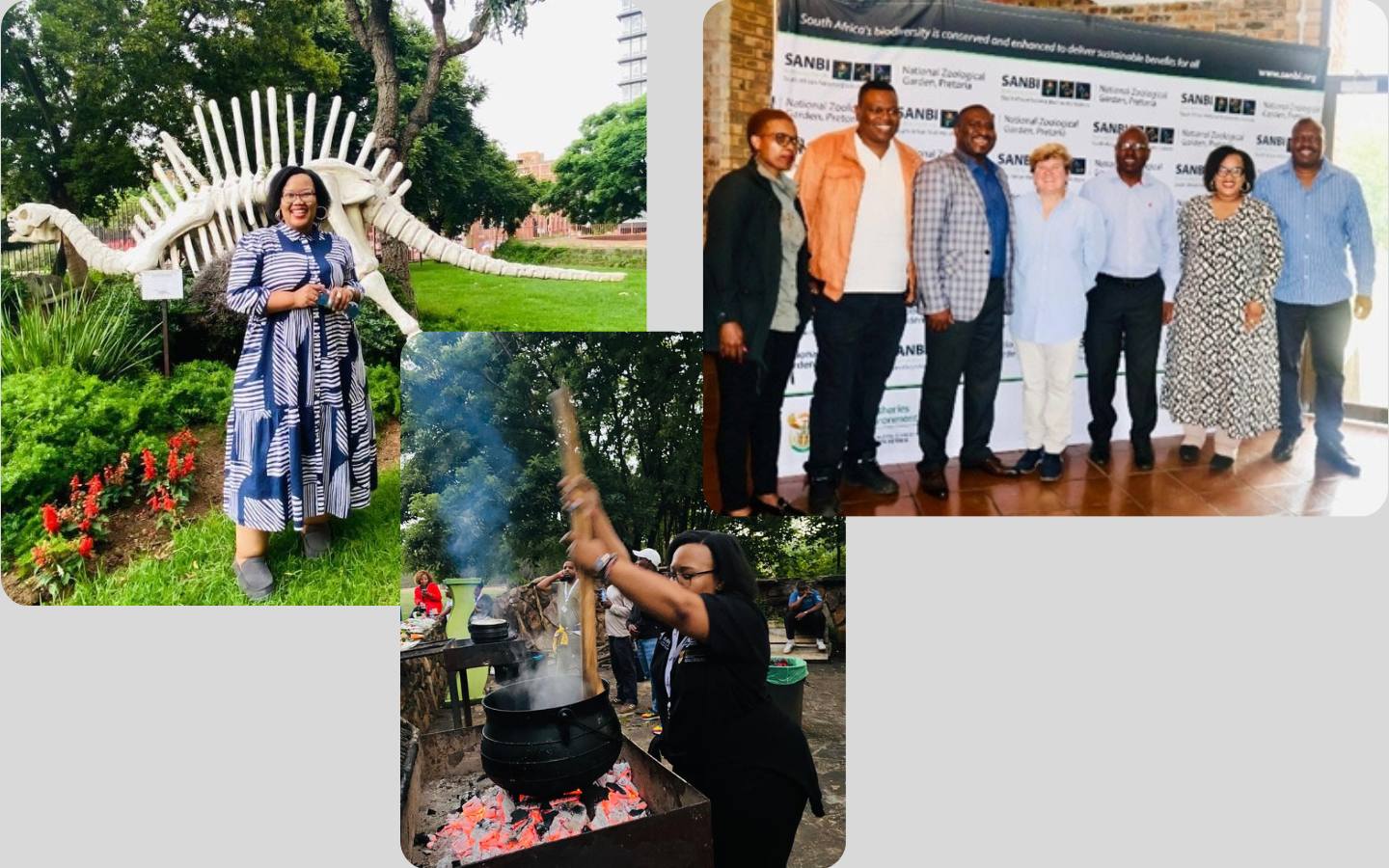
(Top left) Kelly during an educational site visit to the Ditsong National Museum; (Top right) (L to R) Nokulunga Nxumalo (Director: SANBI-NZG Education), Armstrong Mashakeni (Assistant Director: SANBI-NZG Education), Shonisani Munshedzi (SANBI CEO), Dr Deborah Robertson-Andersson (MCEN Chairperson), Elliot Mashile (COO SANBI), Kelly Mogotsi (SAPRI), Leslie Mulimedi (SANBI-NZG Executive Director); (Bottom) Kelly serving as head cook for the Western Cape team during the MCEN Potjiekos Night, where teams from Gauteng, Western Cape, KwaZulu-Natal, and Eastern Cape competed.
Participation by both SAPRI and NRF-SAEON at MCEN 2026 strengthened their collective visibility within national education and engagement networks, created meaningful opportunities for collaboration, and enabled valuable knowledge exchange on innovative approaches to ocean literacy, digital education, and community engagement. The conference further supported the alignment of marine and polar research with societal needs, reinforcing shared commitments to advancing South Africa’s blue economy and environmental sustainability goals.
Engagement at MCEN 2026 reaffirmed the complementary roles of SAPRI and NRF-SAEON as key platforms for advancing marine and polar awareness, capacity development, and public engagement. It also laid a strong foundation for future partnerships and collaborative initiatives across the education, research, and community sectors.
Text supplied by Kelly Mogotsi and Asisipo Mboneli. Photos by Asisipo Mboneli and Ndanduleni Malwela.
Anne Treasure, South African Polar Research Infrastructure, 12 February 2026