
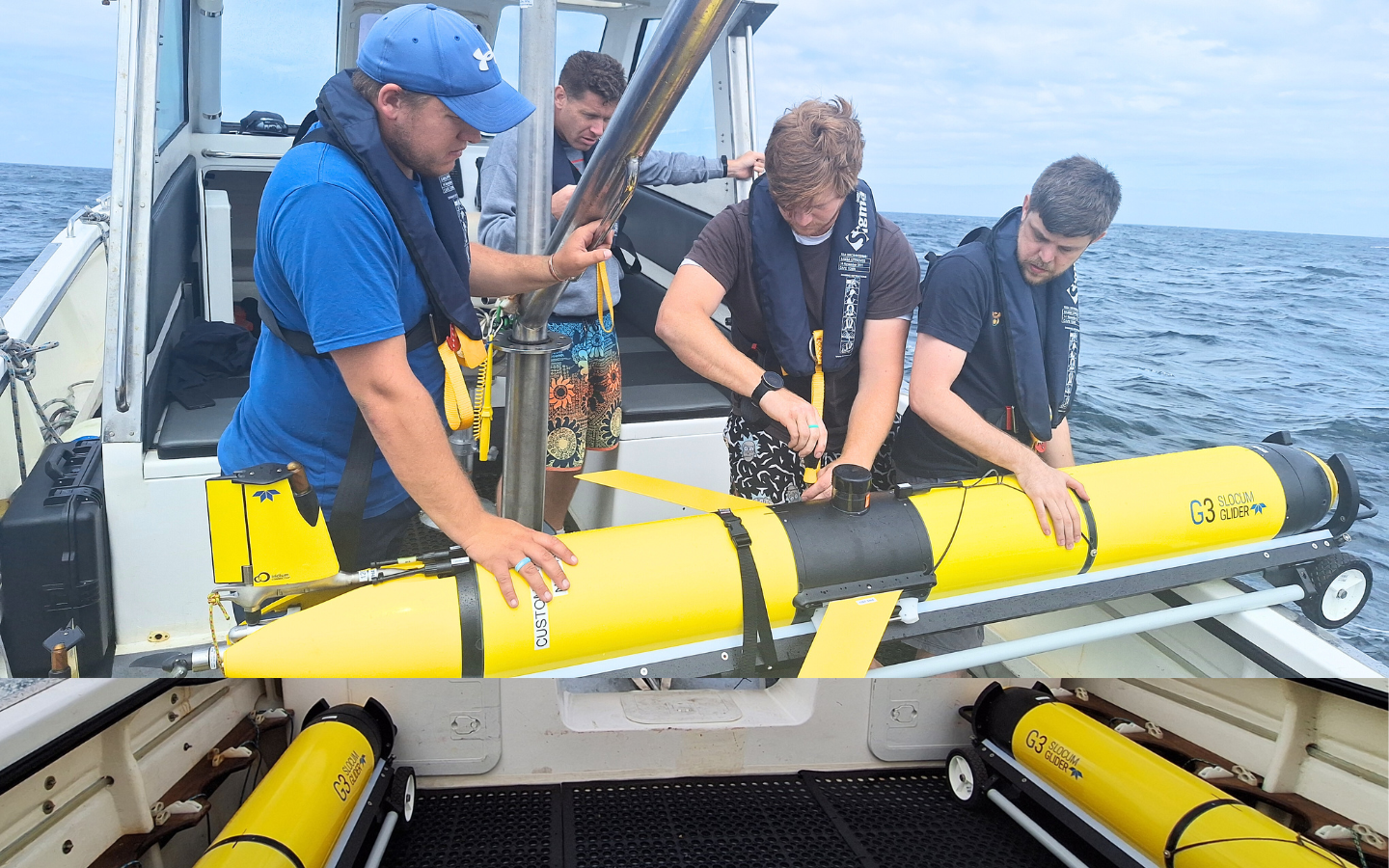
The South African Polar Research Infrastructure (SAPRI) has successfully deployed its first two Slocum Ocean Gliders – named Chappie and Imvubu – on the eastern Agulhas Bank, marking a significant milestone in local marine research technology and SAPRI’s ability to support South African university researchers. This is particularly relevant for Nelson Mandela University which hosts the new Ocean Science Campus, and within this, the UK-SA Bilateral Research Chair in Ocean Science and Marine Food Security – Prof Mike Roberts.
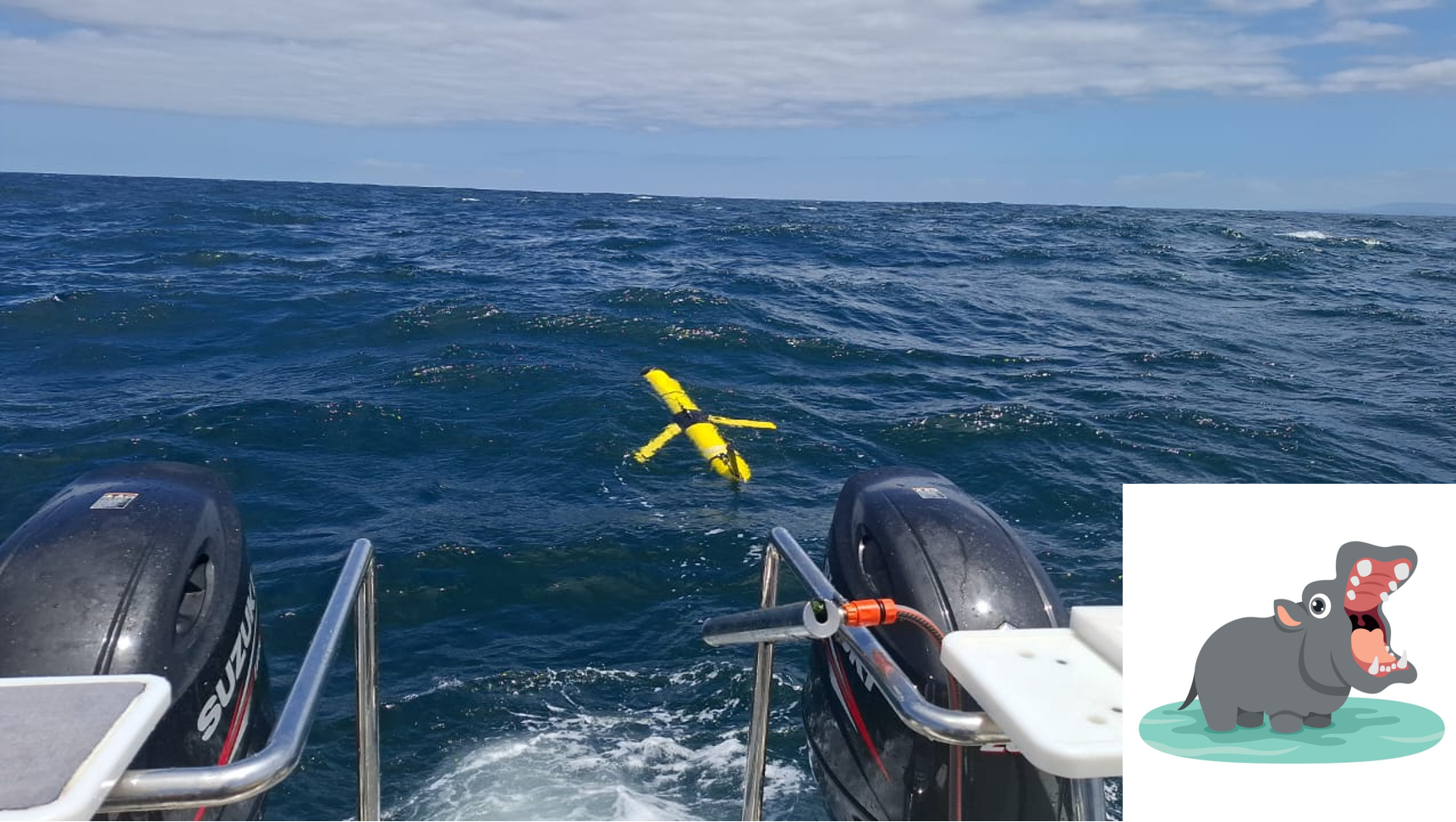
Introducing Imvubu
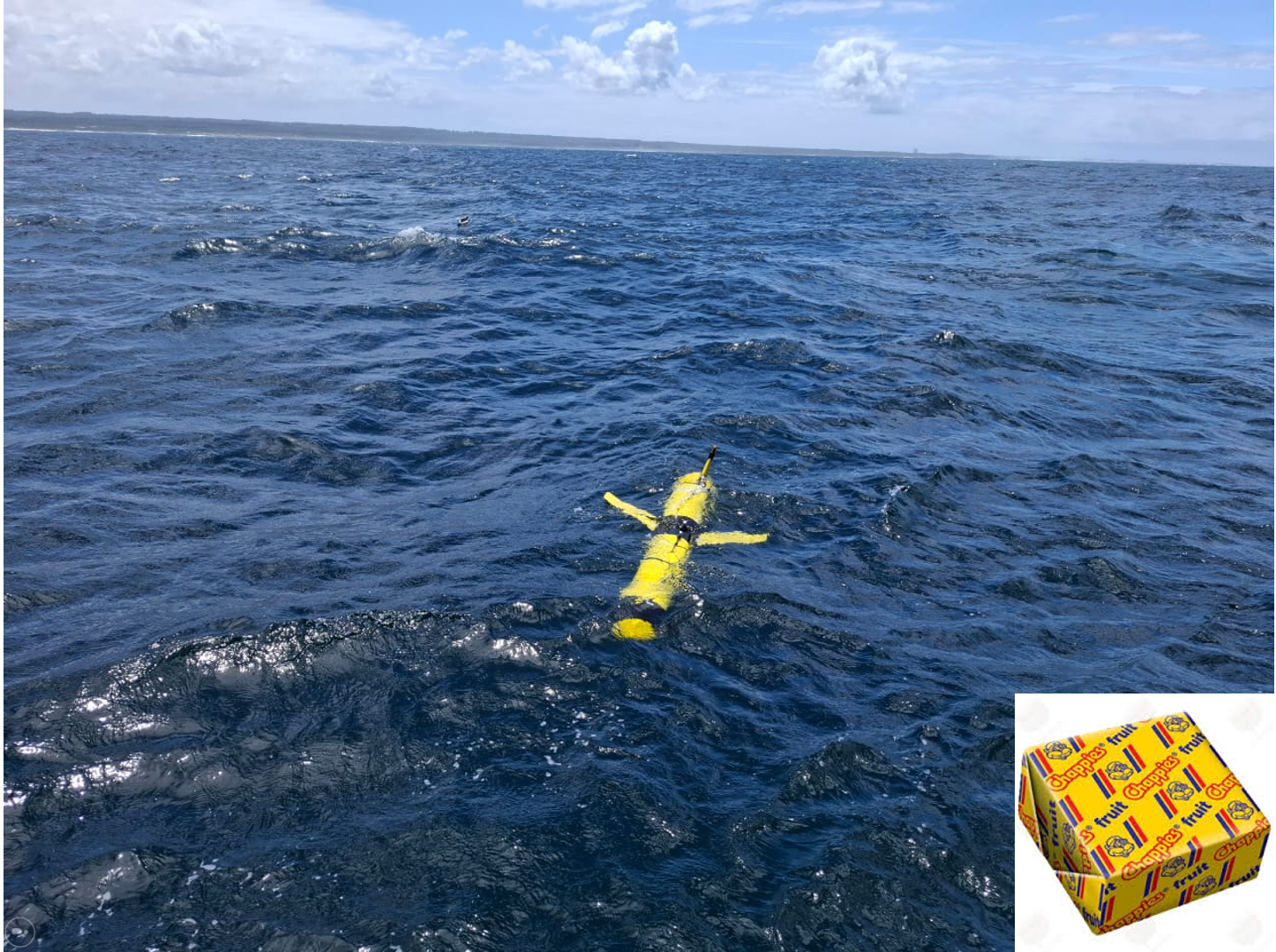
Introducing Chappie
The glider mission furthermore reinforces gratifying collaboration with the fishing industry – South African Squid Management Industrial Association (SASMIA) and government’s Department of Forestry Fisheries and Environment (DFFE).
Slocum gliders are autonomous underwater vehicles that move by adjusting their buoyancy and glide through the ocean to collect long-term environmental data like temperature, salinity, and currents. They’re energy-efficient and ideal for continuous monitoring in remote or difficult ocean areas.
The deployment coincided with the annual four-week November closure of the chokka squid fishery, a period that allows researchers to conduct in situ studies on squid spawning grounds. Current research objectives include hydro-acoustic assessments of inshore spawning adult biomass, analysis of squid paralarvae diets, and investigations into productivity levels on the spawning grounds. These productivity levels, driven by phytoplankton and zooplankton, are critical for paralarvae survival and are believed to be closely linked to coastal upwelling events – phenomena associated with successful squid recruitment.
To support these efforts, the 14-meter RV Observer, managed by the South African Institute for Aquatic Biodiversity (SAIAB), was utilised for hydro-acoustic surveys and environmental sampling. Complementing these operations, SAPRI’s new gliders provided essential oceanographic data, enhancing the interpretation of biological and acoustic findings.
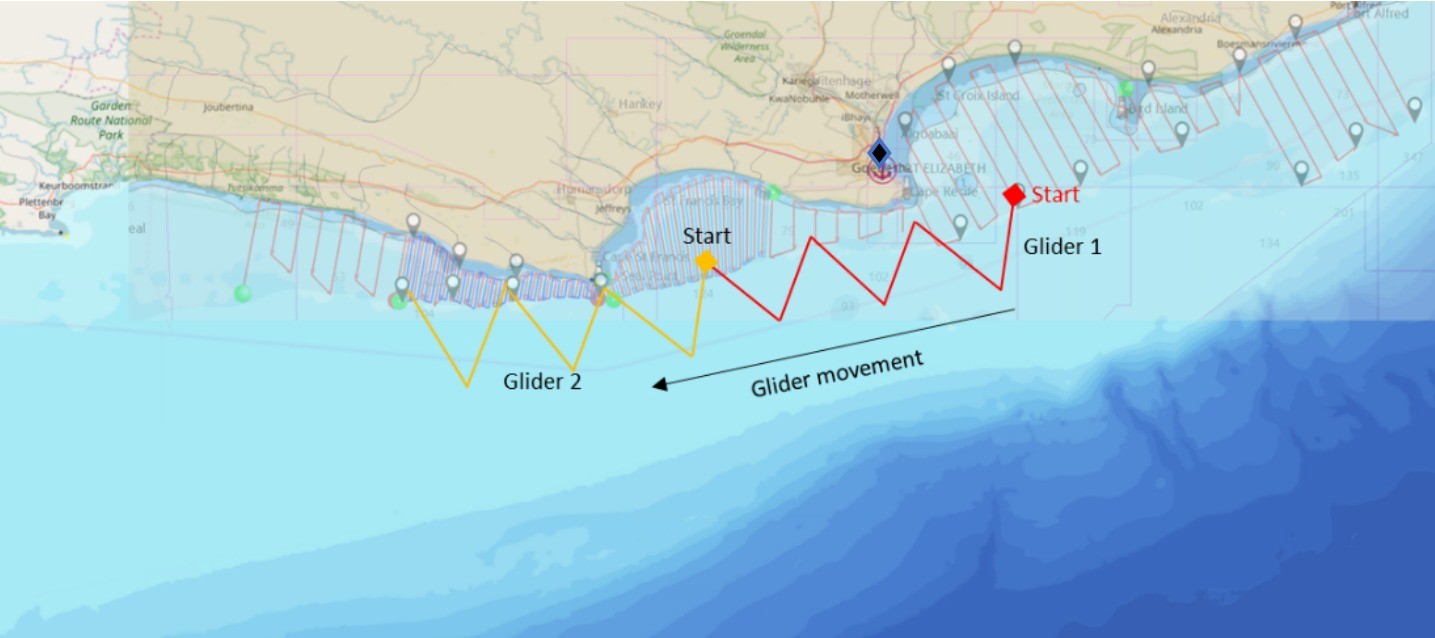
Deployment plan for Imvubu and Chappie
Although Slocum gliders are optimised for deep-water missions beyond 200 meters, this survey tested their capabilities in challenging conditions – operating in depths of 80 to 150 meters along Algoa Bay and St Francis Bay, adjacent to the powerful Agulhas Current. Despite strong currents and communication hurdles, both gliders completed their missions successfully.
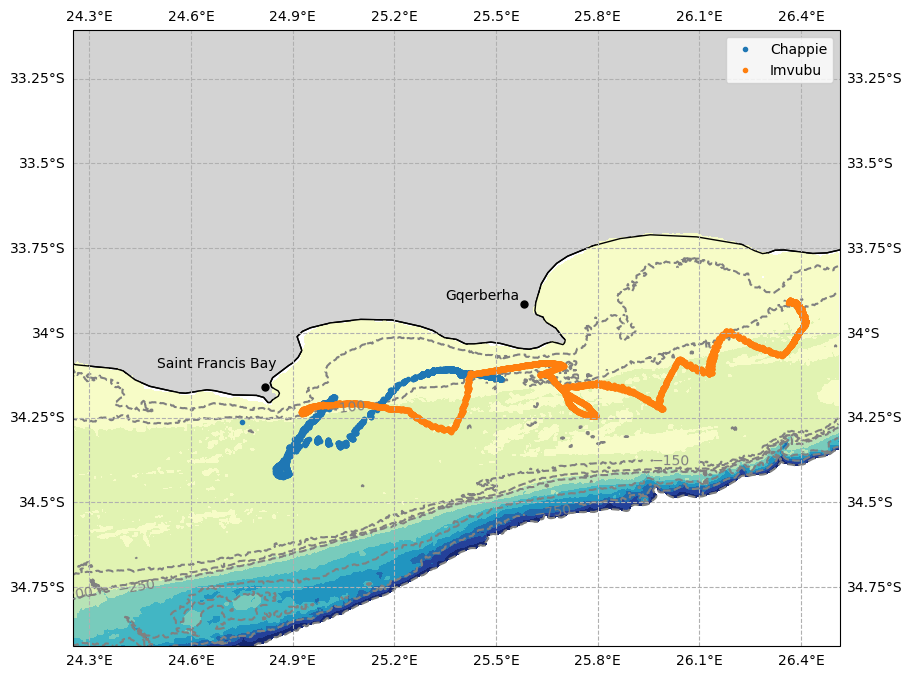
Actual trajectory of Imvubu and Chappie
Imvubu was launched off Bird Island on November 5, 2025, and surveyed Algoa Bay before assisting Chappie in St Francis Bay. Chappie, deployed a day earlier off Schoenmakerskop, faced more difficult conditions but persevered. Both gliders were recovered on November 18, four days beyond the original schedule.
Researchers expressed confidence in the gliders’ performance and anticipate their continued role in advancing oceanographic research along South Africa’s coastline.
We would like to also thank and acknowledge the support of the SAEON Elwandle & SMCRI teams who provided vital support for this glider mission.
Text supplied by Jethan d’Hotman (SAPRI, NRF-SAEON Egagasini Node), Michael Roberts (NRF-SAEON Egagasini Node, UK-SA Bilateral Research Chair: Ocean Science & marine Food Security), Jean Waruguru Mwicigi (DFFE), Tamaryn Morris(SAPRI, NRF-SAEON Egagasini Node), Patrick Vianello (Nelson Mandela University), Robert Cooper (Capricorn Marine Environmental), and Mike Soule (Fisheries Resource Surveys)
Rabia Mathakutha, South African Polar Research Infrastructure, 1 December 2025